The AI Voice You Pick Says More Than Your Script Does
Faceless Lab gives you 200+ ElevenLabs voices, but grabbing the first one is how channels end up sounding generic. Here is how to choose, test and lock in the right one.

Stefano Ventrudo
CTO at Faceless Lab
How to choose an AI voice that fits your niche, test it before you commit, and keep it consistent across every video on a faceless channel.
So you are wondering which AI voice actually works for a faceless channel, and whether it matters as much as people say. It does. We have watched creators spend hours on a script, then hit generate on the first voice the tool suggests, and wonder later why the video did not land the way they expected. The voice is not a detail you fix after the fact. It is half of what the viewer experiences, and on a faceless channel it is doing the job your face would normally do.
We run several faceless channels ourselves, in different niches, and we learned this the slow way, by picking the wrong voice more than once. Here is what we would tell you if you asked us over coffee.
Executive Summary: The AI voice on a faceless video is not interchangeable. A calm, low voice that works for a true crime channel will kill a motivation channel, and an upbeat energetic voice that works for a top 5 list will feel wrong over a history documentary. Faceless Lab gives you more than 200 ElevenLabs voices across dozens of languages and accents, which is enough choice to actually match tone to niche instead of settling for whatever sounds fine on the first try. The fix is simple: pick a voice based on what your niche needs to feel like, test it on a real script before locking it in, and then keep that same voice for every video on that channel so viewers start to recognize it. Autopilot and Series carry that choice forward automatically once it is set, so you only make the decision once per channel, not once per video.
Table of Contents
- Why the voice is doing more work than people think
- What actually changes between AI voices
- Matching a voice to your niche
- One idea, several languages, several voices
- Choose and lock in a voice inside Faceless Lab
- Mistakes that make a good voice sound worse
- Where Faceless Lab is and is not the right choice
1. Why the voice is doing more work than people think
On a normal YouTube channel, the creator's face and personality carry a lot of the trust. On a faceless channel, none of that is there. The voice is what is left to do that job, along with the pacing of the script and the visuals behind it.
That is a bigger responsibility than most people give it credit for.
- It sets the mood before the first fact lands. Viewers decide whether to keep watching in the first couple of seconds, and tone reads faster than words.
- It carries your brand across every video. A recognizable voice is one of the few things that makes a faceless channel feel like a channel, not a random collection of clips.
- It is the easiest thing to get wrong without noticing. A script can be great and a voice can still undercut it, because a fast, bright voice reading a somber true crime story creates a mismatch viewers feel even if they cannot name it.
2. What actually changes between AI voices
"AI voice" is not one thing. The options differ on a handful of dimensions that matter a lot more than most people check for before hitting generate.
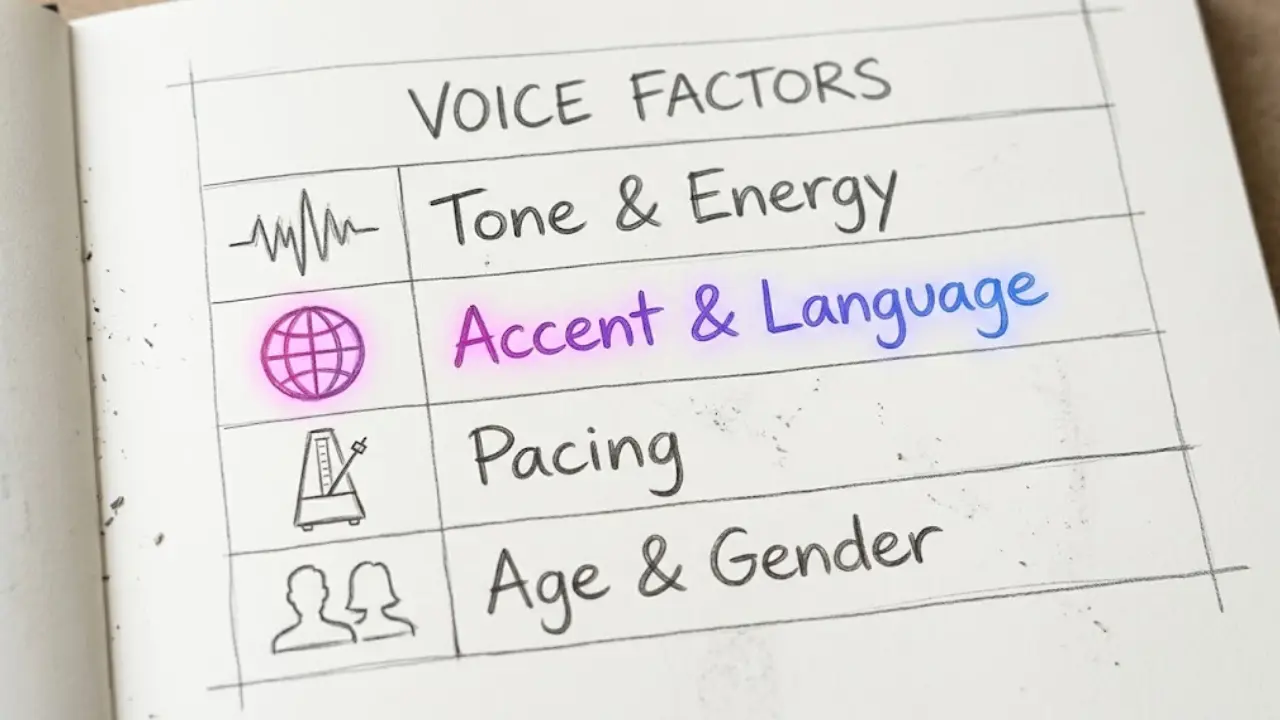
Tone and energy
Some voices sit low and calm, others sit bright and fast. A calm voice under a fast-cut top 5 video can feel sluggish. A bright, high-energy voice under a slow documentary story can feel like it is rushing the viewer past the point.
Accent and language
Faceless Lab's voice library spans dozens of languages and regional accents, from US and UK English to Italian, Spanish and beyond. Translating the script is the easy part. Getting the accent right is what makes a voice sound native to that audience instead of dubbed.
Emotional range and pacing
Some voices are built for narration and hold a steady, even pace well. Others carry more emotional swing, which suits story formats like Reddit stories or horror narration where the delivery needs to build tension. Judge a voice by how it fits your format, since a neutral demo sentence rarely tells you much.
Gender and age character
Male, female and a range of ages and textures are available. This is mostly a brand decision. Test more than one against your actual script before deciding, because a voice that sounds good reading a demo line can sound different reading your specific sentence structure.
3. Matching a voice to your niche
There is no single "best" AI voice. There is a best voice for what you are making. Here is roughly how we would map it, based on the channels we run and what we see working across the niches Faceless Lab creators publish in most.
- True crime and horror: low, calm, deliberate. The restraint is what builds tension, not volume or speed.
- Motivation and stoicism: warm and grounded rather than shouty. Confidence reads better than energy for this format.
- Finance and educational content: clear, authoritative, moderate pace. Viewers need to follow numbers and concepts, so clarity beats personality here.
- Top 5, quiz and fun facts: brighter, faster, more upbeat. These formats live on momentum, and a flat voice makes a snappy script feel slow.
- ASMR and sleep or meditation: soft, slow, almost whispered. This is the one niche where pacing matters more than anything else on this list.
- History and mythology: narrative and steady, closer to a documentary voice than a hype voice, since the format is closer to storytelling than a listicle.
4. One idea, several languages, several voices
If you are publishing the same faceless channel in more than one language, or running separate channels for different markets, the voice question multiplies. A voice that sounds natural in English is not automatically the right pick when the same script runs in Italian or Spanish, because pacing and emphasis do not translate one to one.
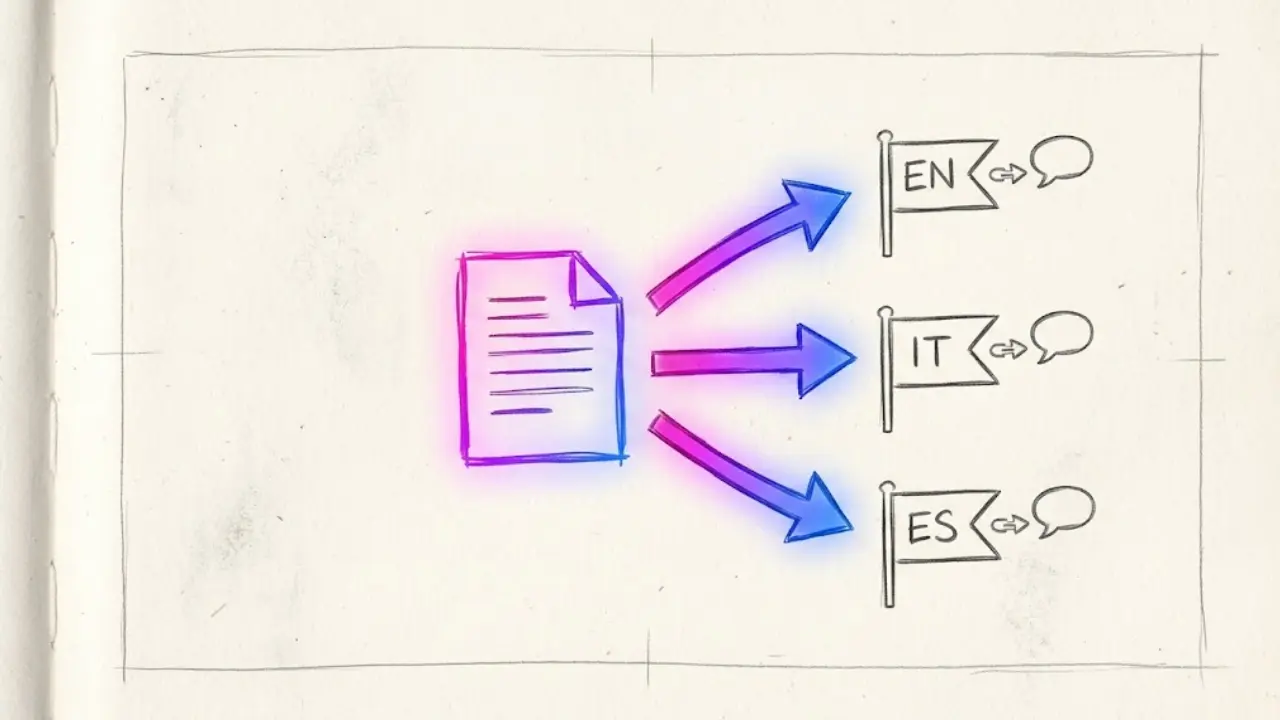
The practical approach is to treat each language as its own small decision, not an afterthought.
- Pick a voice per language, not one voice force-translated. A native-sounding voice for each market beats reusing your English voice across every language.
- Keep the tone consistent even when the voice changes. The Italian version of a calm true crime channel should still sound calm, even though the actual voice file is different from the English one.
- Test a full script, not a sample line. Some voices handle short sentences well and get uneven on longer, more complex ones, and that only shows up once you run real content through them.
5. Choose and lock in a voice inside Faceless Lab
Here is the actual workflow we use when we start a new channel or a new Series inside Faceless Lab.
- Start with the niche and structure, not the voice. Pick your topic and one of the 8 proven video structures first, since the format tells you what pacing and tone the voice needs to support.
- Browse the voice library filtered by language and tone. Faceless Lab's voice library covers more than 200 ElevenLabs voices, so filter by the language you are targeting and narrow from there by energy level rather than scrolling the full list.
- Preview against your real script, not a demo sentence. Generate the voiceover on the actual first video's script, not a sample line, so you hear how it handles your real pacing, names and punctuation.
- Compare two or three finalists side by side. Small differences are easier to hear back to back than one at a time from memory.
- Lock the voice at the channel or Series level. Once you pick, set it once for that channel or Series so every future video uses the same voice automatically instead of you choosing again each time.
- Let Autopilot carry it forward. With Autopilot, which is currently in beta, new videos in a Series keep the voice, structure and visual style you set, so consistency is not something you have to police manually video after video.
- Schedule and auto-publish once you are happy with the read. Faceless Lab can auto-publish to YouTube, Instagram, Facebook and LinkedIn on your schedule. TikTok is excluded from fully automatic publishing and needs your explicit consent each time, which is worth knowing before you plan a channel that leans TikTok-first.
You can run this whole workflow on the Free trial at €0 to test how a voice sounds across a real video end to end, with no credit card required. Paid plans are Starter at €19, Growth at €59 and Pro at €149 once you are ready to publish on a schedule.
💡 Ready to test a voice against your own script? Start free and make your first faceless video.
6. Mistakes that make a good voice sound worse
Most bad-sounding AI voiceovers are not actually a bad voice. They are a good voice set up badly.
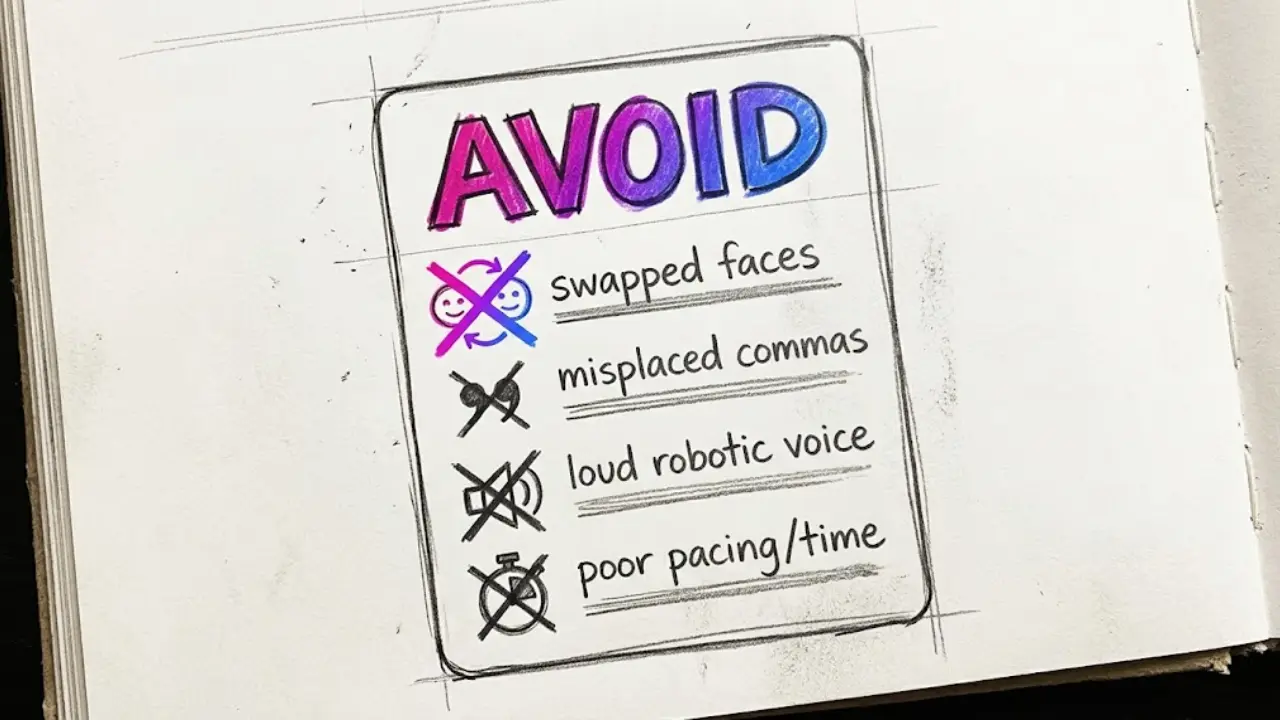
- Switching voices mid-Series. Viewers who come back for a second or third video from the same channel notice a different voice immediately, even if they cannot explain why the video feels off.
- Ignoring punctuation and pacing in the script. AI voices read your punctuation. A script with no commas or short pauses can come out flat, no matter how good the underlying voice is.
- Letting music sit too loud under the voice. A great voice buried under music that was not levelled properly will sound worse than it is. Check the mix as carefully as you check the voice itself.
- Judging a voice on a five-second preview. A voice can sound great on a demo line and uneven on a full 45-second script with names, numbers or longer sentences. Always test the real thing.
- Picking a voice because it sounds impressive, not because it fits. The most dramatic or distinctive voice in the library is rarely the right one for every niche. Fit beats flash.
7. Where Faceless Lab is and is not the right choice
We would rather tell you this straight than have you find out after you sign up.
Faceless Lab is a strong fit if you want to pick a voice once, match it properly to your niche, and then have every future video in that channel or Series keep the same voice, structure and visual style without you rebuilding the setup each time. It is built for creators running one or several channels who want consistency without doing everything by hand, including scheduled auto-publishing to most major platforms.
It is a less obvious fit if you specifically need to hand-direct every single voiceover performance line by line, the way a professional voice actor session works, or if your channel is built entirely around TikTok-first fully automatic publishing, since TikTok needs your explicit consent on every auto-publish rather than running silently in the background like the other platforms.
The bottom line
The voice on your faceless video is not a setting to breeze past. Pick it based on what your niche needs to feel like, test it on a real script, and lock it in once so your channel builds a recognizable sound instead of a different voice every upload.
If this helped, share it with another faceless creator who is still using whatever voice loaded by default. We also run an affiliate program if you want to recommend Faceless Lab to your audience and earn from it.
Read more
Frequently asked questions
What is the best AI voice for a faceless YouTube channel?
There is no single best voice, only the best fit for your niche. Calm, low voices work best for true crime and horror, warm and grounded voices work for motivation content, and bright, fast voices suit top 5 lists and fun facts. Faceless Lab offers more than 200 ElevenLabs voices, so instead of picking the first one, filter by language and energy level, then preview it against your actual script before locking it in for the channel.
Can I use different AI voices for different faceless channels?
Yes, and you should. Each channel or Series inside Faceless Lab can have its own voice locked in, so a true crime channel and a motivation channel you run at the same time can each sound right for their own audience. The key is keeping the voice consistent within a single channel once you choose it, not changing it between videos on the same channel.
Do AI voices still sound robotic in 2026?
The best ones do not. Voice quality has improved a lot, and ElevenLabs voices in particular handle natural pacing, emphasis and emotion well when the script includes proper punctuation. Robotic-sounding results usually come from a mismatched voice choice or a script with no pauses built in, rather than from the technology itself being unable to sound natural.
How many AI voices does Faceless Lab offer?
Faceless Lab's voice library includes more than 200 ElevenLabs voices spanning dozens of languages and accents, including multiple English, Italian and Spanish options among others. That range is meant to let you match a voice to a specific niche and market instead of settling for a generic default that does not fit your content.
Can I make faceless videos in languages other than English?
Yes. Faceless Lab supports publishing the same video idea in multiple languages, each with its own native-sounding voice rather than a single voice forced through a translation. This is useful if you are targeting more than one market or running region-specific versions of the same channel concept.
Does changing my AI voice hurt an existing channel's growth?
It can, because returning viewers build familiarity with a channel's voice the same way they would recognize a real host. Switching voices mid-Series is one of the more common ways a channel accidentally feels inconsistent. If you need to change direction, it is safer to make that decision early, before a channel has built a returning audience around its current sound.
Related articles
YouTube Just Turned Shorts Into Shows. Here Is How to Make a Faceless One
YouTube now lets creators group Shorts into seasons and episodes. Here is how faceless creators can plan a season, script cliffhangers and ship every episode on schedule.
Animal Facts Are the Faceless Niche People Send to Their Friends
Animal facts are one of the easiest faceless niches to start and one of the most shared. Here is how to pick a sub-niche, script shorts that hold, keep every fact accurate, and post daily.
Post Your Faceless Videos When Your Audience Is Actually Watching
The best times to post faceless videos on YouTube Shorts, TikTok and Instagram Reels, why the first hour decides your reach, and how to automate it so you never watch the clock.