Make Faceless Finance Videos for One of YouTube's Highest-Paying Niches
Finance is one of the best-paying faceless niches in 2026. Here is how to make faceless finance videos that hook fast, stay accurate, and post on a rhythm that grows.


Stefano Ventrudo
CTO at Faceless Lab
Finance is one of the few faceless niches where a single good video can pay for a month of tools, and this guide shows you how to make one from idea to published Short.
So how do you make **faceless finance videos **that people actually watch and that actually pay? Finance sits at the top of the faceless earnings table for a reason. Advertisers in banking, investing apps, credit cards, and B2B software bid hard for those viewers, so finance channels regularly see some of the highest RPMs on YouTube while most entertainment niches sit far below. The tricky part is that finance viewers are sharp. Get a number wrong or read a script in a flat robotic voice and they leave. I am Roberto, and between me and Stefano we run faceless channels every day, so this is the workflow we would use to start a finance channel from scratch.
Executive Summary
Faceless finance videos work because the niche pays some of YouTube's highest RPMs (commonly reported in the $15 to $30 range for US finance audiences, versus roughly $2 to $4 for history or story channels), and because the format does not need your face, just clear explanations, clean visuals, and a voice people trust. The winning approach in 2026 is to let AI handle the grunt work of scripting, voiceover, visuals, music, and captions while you stay in charge of topic selection, accuracy, and hooks. Pick one finance angle you can defend, write scripts that open with a concrete stake in the first three seconds, use a calm credible voice, keep every number verifiable, and post on a steady schedule so the channel compounds. Faceless Lab turns a topic into a publish-ready finance Short in minutes and can schedule it out for you, so the only real work left is choosing what to say and checking that it is true.
Table of Contents
- Why faceless finance videos pay more than most niches
- The faceless finance video formats that actually get watched
- Writing a finance script that hooks fast and stays accurate
- Voice, visuals, and captions that make people trust a faceless finance channel
- How to make a faceless finance video inside Faceless Lab
- Where a faceless finance channel is and isn't the right choice
- How to post consistently and turn finance views into income
1. Why faceless finance videos pay more than most niches
Money is the clearest reason to pick this niche, so let us start there.
The RPM gap is real. RPM is what you actually keep per 1,000 monetized views after YouTube takes its cut. Publicly reported creator data puts US finance audiences in roughly the $15 to $30 range, and some sub-topics like credit, investing apps, and B2B tools push higher. Compare that with history or story channels, which often land around $2 to $4. That means a finance channel can earn several times more from the exact same view count.
Why advertisers pay up. A person watching a video about index funds, high-yield savings, or business credit is a person a bank or fintech wants to reach. High commercial intent pulls in high bids, and those bids flow through to your RPM. You are renting attention that advertisers value.
Why faceless fits finance perfectly. Nobody needs to see your face to trust a clean explanation of how a Roth-style account works or why an emergency fund matters. What they need is clarity, correct numbers, and a calm voice. That is exactly what a faceless format delivers, and it means you can run the channel without ever being on camera.
2. The faceless finance video formats that actually get watched
You do not need to invent formats. A handful of proven structures carry most finance channels, and you can rotate them so the channel never feels repetitive.
- The single-concept explainer. One idea, explained in 30 to 60 seconds. "What an ETF actually is." "Why your savings lose value in a high-inflation year." Great for building an evergreen library.
- The mistake breakdown. "Three money mistakes that quietly cost you thousands." Loss-framed hooks perform because people fear losing money more than they enjoy gaining it.
- The number reveal. "This is how much $200 a month becomes in 20 years." A concrete figure in the hook, then the math. Finance viewers love a payoff number.
- The comparison. "High-yield savings vs a checking account." Faceless Lab can build these with a clean two-column visual style so the difference is obvious at a glance.
- The news reaction. A rate decision, a new savings rate, a tax deadline. Timely finance content rides search and the algorithm at the same time.
💡 Want a deeper menu of angles before you commit? Our post on faceless video ideas that are actually getting views pairs well with the finance formats above.
A note on niches inside the niche. "Finance" is broad. Personal finance for beginners, investing, side income, business finance, and money news each attract a slightly different viewer. Pick one lane so your channel reads as an authority instead of a random money feed.
3. Writing a finance script that hooks fast and stays accurate
In finance, two things decide whether a video works: the first three seconds, and whether every claim holds up.

Win the first three seconds. Open with a stake, not a warm-up. "You are probably losing money on this account and you do not know it" beats "Hi everyone, today we are going to talk about savings." Put the payoff or the risk right up front. Faceless Lab can generate a script from a topic in seconds, and it gives you eight proven video structures to choose from, so you can lock in a hook-first opening instead of staring at a blank page.
Keep it to one idea. A 40-second Short cannot teach compound interest, tax brackets, and index funds at once. One idea per video keeps retention high and gives you an endless content calendar, because every sub-topic becomes its own Short.
Guard the numbers. This is the part people skip and regret. Before a finance video goes out, check that every figure, rate, and date is correct and current. AI is excellent at drafting the script and terrible at knowing today's savings rate. You stay the editor. If you cannot verify a number, cut it or soften it to a range.
Add a light disclaimer where it belongs. A short line like "this is general information, not financial advice" protects you and builds trust at the same time. It signals you know the line between educating and advising.
4. Voice, visuals, and captions that make people trust a faceless finance channel
Finance is a trust business, and in a faceless format your voice and visuals carry all of it.
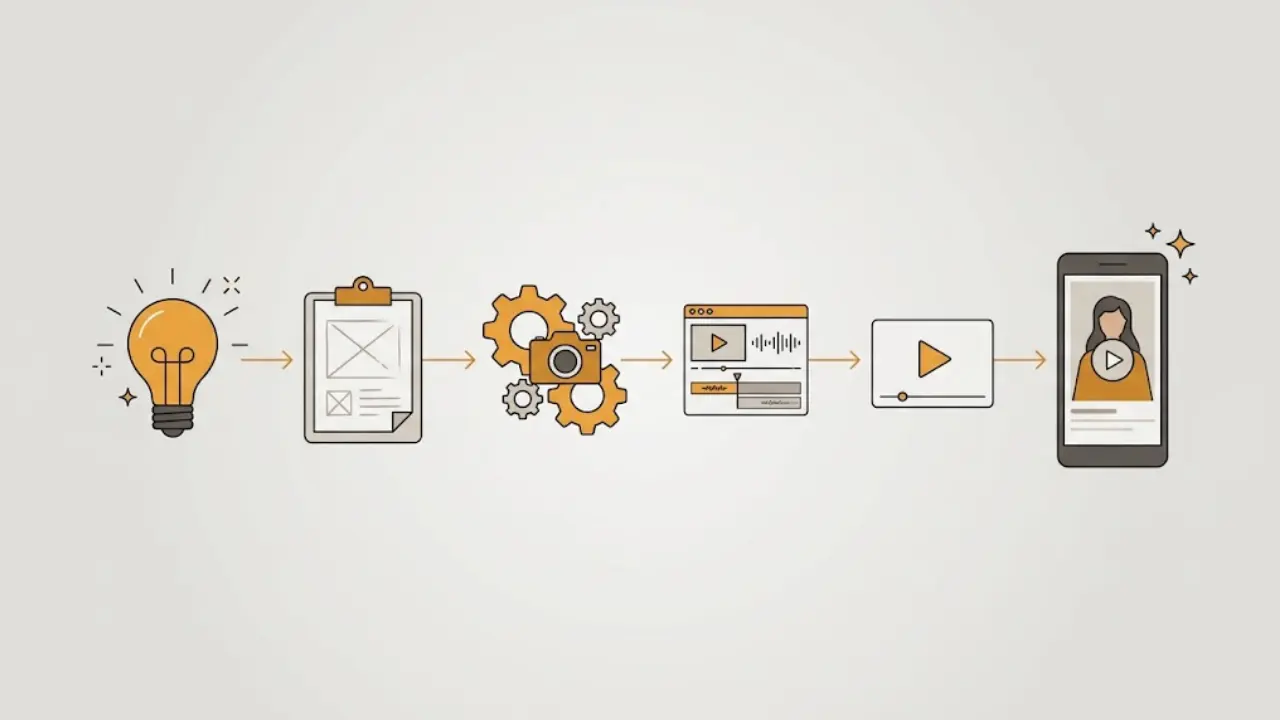
Pick a voice that sounds calm and credible. A finance channel does not want a hype voice. It wants steady and clear. Faceless Lab includes more than 200 ElevenLabs voices, so you can audition several and keep the one that sounds like a person your audience would actually take money advice from. Consistency matters, so once you find the voice, keep it across every video.
Match visuals to the words. Finance viewers respond to clean charts, simple icons, and readable numbers on screen. Faceless Lab draws from multiple video and image models through Replicate and offers 39 visual styles, so you can lock a single calm, professional look and reuse it. One look across the channel builds recognition. A different style every video breaks it.
Caption everything, and caption it accurately. Most Shorts are watched on mute, and finance terms are easy to mishear. Faceless Lab adds synced captions automatically, which keeps viewers reading along and helps when a viewer needs to see a term like "APY" spelled correctly rather than guessed by ear.
Let music sit in the background. A soft, neutral track keeps energy up without competing with the explanation. Faceless Lab selects fitting background music for you, and you can swap it if the mood is off.
5. How to make a faceless finance video inside Faceless Lab
Here is the actual workflow, start to finish. This is how I would produce a finance Short today.
- Start from a topic or a script. Type a finance idea like "why an emergency fund beats investing first" or paste a script you already have. Faceless Lab turns it into a structured video plan.
- Choose a structure. Pick one of the eight built-in video structures. For finance, a hook-then-explain-then-payoff structure works well.
- Pick your voice. Audition a few of the 200+ ElevenLabs voices and choose one calm, credible voice you will keep for the whole channel.
- Lock a visual style. Choose one of the 39 styles that looks clean and professional, then reuse it every time so the channel has a consistent identity.
- Review the script and check the numbers. This is your editorial pass. Read every figure and rate, confirm it is current, and trim anything you cannot verify. Add a short "general information, not financial advice" line if the topic needs it.
- Generate. Faceless Lab assembles the voiceover, visuals, music, and synced captions into a publish-ready Short, usually in a couple of minutes.
- Schedule and publish. Connect your platforms and let Faceless Lab publish on a schedule. Auto-publish covers platforms like YouTube, Instagram, Facebook, and LinkedIn. TikTok stays manual by design, since it needs your explicit consent for each post, so you approve those yourself.
💡 Ready to try it on your first finance topic? Create your first faceless finance video and see a publish-ready Short in minutes.
A word on Autopilot. If you want the channel to keep running with less hands-on time, Autopilot (currently in beta) can carry more of the routine so you focus on choosing topics and checking accuracy. Treat it as a helper that still needs your editorial eye on the numbers.
6. Where a faceless finance channel is and isn't the right choice
I would rather you start with clear eyes than quit in a month, so here is the honest version.
Finance is a great fit if:
- You enjoy explaining money clearly and can sanity-check figures.
- You want high RPM and are willing to be accurate to earn it.
- You like the idea of an evergreen library where old videos keep earning.
Finance is a harder fit if:
- You do not want to verify a single number. Accuracy is not optional in this niche, and getting it wrong costs trust fast.
- You are hoping to give specific investment advice. Educating is fine. Telling strangers what to buy crosses into territory you probably do not want, and platforms treat it carefully.
- You need instant results. Finance rewards consistency over months, not a single viral spike.
Where Faceless Lab helps and where it does not. Faceless Lab removes the production grind: scripting a first draft, voiceover, visuals, music, captions, scheduling, and publishing. What it does not do is know today's interest rate or make an editorial judgment for you. That part stays human, and honestly that is the part that makes a finance channel worth trusting.
7. How to post consistently and turn finance views into income
A finance channel is a compounding asset, so the winning move is a rhythm you can keep.
Batch, then drip. Sit down once, produce five to ten finance Shorts in an afternoon, and let Faceless Lab publish one per day. A steady daily post beats a burst followed by silence, because the algorithm rewards channels that show up.
Stack your income streams. Finance channels earn from more than ad revenue. Affiliate links to tools and apps you genuinely use, digital products like budgeting templates, and sponsorships all layer on top of RPM. High-intent finance viewers convert better than most audiences, which is part of why the niche is so valuable.
Track what lands. Watch which formats and hooks hold retention, then make more of those. One number-reveal that performs is a template for the next twenty videos.
If this niche fits you, the fastest way to start is to make one finance Short today and see how it feels. You can try it free, and if you get stuck, we actually answer. If a video does well, reposting it across your platforms costs you nothing and doubles its reach, and if you love the tool, our affiliate program lets you earn by sharing it. Try Faceless Lab free and make your first faceless finance video
Read more
- What it really takes to monetize a faceless YouTube channel
Frequently asked questions
Are faceless finance videos really one of the highest-paying niches?
Yes. Finance consistently ranks among the top faceless niches for RPM, the amount you keep per 1,000 monetized views. Publicly reported creator data commonly puts US finance audiences in the $15 to $30 range, and some sub-topics like credit, investing apps, and business tools go higher. For comparison, history and story channels often sit around $2 to $4. The reason is advertiser demand: banks, fintech apps, and B2B software bid heavily for finance viewers because they have high commercial intent, and those bids flow into your earnings. Accuracy and consistency are what let you actually capture that value over time.
Do I need to be a finance expert to start a faceless finance channel?
No, but you do need to be accurate. You are curating and explaining clear, verifiable information, not giving personalized investment advice. Stick to widely accepted concepts like budgeting, saving, and how common accounts work, and always confirm your numbers and rates before publishing. Adding a short "general information, not financial advice" line keeps you on the right side of that boundary. If you enjoy explaining money in plain language and you are willing to fact-check, you can run a strong channel without any formal credentials.
How long should a faceless finance video be?
For Shorts, aim for 30 to 60 seconds and cover exactly one idea. Finance viewers reward clarity, so a tight single-concept video usually holds retention better than a rushed video trying to teach three things. One idea per video also gives you an endless content calendar, because every sub-topic becomes its own Short. If you want to go long-form later, you can, but starting with short single-concept videos is the fastest way to build a library and learn what your audience responds to.
Can Faceless Lab publish my finance videos automatically?
Yes, for most platforms. Faceless Lab can schedule and auto-publish to platforms like YouTube, Instagram, Facebook, and LinkedIn, so you can batch a week of finance Shorts and let them go out one per day. TikTok is intentionally excluded from fully automatic publishing because it requires your explicit consent for each post, so you approve those yourself. There is also an Autopilot mode, currently in beta, that carries more of the routine while you stay in charge of topic selection and checking that every number is correct.
How do I keep my finance content accurate when AI writes the script?
Treat AI as your first-draft writer and yourself as the editor. Faceless Lab drafts the script fast, but you do the verification pass: check every figure, rate, and date, confirm it is current, and cut anything you cannot back up. AI does not know today's savings rate or a recent tax change, so that judgment stays with you. Softening a claim to a range or removing an unverifiable number is always better than publishing something wrong, because in finance one bad number can cost you the trust of your whole audience.
How often should I post to grow a faceless finance channel?
Consistency beats intensity. A steady daily post generally outperforms a burst of ten videos followed by weeks of silence, because platforms reward channels that show up reliably. The practical approach is to batch: produce five to ten finance Shorts in one session, then let Faceless Lab publish one per day on a schedule. Finance rewards patience, so think in months rather than days. Track which hooks and formats hold retention, then make more of those, and the channel compounds as your evergreen library grows.
Related articles
Write Faceless Video Titles, Captions and Hashtags That Get Found
A good faceless video still stalls with a vague title. Here is a simple routine for titles, captions and hashtags that helps the right viewers and platforms find your videos.
Style a Dream Room Every Day With Faceless Interior Design Videos
Start a faceless interior design channel with AI rooms, a calm voiceover and captions. Batch a week of home decor videos in one afternoon and schedule them to post themselves.
A Daily Horoscope Channel Is the Easiest Faceless Series to Keep Alive
Horoscopes come with a built-in content calendar. Here is how to pick a lane, build one repeatable format and post daily or weekly astrology readings without ever showing your face.