Faceless Video Ideas That Are Actually Getting Views
Stuck on what to post? Here are faceless video ideas grouped into eight repeatable buckets, plus 25 concrete prompts and how to turn any of them into a finished video fast.


Roberto Pasqualini
CMO at Faceless Lab
A practical bank of faceless video ideas, grouped into eight repeatable buckets, with 25 concrete prompts and a fast way to turn any of them into a finished video.
What faceless video ideas should you actually post right now? That is the question that stops most faceless channels before they ever find a rhythm. The editing is not the hard part anymore, and the tools are not the hard part either. The hard part is opening a blank page every day and deciding what the video is about. I am Roberto, co-founder of Faceless Lab, and I run faceless channels daily, so I have stared at that blank page more times than I want to admit. This is the idea bank I wish I had when I started.
Executive Summary: The fastest way to keep a faceless channel alive is to stop hunting for one perfect viral idea and start working from repeatable buckets. There are eight formats that carry almost every faceless niche, from list videos and story videos to explainers, quizzes and reactions to trends. Pick two or three buckets that fit your niche, write ten hooks inside each, and you have a month of content before you touch a single video. In Faceless Lab you turn any of those hooks into a publish-ready short in minutes, then schedule the batch so the channel keeps posting while you go back to living your life.
Table of Contents
- Why "what do I post" is the real bottleneck
- The eight idea buckets that fit almost any niche
- 25 faceless video ideas you can use this week
- How to turn any idea into a finished video in Faceless Lab
- Match the idea to the right style and voice
- Where this approach fits, and where it does not
- Conclusion
1. Why "what do I post" is the real bottleneck
Most people quit faceless content for one reason. They can make one video, maybe five, and then they run dry. The channel goes quiet for two weeks, the algorithm forgets it exists, and the whole thing feels like a failure.
The problem is almost never talent. It is supply. Short-form rewards consistency more than polish, and consistency needs a steady stream of ideas you can execute without agonizing over each one. When I timed my old manual process, a single short ate up more than three hours between scripting, voiceover, sourcing visuals, cleaning captions, finding music and syncing it all together. At that cost per video, of course you run out of steam. You are not out of ideas, you are out of hours.
So the goal here is not one clever idea. The goal is a system that produces ideas on demand, and a workflow cheap enough that posting three or five times a week stops feeling like a second job.
2. The eight idea buckets that fit almost any niche
Instead of chasing random trends, think in buckets. These eight cover the vast majority of faceless videos that perform, and each one maps to a repeatable structure you can reuse forever.
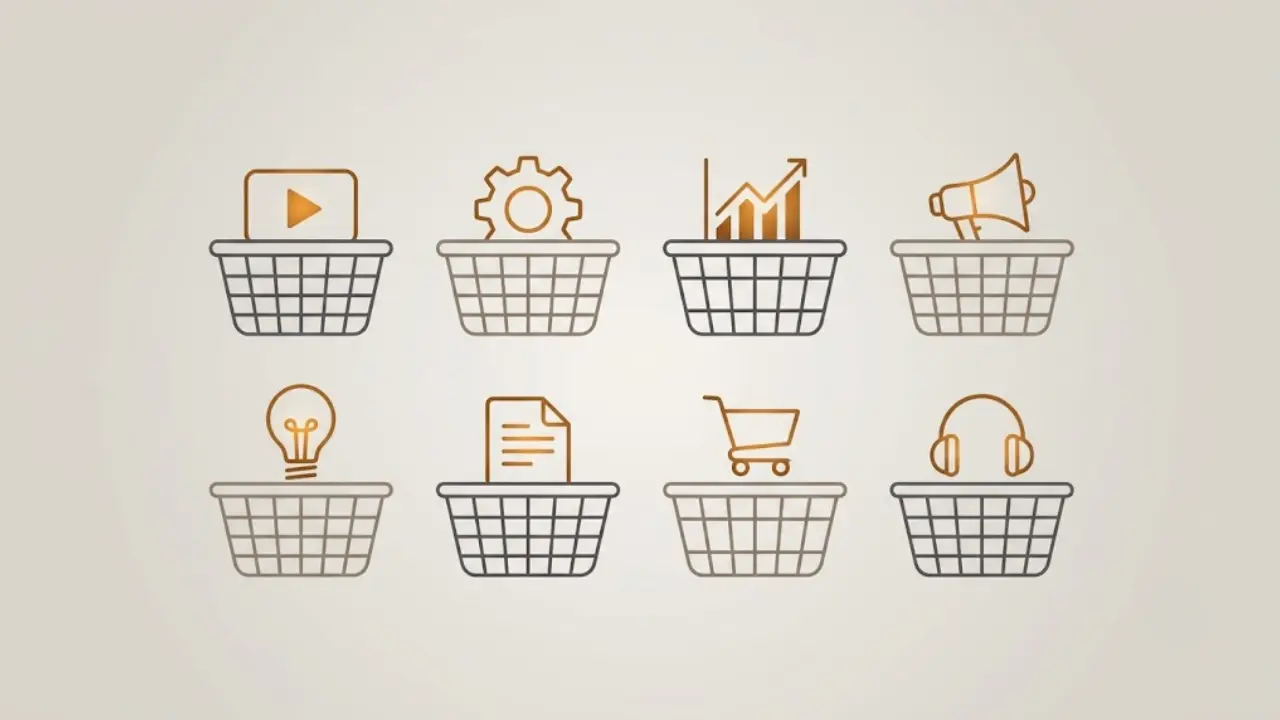
- List and ranking videos. "Top 5", "worst to best", "things nobody tells you about X". Easy to script, easy to watch, endlessly repeatable.
- Story videos. A single narrative with a hook, a turn and a payoff. Reddit-style confessions, historical events, true crime, or original short fiction.
- Explainer videos. "How X actually works", "why Y happened". You take one idea and make it click in 40 seconds.
- Fact and did-you-know videos. Rapid, surprising facts around a theme. Space, the human body, money, history.
- Quiz and interactive videos. "Can you name all 5", "would you rather", "guess the country". These pull comments and rewatches.
- Motivation and mindset videos. Short, punchy, quotable. A voice, a visual, a line that people save and share.
- Reaction to trends videos. You take whatever is spiking this week, a sports moment, a new AI model, a seasonal event, and give it your niche's angle.
- Tutorial and tips videos. One small, useful thing done step by step. These build trust and get saved.
Pick two or three buckets that match your niche and your energy. A finance channel might live in explainers, facts and lists. A story channel might live in story videos and reactions. You do not need all eight. You need a couple you can refill every week.
3. 25 faceless video ideas you can use this week
Here are concrete prompts, grouped by bucket. Treat each one as a template you can swap your topic into.

List and ranking
- 5 tools that quietly save you an hour a day
- Ranking every [category] from worst to best
- 7 things I wish I knew before I started [topic]
- The 3 mistakes that kill most [niche] beginners
Story
- The scam that fooled an entire country
- A Reddit story about the worst roommate ever
- The invention that was ignored for 50 years
- One decision that changed a whole industry
Explainer
- Why your coffee costs what it costs
- How a single ship blocked global trade
- Why some songs get stuck in your head
- What actually happens when a company goes bankrupt
Fact and did-you-know
- 5 facts about the ocean that sound fake
- Money facts your bank hopes you ignore
- Things your body does that science cannot fully explain
Quiz and interactive
- Can you name all 5 before the timer ends
- Would you rather: [option A] or [option B]
- Guess the country from three clues
Motivation and mindset
- The one habit that separates finishers from starters
- What nobody tells you about staying consistent
- A 30-second reason to not give up today
Reaction to trends
- What this week's [sports or news moment] teaches about [your niche]
- Breaking down the new [AI model or product] in 40 seconds
- The seasonal shift smart creators are already planning for
Tutorial and tips
- Set up [thing] in under a minute
- The fastest way to [small useful task]
- One setting most people never change
That is 25 starting points. Change the topic to your niche and you have a week of posts. Write ten more inside your two favorite buckets and you have a month.
4. How to turn any idea into a finished video in Faceless Lab
An idea bank only helps if you can execute fast. Here is the exact path from a line in your notes to a scheduled post.
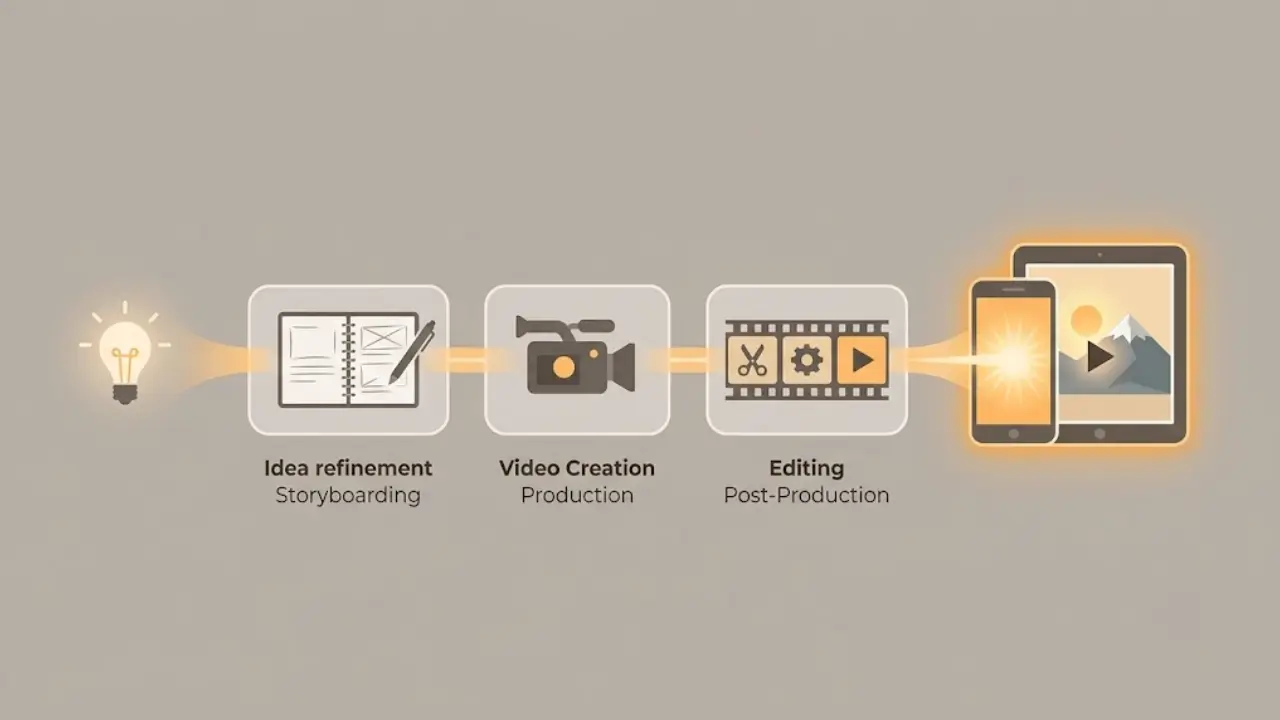
- Drop in your idea. Paste a topic or a full script. If you only have the hook, the app writes the script for you around it.
- Pick a structure. Choose from eight built-in structures that match the buckets above, so a list idea gets a list format and a story idea gets a narrative arc.
- Choose voice and style. Assign one of 200+ ElevenLabs voices and one of 39 visual styles so the video matches your channel's look and tone.
- Let it build the video. Faceless Lab generates the voiceover, visuals, background music and captions together, so you skip the app-switching entirely.
- Review and tweak. Edit the script, swap the voice, adjust captions or visuals before you finalize. You keep control, the machine keeps the grind.
- Schedule and publish. Queue the video to your connected platforms and let it post on a rhythm. Autopilot, currently in beta, can run this hands-off, and you can build a Series to keep a theme going across many videos.
One honest note on publishing. Fully automatic auto-publish covers your main platforms, and TikTok is the exception, since it requires your explicit consent for each upload rather than a silent hands-off post. So for TikTok you approve, for the rest you can let it run.
💡 Ready to try it on your own idea? Start free and make your first video. No credit card to begin.
5. Match the idea to the right style and voice
The same idea lands very differently depending on delivery, so this is where the buckets get their personality.
- Story and motivation tend to work with a warmer, slower voice and a cinematic or moody visual style, so the words have room to breathe.
- Lists, facts and explainers work with a clear, energetic voice and clean, punchy visuals that keep pace with quick cuts.
- Quizzes and reactions work with a bright, conversational voice and bold on-screen text that invites a comment.
With 200+ voices and 39 styles, you can give each bucket its own signature and still keep everything under one channel identity. My advice is to lock a default voice and style per bucket early, so you are not re-deciding on every video. That single habit is what makes daily posting sustainable.
6. Where this approach fits, and where it does not
I would rather you succeed than oversell you, so here is the honest line.

This fits you if you want to post consistently on short-form, you are comfortable letting AI handle production while you steer topics and hooks, and you value speed and rhythm over hand-crafting every frame. It fits faceless YouTube channels, digital product creators and small businesses that need a steady content stream without a production team.
This is not for you if you need on-camera personality-led content, heavily custom motion graphics, or one long flagship video a month where every second is bespoke. Faceless Lab is built for volume and consistency on short-form, not for a single cinematic masterpiece. If your whole strategy is one big video, a manual editor still makes more sense.
On price, you can start on a Free trial at €0 to test the workflow, then move to Starter at €19, Growth at €59 or Pro at €149 as your posting volume grows. Start small, prove the rhythm works for you, then scale the plan to match your output.
7. Conclusion
The verdict is simple. Do not wait for one perfect viral idea. Build from buckets, keep an idea bank you can refill in twenty minutes, and use a workflow fast enough that posting daily stops being a chore. That is the whole game on short-form, and it is very winnable once the idea bottleneck is gone.
Try it free, run five ideas through it this week, and see which bucket your audience rewards. If a video works, repost it to your other channels and squeeze every view out of it, and if you enjoy the tool, our affiliate program is an easy way to earn while you share it. Ready to turn your next idea into a finished short? Try Faceless Lab free.
Read more
Frequently asked questions
What are the best faceless video ideas for beginners?
Start with buckets that are quick to script and easy to watch. List videos, did-you-know facts and short story videos are the most beginner-friendly, because the structure does half the work for you. Pick one bucket, write ten hooks inside it, and post those before you branch out. This keeps your early videos consistent in style, which helps both you and the algorithm learn what your channel is about. Once you have a rhythm, add a second bucket like quizzes or explainers to keep the feed varied without overwhelming yourself.
How do I come up with faceless video ideas every day?
Do not brainstorm daily, batch it instead. Once a week, sit down with two or three idea buckets and write ten hooks in each by swapping your niche topic into proven templates. That gives you twenty to thirty ideas in one sitting, which covers a full posting week with room to spare. Keep a running note of hooks that performed and variations you want to try. The daily version of this task is exhausting and the weekly batch version is easy, so the trick is simply changing when you do the thinking, not how hard you think.
What kind of faceless videos get the most views?
It depends on your niche, but story videos, list and ranking videos, and reaction-to-trend videos tend to travel the furthest because they carry a built-in hook and a clear reason to keep watching. Story videos hold attention through a narrative payoff, lists promise a countable takeaway, and trend reactions ride existing search and interest. The real driver, though, is consistency and a strong first three seconds. A good bucket with a weak hook underperforms, and an average idea with a great hook can still take off.
Do I need to show my face or record my voice?
No. Faceless content is built to work without your face or your own voice. In Faceless Lab you choose from 200+ AI voices for the narration, and the visuals, captions and music are generated for you, so nothing on screen or in the audio has to come from a camera or microphone. This is what makes the format sustainable for people who do not want to be on camera or who want to run multiple channels at once. You stay behind the scenes and steer the topics, hooks and style.
How many faceless videos should I post per week?
Three to five per week is a strong, sustainable target for most channels, and daily is better once your workflow is fast enough to support it without burning you out. Short-form rewards consistency, so a steady three posts a week beats ten videos in one burst followed by two silent weeks. The reason batching and scheduling matter so much is that they let you produce in one sitting and release on a rhythm, which protects both your consistency and your sanity. Start at three, prove you can hold it, then push higher.
Can I schedule faceless videos to post automatically?
Yes. In Faceless Lab you can batch videos and schedule them to publish on your connected platforms on a set rhythm, and Autopilot, currently in beta, can run this largely hands-off. One exception is TikTok, which requires your explicit consent for each upload rather than a fully silent post, so you approve those while the rest can run automatically. This is what turns an afternoon of production into weeks of consistent posting, since the videos keep going out while you move on to other work or plan your next batch of ideas.
Related articles
Post Your Faceless Videos When Your Audience Is Actually Watching
The best times to post faceless videos on YouTube Shorts, TikTok and Instagram Reels, why the first hour decides your reach, and how to automate it so you never watch the clock.
Make Faceless ASMR Videos Without Recording a Single Sound
Sleep and relaxation content is one of the few niches that stays calm and keeps paying. Here is how to build a faceless ASMR channel with AI voice, visuals and music, no camera and no mic needed.
Start a Faceless Psychology Channel That Turns Everyday Behavior Into Daily Shorts
Psychology is one of the most watchable faceless niches going. Here is how to pick a sub-angle, script hooks that hold attention, and post human-behavior shorts every day without showing your face.