What It Really Takes to Monetize a Faceless YouTube Channel
Can a faceless YouTube channel actually pay? Here are the real 2026 Partner Program thresholds, the income math nobody shows you, and the posting rhythm that gets you there without showing your face.


Roberto Pasqualini
CMO at Faceless Lab
The real subscriber and watch-hour thresholds, the income math nobody puts on screen, and the posting rhythm that gets a faceless channel paid.
Can you actually monetize a faceless YouTube channel without ever showing your face or recording your own voice? Yes, and the bar is a lot more concrete than most videos make it sound. I run three faceless channels myself, and the thing that separates the ones that get paid from the ones that quietly stall is almost never the editing quality. It comes down to whether you keep publishing long enough to clear YouTube's monetization thresholds, and whether you build income streams that do not depend on ad revenue alone.
Executive Summary: To monetize a faceless YouTube channel you have to join the YouTube Partner Program, which means 1,000 subscribers plus either 4,000 valid public watch hours in the last 12 months or 10 million valid public Shorts views in 90 days. There is also an earlier tier at 500 subscribers that unlocks fan funding features but not ad revenue yet. Faceless channels can clear these bars because the format scales cleanly: you own the topics and hooks while AI handles script, voiceover, visuals, captions and music, so you can publish daily instead of once a week. The channels that get paid are almost always the consistent ones. Because Shorts ad rates are low, the smartest faceless creators stack affiliate links, digital products and sponsorships on top of AdSense. Faceless Lab exists to take the production grind off your plate so that daily cadence is actually sustainable.
Table of Contents
- What "monetized" really means on YouTube in 2026
- Why faceless channels can clear the bar
- The income math nobody shows you
- The one habit that gets you paid: cadence
- How to build a monetizable faceless channel inside Faceless Lab
- Income beyond ads: the stack that actually pays
- Where a faceless channel is and is not the right move
1. What "monetized" really means on YouTube in 2026
Before you chase a payout, get clear on what you are actually chasing. Monetization on YouTube means acceptance into the YouTube Partner Program (YPP), and in 2026 it works in two tiers.
The early access tier. You can apply once you hit 500 subscribers, plus 3 public uploads in the last 90 days, plus either 3,000 valid public watch hours in the last 12 months or 3 million valid public Shorts views in the last 90 days. This tier unlocks fan funding tools like channel memberships, Super Thanks and shopping. It does not turn on ad revenue yet, so treat it as a warm-up lap.
The full monetization tier. This is the one most people mean when they say "monetized." You need 1,000 subscribers, plus either 4,000 valid public watch hours in the last 12 months or 10 million valid public Shorts views in the last 90 days. Clear that and you unlock ad revenue, YouTube Premium revenue share and the rest of the toolkit.
A few requirements sit underneath both tiers and quietly disqualify people who ignore them:
- Two-step verification has to be active on your Google account.
- No active Community Guidelines strikes.
- Your content has to follow the monetization policies, which matters for faceless channels built on reused or lightly edited third-party footage.
2. Why faceless channels can clear the bar
A traditional creator is the bottleneck in their own channel. If they are sick, traveling or just out of ideas, the uploads stop. A faceless channel does not have that dependency, and that is the whole reason the format can hit monetization thresholds faster than people expect.
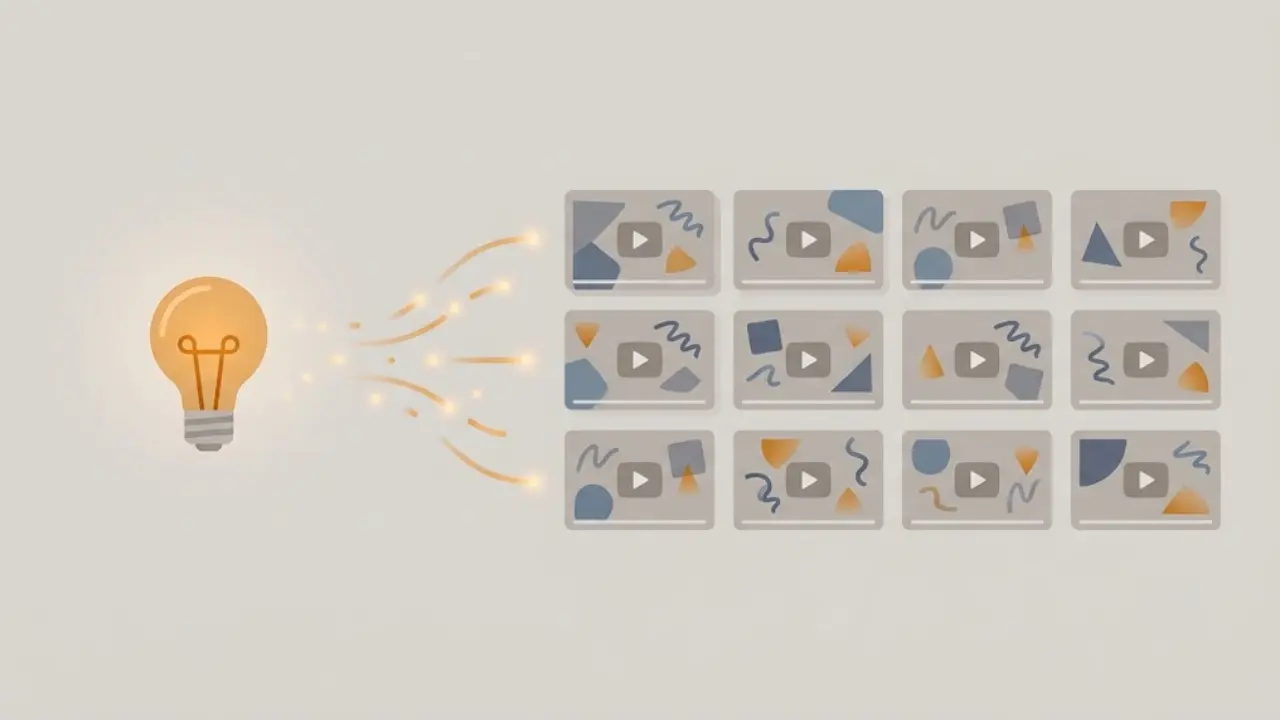
The format scales. Because there is no face and no live recording, one idea can become five videos, and five ideas can become a full week of posts. You are directing, not performing.
Repetition works in your favor. Faceless niches like motivation, "did you know" facts, history explainers, Reddit-style stories and top-5 rundowns reward a consistent template. Viewers come for the format, so a repeatable structure that would feel stale on a personal vlog actually builds trust here.
Watch time is winnable. Clean captions, a tight hook in the first three seconds and a script that never sags are what push both watch hours and Shorts views up. None of that requires you on camera. It requires a good system.
The catch is volume. To clear 1,000 subscribers and either watch-hours or Shorts-views target, you generally need to be posting most days for weeks or months. That is exactly where hand-editing every video kills channels before they qualify.
3. The income math nobody shows you
Here is the honest part that the "I made $10k in a month" thumbnails skip. Faceless income is real, but it is a range, and it depends heavily on niche and format.
Shorts pay little per view. Short-form ad revenue is spread across a shared pool, so effective rates are low compared to long-form. High Shorts view counts are great for growth and for clearing the 10 million-view path, but they are rarely the main income line.
Long-form RPM swings by niche. A finance, tech or business faceless channel can earn many times the RPM of an entertainment or kids-style channel, because advertisers pay more to reach those viewers. Two channels with identical view counts can earn very different amounts for this reason.
Ad revenue is usually the floor, not the ceiling. The faceless creators I know who actually make a living treat AdSense as one stream among several. We will cover the rest in section 6.
💡 Do not model your business on ad revenue alone before you are even monetized. Model it on cadence first. Views and subscribers are the input; every income stream is downstream of consistent publishing.
4. The one habit that gets you paid: cadence
If I could give a new faceless creator only one instruction, it would be this: pick a sustainable posting schedule and protect it like a job.

Cadence does three things at once. It feeds the algorithm the fresh uploads it rewards. It compounds your watch hours and Shorts views toward the thresholds. And it gives you enough at-bats that a few videos can break out and pull the whole channel up.
The problem is that cadence and quality usually fight each other. Posting daily by hand means cutting corners, and cutting corners means videos that do not hold attention, which means the watch hours never accumulate. The way out is to remove the manual production work so that "post every day" stops being a heroic effort.
A realistic weekly rhythm looks like this:
- Batch on one day. Sit down once and generate a week or two of videos in a single session.
- Schedule the rest. Queue them to publish on a steady drip instead of dumping them all at once.
- Review the numbers weekly. Watch which hooks and topics land, then make more of those.
That rhythm is the entire reason we built Faceless Lab the way we did.
💡 Want the batching side in detail? See our guide on how to batch a month of faceless videos in one afternoon. [batch a month of faceless videos]
5. How to build a monetizable faceless channel inside Faceless Lab
This is the part where the theory turns into published videos. Here is the exact workflow I use to keep three channels fed without spending my weekends editing.
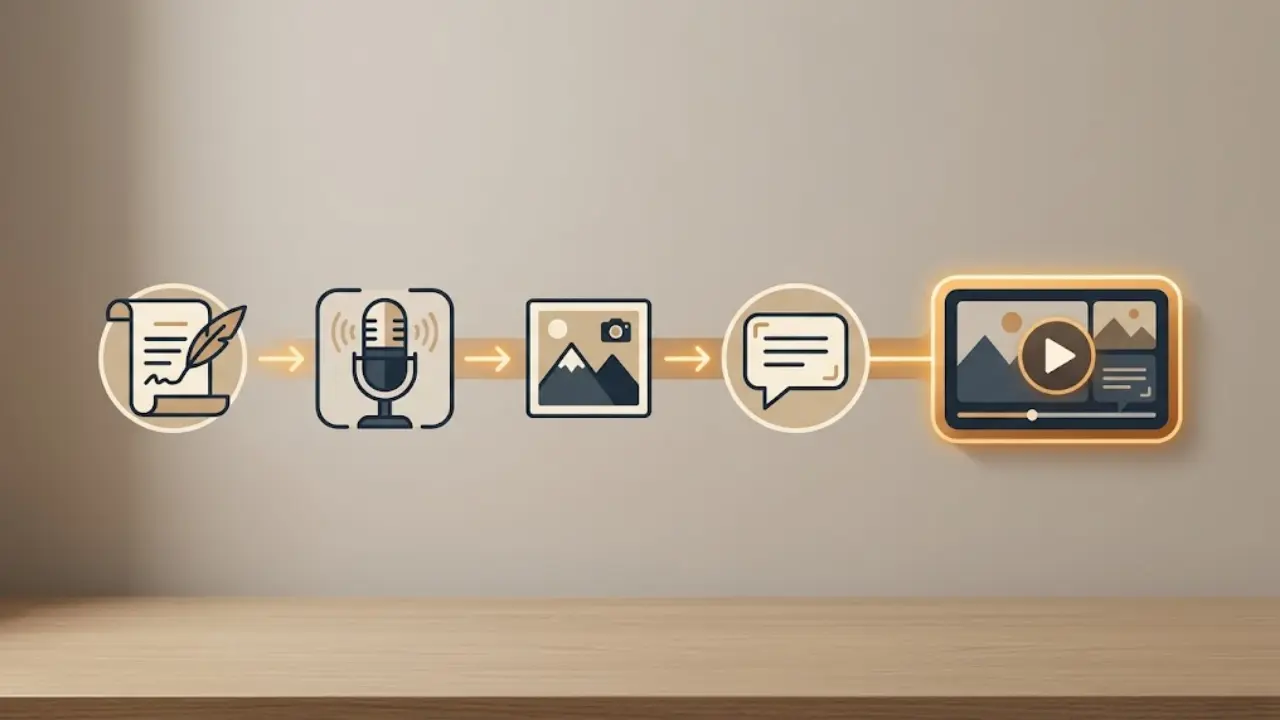
Step 1: Start from an idea or a script. Type a topic, a hook or a full script into Faceless Lab. If you only have a rough idea, the AI writes the script for you. You stay in control of the angle.
Step 2: Pick a structure. Faceless Lab ships with 8 video structures, so you can match the format to your niche, whether that is a fact list, a story, a top-5 or a straight explainer.
Step 3: Choose a look and a voice. Select from 39 visual styles to keep your channel's identity consistent, and pick from 200+ ElevenLabs voices for a voiceover that does not sound robotic. Visuals are generated through multiple models on Replicate, so you are not locked into one look.
Step 4: Let it assemble the full video. Voiceover, visuals, background music and captions are produced and synced automatically. You get a publish-ready file in minutes instead of hours.
Step 5: Batch and set up a Series. Instead of making one video at a time, use Series to keep a theme running so your channel always has something in the pipeline. Batch a week or two in a single sitting.
Step 6: Schedule and auto-publish. Queue videos to post on a steady cadence to YouTube and your other platforms. Autopilot (currently in beta) can keep the pipeline running with minimal input. One honest note: fully automatic auto-publish excludes TikTok, which requires your explicit consent for each post, so TikTok stays a quick manual confirmation.
💡 Ready to try the workflow end to end? Start free and generate your first video.
6. Income beyond ads: the stack that actually pays
Ad revenue is the milestone everyone fixates on, but it is often the smallest slice once a faceless channel matures. Here is the stack that turns a monetized channel into a real income.
Affiliate links. Recommend tools, products or resources that fit your niche and earn a commission on every sale from your description links. This works from day one, before you are even in YPP.
Your own digital products. A template pack, an ebook, a preset or a mini-course sells especially well on how-to and educational faceless channels. You keep the full margin.
Sponsorships. Once you have consistent views, brands will pay for a mention or a dedicated segment. Faceless channels can command solid rates because the audience is niche and engaged.
Channel memberships and Super Thanks. These unlock at the earlier 500-subscriber tier, so fan funding can start before ad revenue does.
The through-line is the same as everything else in this guide. Every one of these streams grows with your view count, and your view count grows with cadence.
7. Where a faceless channel is and is not the right move
I am not going to pretend faceless is the answer for everyone, because it is not.

A faceless channel is a strong fit when:
- You want to build a content business without being on camera or being tied to a personal brand.
- You are marketing a product, a service or a digital offer and need a steady stream of top-of-funnel content.
- You can commit to a cadence for a few months before monetization kicks in.
- Your niche rewards a repeatable format, like facts, stories, motivation, history or explainers.
A faceless channel is the wrong move when:
- You are hoping to be monetized in a week. The thresholds take real time and real volume.
- Your niche depends on a personality or a face that viewers want to see, like personal vlogging or reaction content.
- You plan to reupload other people's footage with minimal changes. That runs straight into YouTube's reused-content policies and can block monetization entirely.
- You are not willing to review your numbers and adjust. Automation handles production, not strategy.
Being honest about this upfront saves you months. If your situation lines up with the first list, faceless is one of the most leverage-friendly formats there is.
Conclusion
So, what does it really take to monetize a faceless YouTube channel? Clear thresholds you can look up (1,000 subscribers plus watch hours or Shorts views), a niche that rewards a repeatable format, income streams that go beyond AdSense, and above all a posting cadence you can actually sustain for months. The production work is the part that used to make that cadence impossible. It does not have to anymore.
If you have been stuck making one video at a time, try building your next week of content in a single sitting and letting it publish on a schedule. That one change is what moved my own channels from stalled to monetized.
If this guide helped, repost it to whoever is grinding on their own faceless channel, and if you want to earn while you share, our affiliate program pays you for every creator you send our way.
Try Faceless Lab free and start publishing consistently.
Read more
- How to batch a month of faceless videos in one afternoon.
- 9 faceless video niches that still work (and 3 that are getting harder).
- How to auto-publish faceless videos hands-off.
Frequently asked questions
Can you monetize a faceless YouTube channel in 2026?
Yes. YouTube's Partner Program does not require you to show your face or use your own voice, so faceless channels qualify the same way any channel does. For full ad monetization you need 1,000 subscribers plus either 4,000 valid public watch hours in the last 12 months or 10 million valid public Shorts views in 90 days. You also need two-step verification and no active Community Guidelines strikes. The format actually scales well toward those thresholds, because you can publish daily without being on camera, which is exactly what feeds watch hours and Shorts views over time.
How many subscribers do you need to make money on YouTube?
There are two thresholds. At 500 subscribers, with 3 uploads in 90 days and either 3,000 watch hours or 3 million Shorts views, you can access fan funding features like memberships and Super Thanks, though not ad revenue yet. At 1,000 subscribers, with 4,000 watch hours or 10 million Shorts views, you unlock full monetization including ads. Outside YouTube itself you can earn from day one through affiliate links and your own products, which do not require any subscriber count at all.
How long does it take to monetize a faceless channel?
It varies widely, from a couple of months to a year or more, depending on your niche, cadence and how well your hooks land. The single biggest factor is how consistently you publish. A channel posting most days in a hungry niche accumulates watch hours and Shorts views far faster than one posting once a week. There is no shortcut around the thresholds, but removing the production grind so you can post daily is the most reliable way to get there faster.
Do faceless YouTube channels make good money?
They can, but income is a range and depends heavily on niche. Short-form ad rates are low, so high Shorts views help growth more than they pad your paycheck. Long-form videos in niches like finance, tech or business earn much higher ad rates than entertainment. The creators who do best treat ad revenue as a floor and stack affiliate income, digital products and sponsorships on top. A faceless channel with a clear niche and consistent output can absolutely become a real income, but rarely from AdSense alone.
Is it against YouTube rules to use AI for faceless videos?
No, using AI to produce videos is allowed. What YouTube restricts is reused or minimally changed content, mass-produced spam, and anything misleading. As long as your videos add original value, with your own scripts, structure and creative direction, AI-assisted production is fine and monetizable. Where creators get into trouble is reuploading other people's footage with little transformation. Building your videos from your own ideas and scripts, the way a tool like Faceless Lab is designed to, keeps you on the right side of the policies.
What is the fastest way to grow a faceless channel toward monetization?
Consistency beats everything. Pick a niche with a repeatable format, batch your videos so producing them is fast, schedule them to publish on a steady drip, and review weekly which hooks and topics perform. Short-form is the quickest way to accumulate views for the 10 million Shorts path, while slightly longer videos build the 4,000 watch hours. Doing both, at a cadence you can sustain for months rather than a heroic week, is what actually clears the thresholds.
Related articles
Post Your Faceless Videos When Your Audience Is Actually Watching
The best times to post faceless videos on YouTube Shorts, TikTok and Instagram Reels, why the first hour decides your reach, and how to automate it so you never watch the clock.
Make Faceless ASMR Videos Without Recording a Single Sound
Sleep and relaxation content is one of the few niches that stays calm and keeps paying. Here is how to build a faceless ASMR channel with AI voice, visuals and music, no camera and no mic needed.
Start a Faceless Psychology Channel That Turns Everyday Behavior Into Daily Shorts
Psychology is one of the most watchable faceless niches going. Here is how to pick a sub-angle, script hooks that hold attention, and post human-behavior shorts every day without showing your face.