You Can Build a Fitness Channel Without Filming a Single Workout
Start a faceless fitness channel with AI visuals, a clear voiceover and captions. Batch a month of workout Shorts now, schedule them, and be ready before January hits.
Roberto Pasqualini
CMO at Faceless Lab
A practical guide to starting a faceless fitness channel with AI, from the workout formats people follow to batching and scheduling a whole month of Shorts before the new year rush.
Wondering how to start a faceless fitness channel when you do not want to film yourself training, or you do not have a gym, a ring light and a free hour every day? Fitness is one of the biggest topics on short-form video, and a lot of what people actually save is a clear tip, a simple routine or a form cue, none of which needs your face. We run faceless channels ourselves, and fitness is a niche we point creators to when they want something useful, repeatable and easy to batch. It is also a niche with a very clear calendar, because interest climbs every January, and early October is a good time to get ahead of it.
A faceless fitness channel works because the value is in the instruction, not in the person delivering it. You write a short script about one exercise, one routine or one habit, generate the visuals with AI, add a clear voiceover and big captions, and publish a vertical video in minutes. The formats people save are single exercise explainers, short routines, form checks, myth busters and habit tips, and all of them can be made without filming anything. Batch a month of videos in one sitting, keep one look and one voice, schedule the run, and your channel is already posting when the new year rush arrives.
Table of Contents
- Why fitness works as a faceless niche
- The faceless fitness formats people actually follow
- How to make a faceless fitness video inside Faceless Lab
- Keep your workouts clear and your channel recognizable
- Batch your January now and schedule the run
- Where a faceless fitness channel is and isnt the right choice
- Stay safe and credible with workout content
1. Why fitness works as a faceless niche
Most people who scroll fitness content are not looking for a personality. They want to know how to do a movement properly, what to do in ten minutes, or whether a popular claim holds up. That is information, and information travels well without a face.
Three things make fitness easy to run as a faceless channel:
- Topics never run out. Every exercise, every muscle group, every equipment setup and every time budget is a new video. Bodyweight at home, five-minute desk breaks, beginner kettlebell, mobility before bed: you can plan months of ideas in an afternoon.
- The format is built for short video. One cue, one move or one rule fits in 30 to 45 seconds, which is the length most Shorts and Reels viewers will actually finish.
- The calendar does the marketing. January resolutions, spring "get ready for summer" pushes, back to routine in September and holiday "stay active" tips give you a reason to post at every point in the year.
Fitness also has monetization paths that do not need your face, such as affiliate links to equipment and apparel, which we cover in our guide to monetizing a faceless YouTube channel.
2. The faceless fitness formats people actually follow
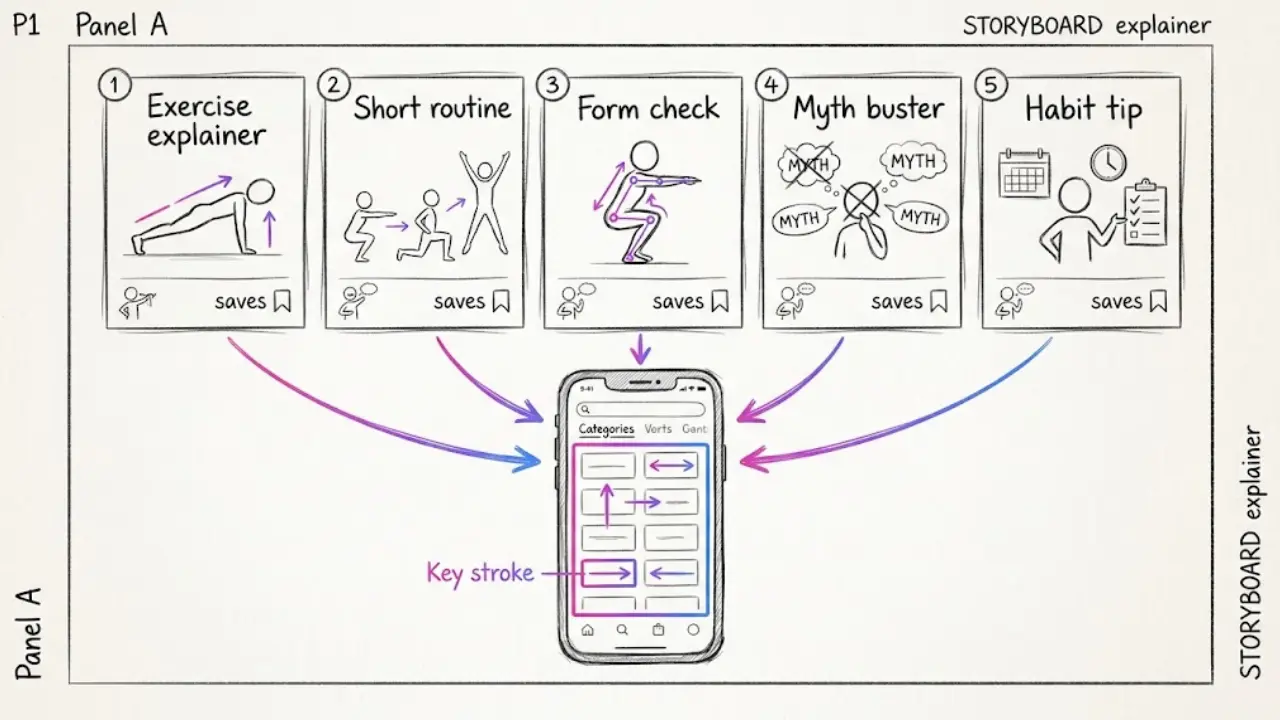
Fitness viewers save videos they plan to use, so the best formats are the ones that are easy to follow and easy to come back to. These are the ones we would test first.
Single exercise explainers
One movement, three cues. "The squat in three cues." "How to set up a push-up so your shoulders stay happy." Each explainer is its own video, and each one can be written in a few minutes. They are searched constantly, so they make a solid evergreen backbone.
Short routines
A routine people can do in the time they have. "A five-minute morning mobility flow." "A ten-minute bodyweight circuit with no equipment." Number the moves on screen so people can follow along without pausing.
Form checks and common mistakes
"Three mistakes people make on the deadlift." People like to know what they might be doing wrong, and the format gives you a natural hook for the first three seconds.
Myth busters
Short, calm takes on popular claims. Keep these careful and grounded, and only say what you can stand behind. A clear, honest myth buster builds trust faster than anything else in this niche.
Habit and consistency tips
"How to build a walking habit." "What to do on days you do not feel like training." These speak to a very large audience that is not an athlete and just wants to stay active, and they draw comments from people sharing their own routines.
3. How to make a faceless fitness video inside Faceless Lab
This is the loop we use on our own channels, from a one-line idea to a scheduled post.
- Start from an idea or a script. Type a topic like "three cues for a better squat" or paste a script you already wrote. Faceless Lab turns it into a short with scenes, and you can choose from 8 video structures, so a numbered routine is laid out differently from a myth buster.
- Choose a visual style. There are 39 styles, powered by multiple models through Replicate. For fitness, a clean, bold and simplified look usually reads better than a hyper-realistic one, because it keeps the focus on the movement.
- Pick a voice. You get 200+ ElevenLabs voices. A clear, steady voice with some energy suits instruction, and using the same one every time makes the channel sound like one channel.
- Let it build the video. Faceless Lab generates the voiceover, matches visuals to your script, adds captions and drops in background music. You get a publish-ready vertical video in minutes.
- Review and adjust. Swap an image, fix a caption, tighten a cue. This step matters more in fitness than in most niches, so check every video before it ships.
- Schedule and publish. Connect your accounts and Faceless Lab can publish to YouTube, Instagram, Facebook and LinkedIn for you. TikTok needs your explicit consent, so it is left out of fully automatic publishing.
That takes a workout idea to a scheduled post without opening a separate script tool, voice tool, stock library and editor.
💡 Ready to try it on your first workout? Create your first video free.
4. Keep your workouts clear and your channel recognizable
Fitness viewers follow people and brands they trust. A consistent look and sound is how a faceless channel earns that trust without a face.
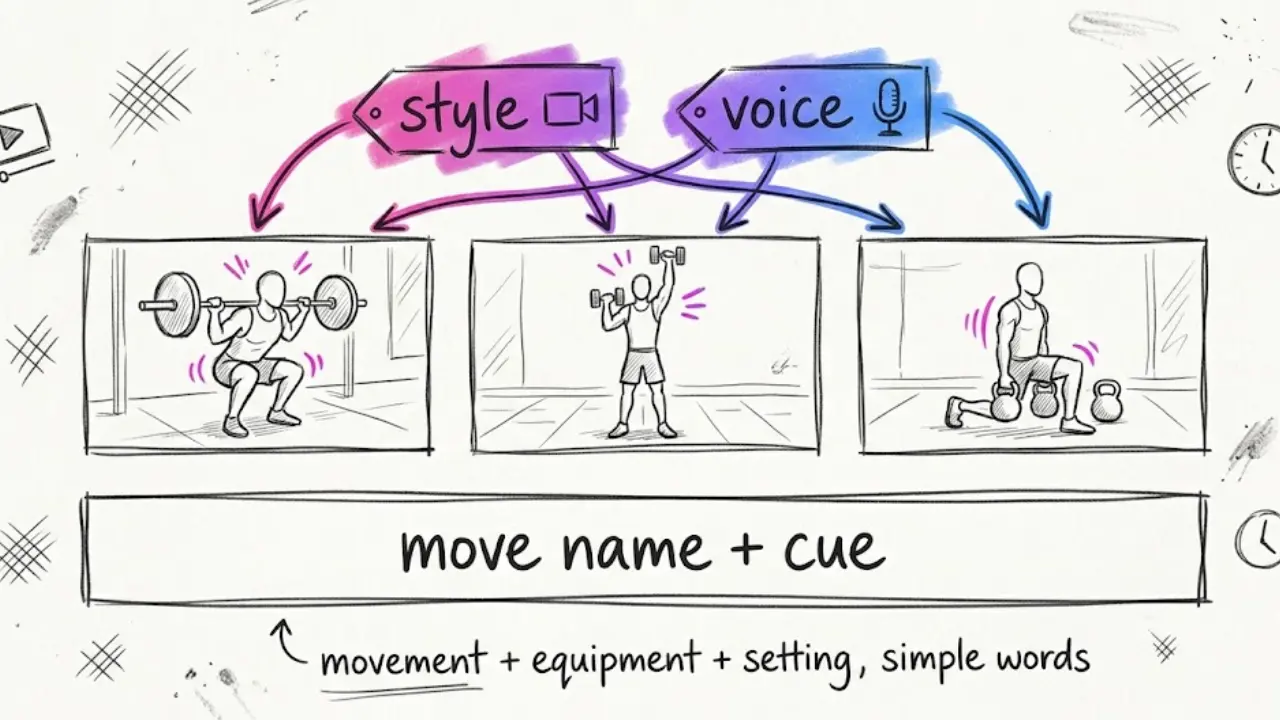
Lock one visual style. Choose a style in Faceless Lab and use it across every video. A recurring look tells viewers they are in the right place within a second of the video starting.
Lock one voice. The same ElevenLabs voice in every video becomes part of your brand within a week. For a deeper look at this choice, read our guide to adding a natural AI voiceover to your faceless videos.
Make captions do real work. Many people watch with the sound off, and in a workout video the captions often carry the instruction. Put the key cue or the move name on screen. Our guide to adding subtitles that keep people watching shows how.
Write prompts for clarity. Describe the movement, the equipment and the setting in simple words. "A simplified figure doing a bodyweight squat, side view, plain background" gives you cleaner results than "person exercising." Simple scenes also make it easier to spot problems during review.
5. Batch your January now and schedule the run
Posting a workout a day by hand is how people burn out in week three. Batching fixes it, and early October gives you a long runway.
Make a week in one sitting. Block an afternoon, pick five exercise or routine ideas and produce five videos back to back. With your style and voice locked, each new video is mostly a new topic and script.
Plan around the calendar. Autumn "stay consistent" tips now, holiday "stay active" ideas through December, and your biggest push of beginner routines and habit videos ready for the first weeks of January. If you batch ahead, you publish into each moment instead of chasing it.
Turn one format into a Series. Series lets you set up a repeatable format once, for example "one exercise, three cues," and keep it running. That is the difference between making videos and running a channel.
Let Autopilot carry some of the load. Autopilot is in beta and built to keep a channel posting on a rhythm without starting from zero each day. You still choose the topics and review what goes out.
6. Where a faceless fitness channel is and isnt the right choice
Here is the honest read from the two of us.
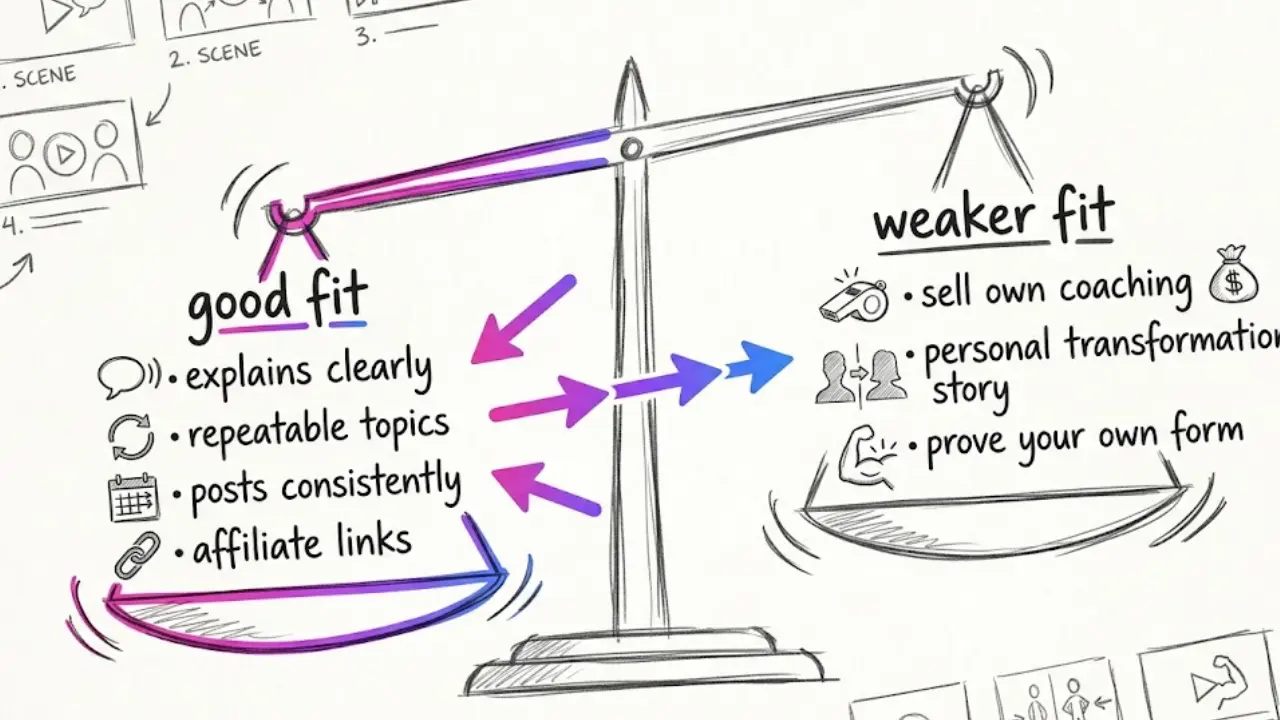
It is a strong choice if you like explaining things clearly, you want a niche with endless repeatable topics and a built-in yearly calendar, and you can post consistently. It also suits you if you want to earn through affiliate links, since viewers who like a routine often want the equipment that goes with it.
It is a weaker choice if you want to sell your own coaching, since people hire a trainer they can see and trust. It also fits badly if your whole pitch is your own transformation or your own demonstration of form. AI visuals are good for explaining a movement in a simplified way, and they are not proof that you can coach it.
Faceless Lab has limits too. Automatic publishing covers YouTube, Instagram, Facebook and LinkedIn, and TikTok needs your explicit consent. Autopilot is still in beta, so treat it as a strong assistant rather than a machine you can forget about. AI images of the human body can also go wrong in visible ways, such as extra limbs, odd joint angles or a movement that does not match the words, so give every video a careful look before it goes out.
7. Stay safe and credible with workout content
This section keeps your audience safe and your channel trustworthy, so it is worth a careful read.
Never show a movement you have not checked. If an AI image shows a squat or a lift with the wrong posture, a viewer may copy it. Review each frame against what your script says, and regenerate anything that looks off. When in doubt, use simplified or stylized figures instead of realistic ones.
Do not give medical advice. Share general information and add a short line such as "talk to a doctor or qualified professional before starting a new program" where it fits. Leave diagnosis, injury treatment and diet prescriptions to people who are qualified to give them.
Avoid big promises. Claims like "lose weight fast" or "fix your back in a week" mislead people and can get a video removed. Stick to what you can support, and describe a routine as a routine.
Be open about AI. If a video uses AI visuals or an AI voice, say so where a platform asks you to, and check the current rules on each platform you post to.
Add your own point of view. A clear tip, an opinion, a simple rule of thumb or a good story is what makes a video yours, and it is what platforms tend to reward over a slideshow of exercises.
Fitness rewards the people who show up every week with something useful, and a faceless setup lets you do that without ever setting up a camera. Batch your first week of workouts, lock your look and schedule the run. If one of your videos takes off, repost it on your other accounts and tag it so people can find you, and if you like the tool, our affiliate program pays you to send other creators our way.
Pick your first workout, start free and get your channel ready before January: https://facelesslab.video/
Read more
Frequently asked questions
What is a faceless fitness channel?
A faceless fitness channel is a workout or wellness channel where you never appear on camera. You post short videos about exercises, routines, form cues and healthy habits, using a script, an AI voiceover, captions and AI-generated visuals instead of footage of yourself training. The instruction is what people watch, so the format suits the niche well. A tool like Faceless Lab produces the voiceover, visuals, captions and music from one idea, and you review the result before it publishes. It works best with simple, clear explanations rather than flashy demonstrations.
Can I make workout videos with AI and no camera?
Yes. You write or generate a short script about an exercise or a routine, then an AI tool creates matching visuals, a voiceover, captions and background music. In Faceless Lab you can pick one of 39 visual styles and one of 200+ ElevenLabs voices, then review the finished vertical video before publishing. AI images of the human body can show odd joints or extra limbs, so check every frame against your script and use simplified or stylized figures when realism causes problems. Never publish a movement you have not verified.
What types of faceless fitness videos get saved the most?
Videos people plan to use again tend to get bookmarked. Single exercise explainers, short routines, form checks, calm myth busters and simple habit tips are the formats we would test first. They are short, clear and practical, which is what drives saves and shares. Pick two or three, run them on repeat with different exercises and equipment setups, and watch which ones your audience saves before you commit to one direction for the channel. Numbered on-screen steps help people follow along without pausing.
When is the best time to start a faceless fitness channel?
Interest in fitness tends to climb around the new year, so starting in autumn gives you time to build a library before that moment. Block an afternoon, make five videos back to back with your style and voice locked, and schedule them. Repeat for a few weeks and you will have a month of content ready by January. With Series and Autopilot (currently in beta) in Faceless Lab you can set up a repeatable format once and keep the channel posting without rebuilding every video.
How much does it cost to start a faceless fitness channel with Faceless Lab?
You can start on the free trial at €0, which is the right way to test the niche and the workflow before spending anything. The paid plans are Starter at €19, Growth at €59 and Pro at €149, so you move up only when the channel is working and you want more output or automation. You also avoid paying for a separate script tool, voice tool, stock library and editor, because Faceless Lab bundles script, voiceover, visuals, captions, music, scheduling and publishing in one workflow.
Is it safe to publish AI-made workout videos?
It can be, if you take care. Check every frame so the movement matches your script and the posture looks correct, because viewers may copy what they see. Share general information, avoid medical advice and big promises like fast weight loss, and add a short note suggesting people speak to a qualified professional before starting a new program. Label AI content where a platform asks you to, and check each platform's current rules. Careful, honest content protects your audience and your channel.
Related articles
One AI Model Can't Make Every Faceless Video Look Right
Most faceless video tools render every scene through one AI model, which is why so many channels start to look alike. Here's how Faceless Lab does it differently, and why it matters for your visuals.
The AI Voice You Pick Says More Than Your Script Does
Faceless Lab gives you 200+ ElevenLabs voices, but grabbing the first one is how channels end up sounding generic. Here is how to choose, test and lock in the right one.
YouTube Just Turned Shorts Into Shows. Here Is How to Make a Faceless One
YouTube now lets creators group Shorts into seasons and episodes. Here is how faceless creators can plan a season, script cliffhangers and ship every episode on schedule.