Start a Faceless YouTube Channel From Scratch
A plain-English guide to starting a faceless YouTube channel with zero editing skills: how to pick a niche, set up the channel, make your first AI videos, and post on a schedule that sticks.


Roberto Pasqualini
CMO at Faceless Lab
A plain-English walkthrough to picking a niche, setting up your channel, making your first videos with AI, and posting on a rhythm you can actually keep.
So you want to know how to start a faceless YouTube channel, but every guide you open assumes you already own a mic, know how to edit, and have your niche figured out? We started in the same spot. A faceless channel means you never appear on camera and never record your own voice. The whole video runs on a script, an AI voiceover, some visuals, captions, and music, which is exactly the kind of content one person can make at home with no studio and no editing background.
Neither of us learned to edit before we started. Stefano built Faceless Lab because he kept abandoning projects the moment content got in the way, and today he runs three faceless YouTube channels from the same workflow. This is the path we wish someone had handed us on day one.
Executive Summary. Starting a faceless YouTube channel comes down to five moves: choose one narrow niche you can post to for a full year, set up a clean channel with a clear name and banner, produce your first batch of short videos, publish on a fixed schedule, and keep going long enough for the algorithm to learn who to show them to. You do not need a camera, a voice actor, or editing skills. With an AI tool like Faceless Lab you type a topic, get a full video back with script, voiceover, visuals, captions and music in a few minutes, then schedule it straight to YouTube. Production was never the hard part. Picking a lane and posting consistently is, and that is what this guide is built around.
Table of Contents
- What a faceless YouTube channel actually is
- Pick a niche you can post to for a year
- Set up your channel the right way
- Make your first faceless videos, step by step
- Post on a schedule and let it run
- Where Faceless Lab is and isn't the right choice
- Your first 30 days
1. What a faceless YouTube channel actually is
A faceless channel publishes videos without ever showing your face or using your own live voice on camera. Think motivation clips over cinematic b-roll, history stories with a calm narrator, finance facts with clean animated text, or "did you know" shorts. The viewer never sees a creator. They see the content, and that is the whole appeal.
The pieces of a single faceless video
Every faceless short is really five ingredients stacked together:
- Script and hook. A short piece of writing that grabs attention in the first three seconds and carries one idea to the end.
- Voiceover. An AI narrator reading that script in a natural voice.
- Visuals. Images or clips that match each line, so the eye always has something to follow.
- Captions. On-screen subtitles, because most people watch on mute.
- Music. A background track that sets the mood without fighting the voice.
Made by hand, stitching those five together is where beginners burn a whole weekend. Done with AI, it is a few minutes of choices.
Why beginners start faceless
- No on-camera confidence needed. You never have to film yourself, so the thing that stops most people never comes up.
- It scales with your time, not your face. One person can run several channels because nothing depends on you being in the room.
- The skills transfer. Writing hooks and picking niches are the same muscles whether you show your face or not, so nothing here is wasted later.
2. Pick a niche you can post to for a year
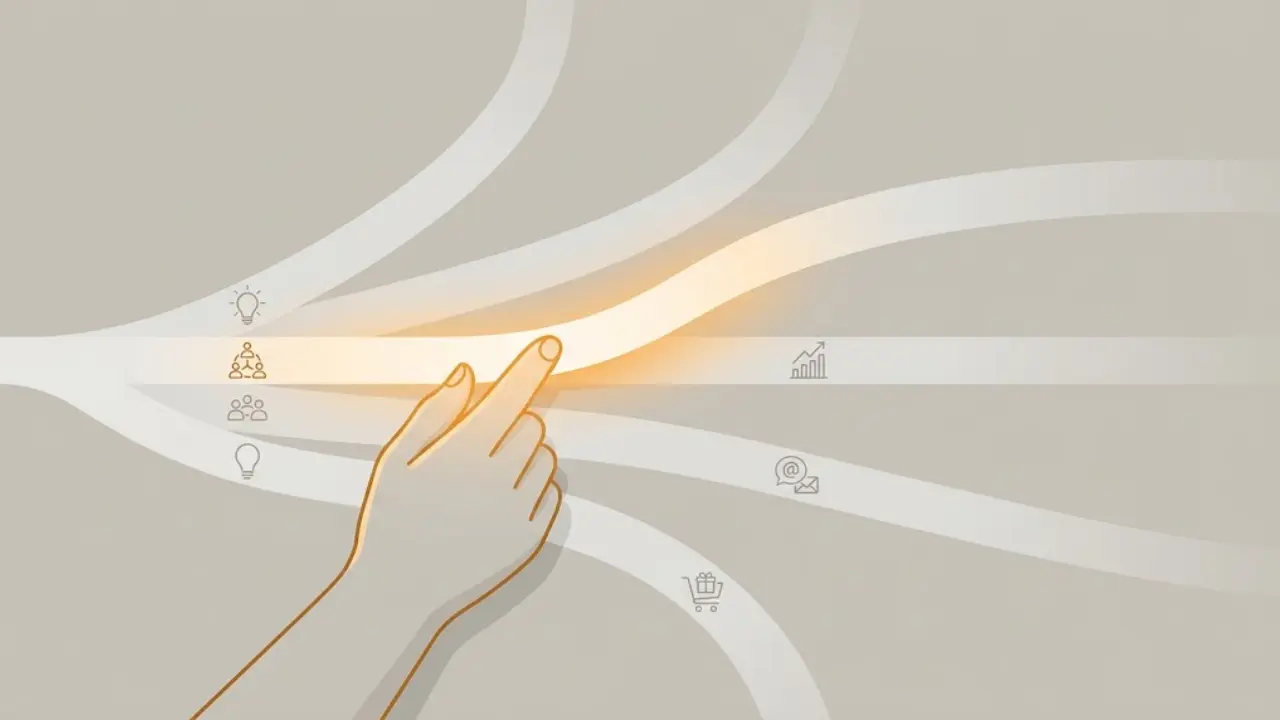
This is the decision that makes or breaks a channel, and beginners rush it. Your niche is not a genre, it is a promise to show up with the same kind of video, over and over, until the algorithm and an audience both know what you are.
Start narrow, not broad
"Motivation" is not a niche, it is a category. "Stoic morning discipline for men in their 20s" is a niche. The narrower you start, the easier it is to write the next 50 videos and the faster YouTube understands who to recommend you to. You can always widen later once you have traction.
Niches that hold up
These formats keep pulling views because the demand is steady and the supply of good versions is still thin:
- Motivation and discipline. Short, punchy, endlessly repostable.
- Finance and money facts. One of the highest-paying corners of YouTube for ad rates.
- History and "this happened" stories. Strong watch time when the story is tight.
- Psychology and mindset facts. Save-and-share friendly.
- Reddit and text-message stories. Built-in narrative tension.
- Top 5 and ranked lists. People stay to see number one.
- Quiz and "would you rather" videos. They pull comments, which the algorithm loves.
The one-year test
Before you commit, ask one question: can you imagine making a video in this niche every day for a year without hating it? If the honest answer is no, pick again now, not three weeks in. Interest fades. A topic you are naturally curious about is the only thing that survives the boring middle stretch.
3. Set up your channel the right way
You can set up a channel in ten minutes, and most of it barely matters. A few things do.

Name, handle, and picture
- Name it after the niche, not yourself. "Daily Stoic Discipline" tells a stranger what they get. "Marco's Channel" tells them nothing.
- Grab a matching handle so people can find and tag you across platforms.
- Use a simple, readable logo or icon. It shows up tiny in the feed, so clean beats clever.
The three things to fill in before your first upload
- A banner that repeats your promise in a few words.
- A one-line channel description with the words your audience would actually search.
- A niche keyword in your channel name or handle, which quietly helps YouTube place you.
Format for where the video lives
Short-form (roughly 15 to 60 seconds) is the fastest way to get discovered from zero, and it belongs in a 9:16 vertical frame. If you plan longer explainers later, they sit in 16:9. Faceless Lab exports in the right aspect ratio for each platform, so you are not resizing anything by hand.
4. Make your first faceless videos, step by step
Here is the part people expect to be hard. Inside Faceless Lab it is a short sequence of choices, and your first video is usually done in a few minutes.
- Type a topic or paste a script. Start with a single idea, like "three Stoic habits that build discipline." The AI drafts a full script with a hook, or you paste your own if you already have one.
- Pick a structure. Faceless Lab ships with 8 proven video structures (story, listicle, hook-and-payoff, and more), so the pacing is handled before you write a word.
- Choose a voice. There are 200+ ElevenLabs voices. Pick one that fits the mood of your niche, calm and grave for history, warm and upbeat for motivation, and keep using it so your channel has a recognizable sound.
- Set the visual style. Choose from 39 styles powered by multiple Replicate models, from cinematic realism to clean flat animation. Lock one style and reuse it, because consistency is what makes a channel look like a channel.
- Check captions and music. Captions are generated automatically and synced to the voice. Pick a background track that supports the mood without drowning the narration.
- Generate. Most videos render in about 2 to 5 minutes. You get a finished, publish-ready file, not a rough draft you still have to assemble.
- Connect your channel and schedule it. Link your YouTube channel and set a publish time, or let it post automatically. Autopilot (in beta) can carry the repetitive part for you. One note for honesty: TikTok is excluded from fully automatic publishing and needs your explicit consent each time, which is a platform rule, not our choice.
💡 Want to try this while you read? Create your first video free.
5. Post on a schedule and let it run
A new channel does not fail because the videos are bad. It fails because the fourth video never gets made. Consistency is the entire game early on.
How often to post
Aim for a video a day if you can, and at least four or five a week if you cannot. Frequency matters more than polish in the first month, because every upload is a fresh chance for the algorithm to test you with a new audience.
Batch, then schedule
Do not create one video a day under pressure. Sit down once, make ten, and schedule them out. Batching keeps your ideas in one lane and removes the daily "what do I post" friction that kills momentum.
Let Autopilot carry the boring part
Once your niche, voice and style are set, most of the work is repetition, and repetition is what software is good at. Faceless Lab's Series and Autopilot (beta) can keep a channel fed on a rhythm while you focus on picking topics and reading what is working.
6. Where Faceless Lab is and isn't the right choice
We would rather you start on the right tool than churn in a week, so here is the honest version.
Faceless Lab is a strong fit if you want to:
- Turn an idea or a script into a finished short with voice, visuals, captions and music in one place.
- Run one or several faceless channels without editing skills.
- Schedule and auto-publish to YouTube, Instagram, Facebook and LinkedIn, and post to TikTok with a quick manual confirm.
- Keep costs predictable. Plans are a Free trial at €0, Starter at €19, Growth at €59, and Pro at €149, so you can test the whole workflow before paying anything.
It is not the right tool if you want to:
- Clip and repurpose existing long videos or podcasts. Faceless Lab builds videos from an idea or script, it is not a footage clipper.
- Make on-camera vlogs or talking-head content, which is the opposite of faceless by design.
- Publish real match footage or copyrighted broadcast clips. Those carry rights issues no tool should pretend away.
If your plan is "idea to finished faceless short, on a schedule, without touching an editor," this is squarely what we built. If it is something else, better to know now.
7. Your first 30 days
You do not need a 12-month plan. You need the next four weeks.
- Week 1. Pick one narrow niche, set up the channel, and make your first five videos. Publish them. Done beats perfect.
- Week 2. Batch ten more and schedule them across the week. Watch which hooks hold attention past three seconds.
- Week 3. Double down on the two topics that performed best and cut the ones that flopped. Keep the voice and style fixed.
- Week 4. Review your numbers, not your feelings. Retention and reposts tell you more than view counts this early. Then repeat, because month two is where compounding starts.
Thirty days in you will not be famous, and that is fine. You will have a running channel, a workflow you trust, and real data instead of guesses. That is further than most people who "want to start a faceless channel" ever get.
Starting a faceless YouTube channel is not about talent or gear. It is about picking a lane and showing up long enough for it to work, and AI removes almost every excuse in between. Try it free, keep the videos that earn reposts, and if this guide helped, share it with someone stuck at the starting line. We also run an affiliate program, so if you end up recommending Faceless Lab anyway, you can get paid for it.
Start your first channel and see your first video in minutes at facelesslab.video.
Read more
Frequently asked questions
How do I start a faceless YouTube channel with no experience?
Start with one narrow niche you could post about for a year, then set up a simple channel named after that niche. From there you make videos with an AI tool that handles the script, voiceover, visuals, captions and music, so no editing skill is required. Publish your first five videos, schedule ten more, and keep a steady rhythm. The technical side takes an afternoon to learn. The real work is choosing a lane and posting consistently long enough for the algorithm to understand who to show your videos to.
Are faceless YouTube channels still worth it?
Yes, and the barrier is lower than it has ever been. Short-form demand keeps growing across YouTube, Instagram and TikTok, and viewers care about the content, not whether they can see your face. What has changed is that AI now removes the production bottleneck, so the winners are people who pick a strong niche and post consistently rather than those with the best gear. The catch is that "easy to start" also means more competition, so a narrow niche and a recognizable voice and style matter more than ever.
How much does it cost to start a faceless YouTube channel?
Creating a YouTube channel is free, so your only real cost is the tool you use to make videos. With Faceless Lab you can start on a Free trial at €0 to test the full workflow, then move up as you scale: Starter is €19, Growth is €59, and Pro is €149. Beyond that, a faceless channel needs almost nothing, no camera, no microphone, no editing software. Your biggest investment is time spent picking a niche and posting consistently, which costs nothing but your attention.
What is the best niche for a faceless YouTube channel?
The best niche is the one you can post to for a full year without losing interest, because consistency beats any single topic. That said, some corners hold up well: motivation and discipline, finance and money facts, history stories, psychology and mindset, Reddit and text stories, ranked top 5 lists, and quiz style videos that pull comments. Finance tends to pay the most per view, while story and quiz formats tend to earn the strongest watch time and engagement. Start narrow, prove it works, then widen once you have traction.
Can I really make faceless videos with AI, and will YouTube allow them?
Yes. Tools like Faceless Lab generate the script, voiceover, visuals, captions and music from a single topic, and most videos are ready in about 2 to 5 minutes. YouTube allows AI-assisted content as long as it adds value and follows its disclosure rules for altered or synthetic media, so you should label AI content where required and avoid low-effort, mass-produced spam. The platform rewards videos people actually watch and enjoy, so treat AI as the production shortcut and put your effort into strong niches, hooks and consistency.
How often should I post on a new faceless channel?
As often as you can sustain, ideally once a day in the first month and at least four or five times a week if daily is too much. Early on, frequency matters more than polish, because every upload is a new chance for the algorithm to test your videos with fresh viewers. The trick is to batch rather than scramble: make ten videos in one sitting and schedule them out, or let an automation feature publish on a rhythm. Consistency over a few months is what separates channels that grow from channels that stall.
Related articles
Make Faceless Real Estate Videos That Bring in Local Leads
Agents, brokers and investors can grow a local audience with market updates, buyer tips and neighborhood guides, all made as faceless videos with AI and scheduled ahead of time.
Write Faceless Video Titles, Captions and Hashtags That Get Found
A good faceless video still stalls with a vague title. Here is a simple routine for titles, captions and hashtags that helps the right viewers and platforms find your videos.
Style a Dream Room Every Day With Faceless Interior Design Videos
Start a faceless interior design channel with AI rooms, a calm voiceover and captions. Batch a week of home decor videos in one afternoon and schedule them to post themselves.