Start a Faceless Hockey Channel While the NHL Season Is Still Fresh
The 2026-27 NHL season opened September 29. A faceless hockey channel batched now can post breakdowns, rankings and storylines from the Winter Classic to the playoffs, with no camera and no game footage.

Stefano Ventrudo
CTO at Faceless Lab
The 2026-27 NHL season opened on September 29, and a faceless hockey channel set up now can post breakdowns, rankings and storylines from the Winter Classic to the playoffs without a camera and without touching game footage.
Can you run a faceless hockey channel that grows all season without filming yourself or reuploading broadcast clips? Yes, and the timing is good. The season just started, the first big events are weeks away, and people are already searching for teams, players and predictions. A faceless hockey channel rides that attention with short videos built from a script, an AI voiceover, visuals and captions. If you set it up this week, October can post itself while you watch the games.
Executive Summary. A faceless hockey channel turns the NHL calendar into a steady content plan without showing your face or leaning on copyrighted broadcast footage. You pick angles like team breakdowns, ranking debates, "what if" scenarios and daily storylines, write tight scripts, and let a tool handle the voiceover, visuals, captions and music. The 2026-27 season opened on September 29 and already lists the Heritage Classic on October 25, the Winter Classic on December 31 and All-Star Weekend on February 5 and 6, so the demand comes with the schedule. Batch a few weeks of videos now with Faceless Lab, schedule them to publish automatically to YouTube, Instagram, Facebook and LinkedIn, and start on the free trial before you pay for anything.
Table of Contents
- Why the NHL season is a gift for faceless creators
- What a faceless hockey channel actually posts
- The content angles that get watched
- How to make a faceless hockey video inside Faceless Lab
- Batch October and let the season post itself
- Where a faceless hockey channel is and isn't the right choice
- Staying monetizable and copyright-safe
1. Why the NHL season is a gift for faceless creators
Most creators have to earn attention from zero. Sports creators borrow it. When the puck drops on a new season, fans are already looking for the same teams and the same storylines, and you do not have to invent that interest. The league schedule creates it for you, night after night.
The calendar is your content plan. The 2026-27 season opened on September 29 with five games, including Carolina at Florida, Boston at the Rangers and Toronto against Montreal. After that the NHL has already published a run of signature dates. The Heritage Classic between Winnipeg and Montreal is on October 25. The Global Series visits Finland from November 12 to 14 and Germany from December 18 to 20. The Winter Classic between Utah and Colorado lands on December 31, All-Star Weekend on February 5 and 6, and the Stadium Series on February 20. Each date is a natural spike in searches, and each one is a video you can plan weeks ahead.
Every night makes tomorrow's video. A regular NHL night gives you goals, streaks, rivalries and a few surprises. You are never facing a blank page, because the league already picked the topic.
Faceless fits hockey well. Nobody needs your face in a "top 5 goalies right now" video or a "can the Oilers finally get it done" breakdown. They want a clear voice, sharp visuals and a take worth arguing with in the comments. A faceless format delivers exactly that, and hockey has a loyal, opinionated audience that loves to argue.
We are Stefano and Roberto, and we run faceless channels ourselves. Sports is one of the niches we point new creators to first, because the schedule solves the hardest part, which is knowing what to post tomorrow.
2. What a faceless hockey channel actually posts
A faceless hockey channel is not game footage with a robot voice on top. That road leads to copyright strikes and demonetization. The channels that last post original short videos built around commentary, stats, rankings and storytelling, illustrated with their own visuals.
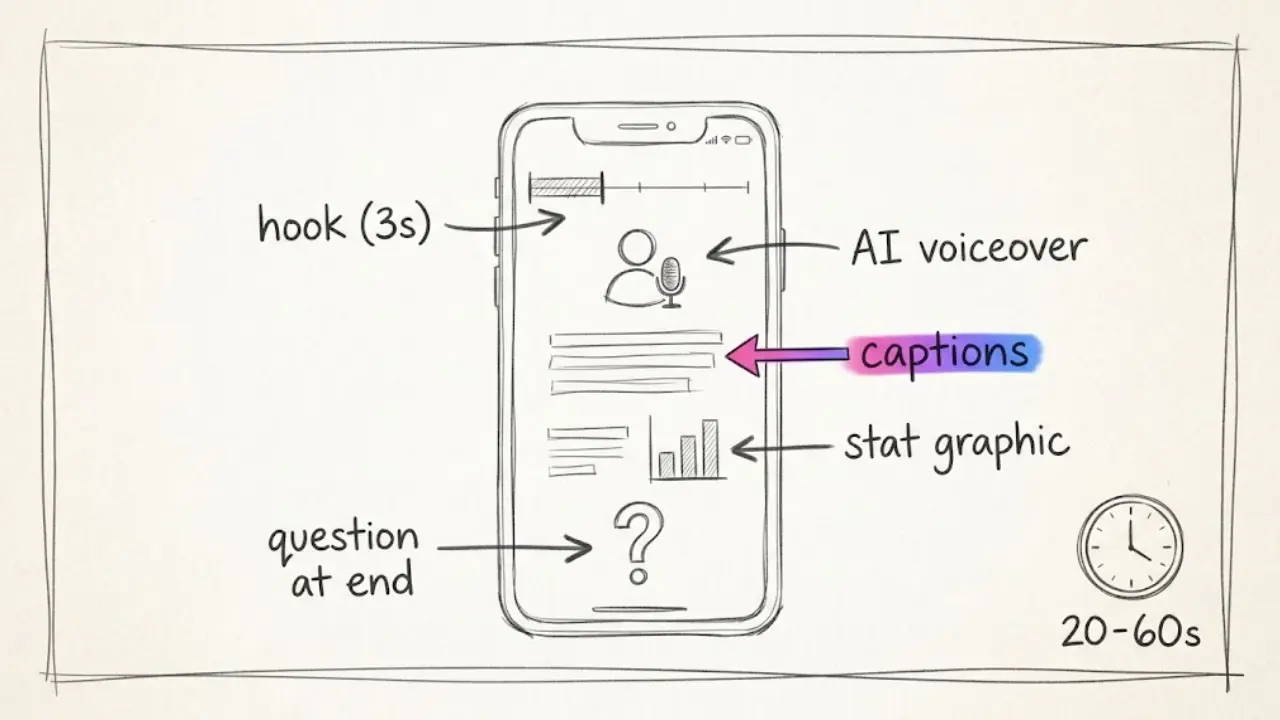
Here is the shape of a typical video.
- Length. 20 to 60 seconds for Shorts, Reels and TikTok, long enough to make a point and short enough that people finish it.
- Format. Vertical 9:16, a hook in the first three seconds, burned-in captions, and a question or hot take at the end to pull comments.
- Voice. A clear AI voiceover reading a script you control. It is the spine of the video.
- Visuals. AI-generated imagery, team-color graphics and stat cards, with no reuploaded broadcast clips.
- Cadence. One short a day is plenty to start. Showing up matters more than polish.
All of this repeats. Once a format works, you swap the team, the player or the stat. That is what makes it batchable, and batching is where a tool earns its keep.
3. The content angles that get watched
You do not need a new idea every day. You need a handful of formats you can run on repeat with fresh names in them.
Team and player breakdowns
Pick a team or player having a moment and explain why in 40 seconds. "Why this goalie is stealing games right now." "What changed for the Hurricanes." These match the searches that spike that week, and they stay findable for months.
Ranking and debate videos
Rankings pull comments. "Top 5 goalies in the league." "Three teams nobody is talking about." People watch to disagree, and disagreement is engagement. A bold take that you can back up beats a safe one.
"What if" scenarios
Hockey fans love a hypothetical. "What if the Winter Classic were played in July." "What if your favorite team drafted differently." They are easy to script and need no real footage at all.
Daily storyline recaps
Turn last night's biggest moment into a next-morning short about what it means, not a highlight reel. This ties your channel to the live season without touching a broadcast clip.
Stat and history shorts
"The last team to pull this off did it in the 1980s." Records and numbers are safe, evergreen and easy to share. Pair one surprising stat with a clean graphic and it works in October and still works in March.
4. How to make a faceless hockey video inside Faceless Lab
This is the loop we use on our own channels, start to finish.
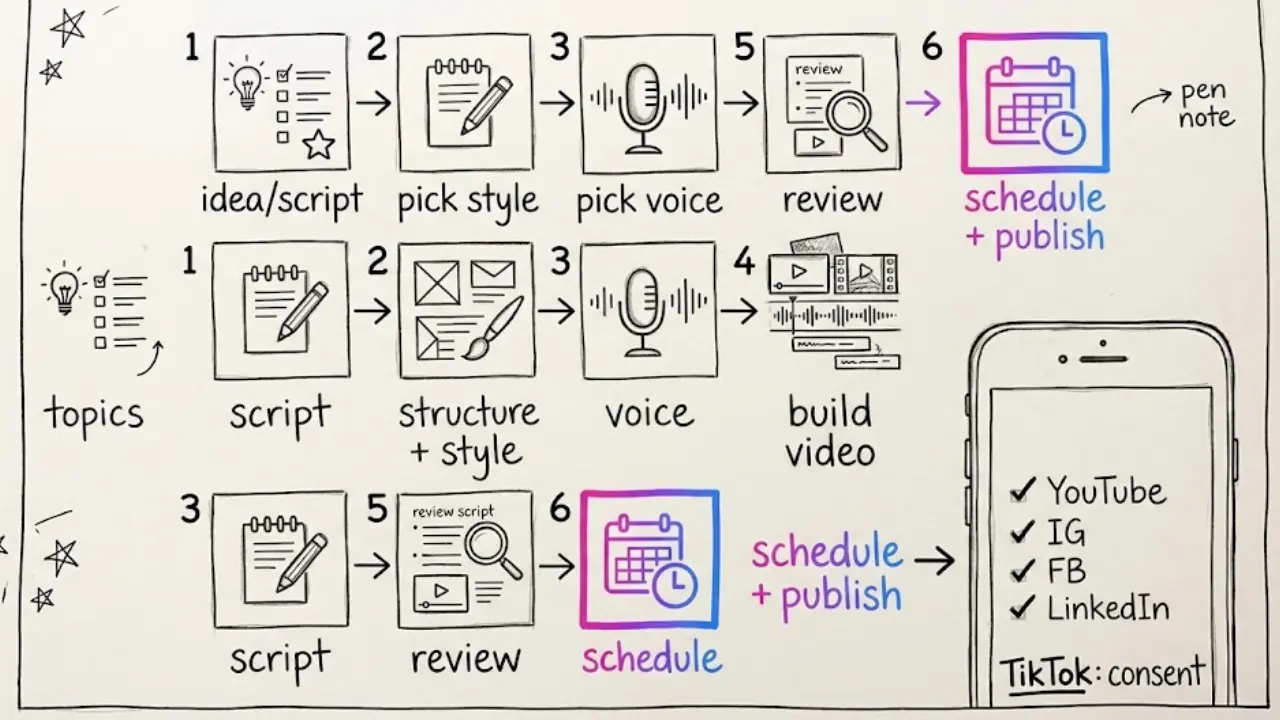
- Start from an idea or a script. Type a topic like "top 5 goalies this NHL season" or paste a script you already wrote. Faceless Lab turns it into a short with scenes, and you can pick from 8 video structures so a ranking is laid out differently from a story.
- Choose a visual style. There are 39 styles, powered by multiple models through Replicate. Pick one and keep it, because a recognizable look is how a faceless channel builds an identity.
- Pick a voice. You get 200+ ElevenLabs voices. Choose one that sounds confident and quick, and use it every time so the channel sounds like one channel.
- Let it build the video. Faceless Lab generates the voiceover, matches visuals to your script, adds captions and drops in background music. You get a publish-ready vertical video in minutes.
- Review and tweak. Swap a visual, fix a caption, adjust a line. You keep control of the parts that matter.
- Schedule and publish. Connect your accounts and Faceless Lab publishes to YouTube, Instagram, Facebook and LinkedIn for you. TikTok needs your explicit consent, so it is left out of fully automatic publishing.
That takes you from a one-line idea to a scheduled post without opening a separate editor, voice tool or stock site.
💡 Ready to try it on your first hockey short? Create your first video free.
5. Batch October and let the season post itself
Posting daily by hand for months is how people burn out in week three. Batching fixes that.
Make a week in one sitting. Block an afternoon, pick five angles and produce five videos back to back. With your style and voice locked, each new video is mostly a new topic and script.
Turn one idea into a Series. With Series you set up a repeatable format once, for example a daily storyline recap, and keep it running. That is the difference between making videos and running a channel.
Let Autopilot carry some of the load. Autopilot is in beta and built for this, keeping a channel posting on a rhythm without starting from zero each day. You still choose the topics and the takes.
Front-load the next big date. The Heritage Classic is on October 25. Batch two or three weeks of hockey shorts now and schedule them across that game and the weeks around it. When search interest jumps, your channel is already posting.
6. Where a faceless hockey channel is and isn't the right choice
Here is the honest read from the two of us.
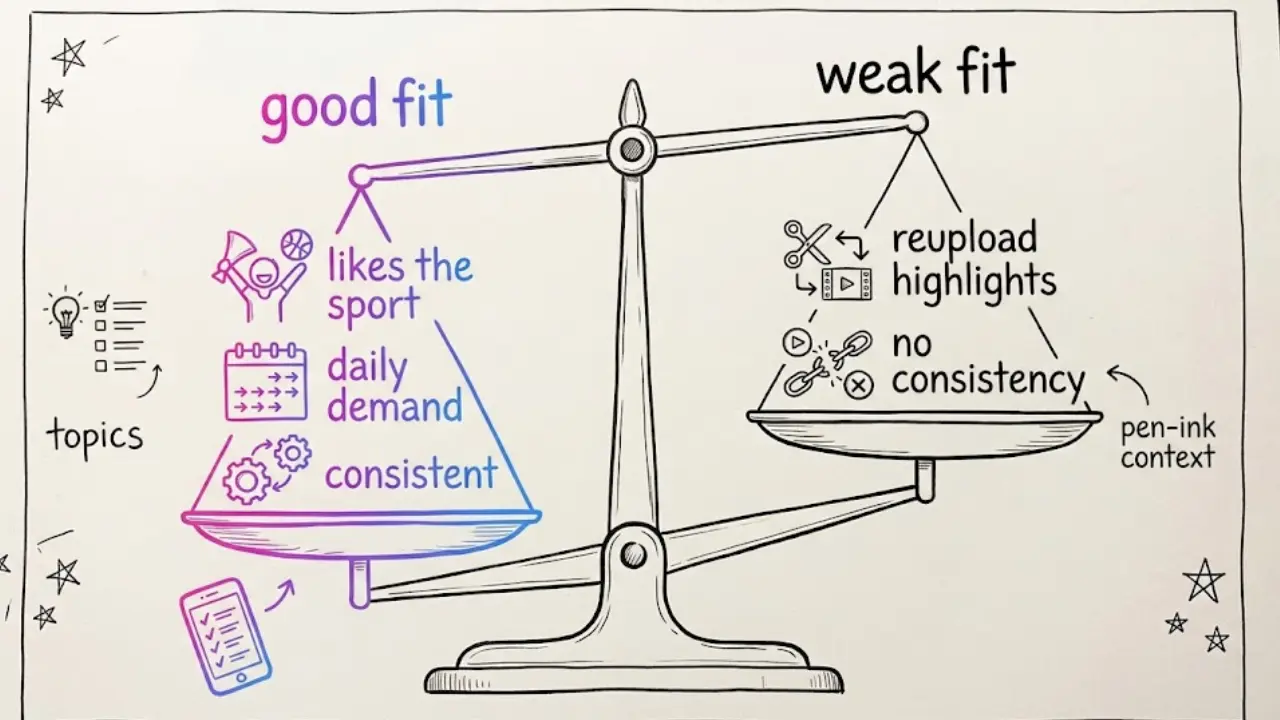
It is a strong choice if you follow the sport enough to have opinions, you want a niche with daily demand built in, and you can show up through a long season. Sports forgives a lot, because the schedule keeps feeding you topics.
It is a weaker choice if you hoped to reupload highlights and let the algorithm do the rest. That is a copyright problem and it will not last. It also fits badly if you cannot post with any consistency, since a sports channel that goes quiet for two weeks loses the momentum the season gave it.
Faceless Lab has limits too. Automatic publishing covers YouTube, Instagram, Facebook and LinkedIn, and TikTok needs your explicit consent. Autopilot is still in beta, so treat it as a strong assistant rather than a machine you can forget about. AI visuals work well for graphics, hypotheticals and stat cards, and they will not replace the real game footage you are deliberately avoiding. Lean on what the format does well, which is takes, rankings, stories and stats.
7. Staying monetizable and copyright-safe
This section keeps your channel alive, so read it twice.
Skip broadcast footage. NHL game clips, TV feeds and official highlights are protected. Building on them is the fastest route to strikes and demonetization. Post your own commentary and your own visuals.
Use original visuals and scripts. AI-generated imagery, team-color graphics and stat cards are yours to use, and so is a script you wrote or generated. You are making something new about the games, without copying the games.
Be careful with logos. Team and player names in a script are fine. Official logos and branded assets are a grey area you do not need to enter, and clean generic hockey graphics still look sharp.
Keep it transformative. Platforms reward a point of view, a ranking, an argument or a story. That is what a faceless hockey channel is built to do, and it keeps you on the right side of copyright and monetization rules.
The season is a long, steady stream of attention, and this is the cheapest moment to plug a channel into it. Batch your first two weeks, schedule them, and let the schedule do the heavy lifting. If one of your videos takes off, repost it on your other accounts and tag it so people can find you, and if you like the tool, our affiliate program pays you to send other creators our way.
The puck has already dropped. Set up your channel, start free, and let the season post itself: https://facelesslab.video/
Read more
Frequently asked questions
What is a faceless hockey channel?
A faceless hockey channel is a hockey content channel that never shows your face and never reuploads broadcast footage. You post short original videos built around commentary, rankings, stats, hypotheticals and daily storylines, illustrated with your own AI-generated visuals and graphics. A tool like Faceless Lab handles the voiceover, visuals, captions and music from a script you control. The appeal is simple. The NHL season creates constant demand for takes and breakdowns, and a faceless format lets you meet that demand every day without a camera, an editing suite or your face on screen.
Can I make NHL videos without showing game footage?
Yes, and that is the safe way to do it. NHL broadcast clips, TV feeds and official highlights are protected, and building a channel on them leads to strikes and demonetization. What you can do freely is write your own commentary, rankings and stories, then illustrate them with AI-generated imagery and generic hockey graphics. Player and team names in a script are fine, while official logos are best avoided. Content that adds a real point of view keeps you on the right side of copyright and is what platforms tend to reward with reach.
When is the best time to start a faceless hockey channel?
Right now is a very good moment. The 2026-27 NHL season opened on September 29, and the schedule already lists the Heritage Classic on October 25, the Winter Classic on December 31 and All-Star Weekend on February 5 and 6. Starting this week lets you lock a visual style and voice, batch your first two or three weeks of videos and schedule them ahead of the next big date. Starting later in the season still works, but you give up the easy momentum of launching while interest is fresh.
How often should a faceless hockey channel post?
One short per day is a strong target during the season, and it is realistic when you batch. A regular NHL night produces several storylines, so you are rarely short of topics. Consistency matters more than volume or polish, because a sports channel that posts daily stays tied to the live season, while one that goes quiet for two weeks loses momentum. With Series and Autopilot (currently in beta) in Faceless Lab, you can set up repeatable formats once and keep the channel posting without rebuilding each video from scratch.
How much does it cost to start a faceless hockey channel with Faceless Lab?
You can start on the free trial at €0, which is the right way to test the niche and the workflow before spending anything. The paid plans are Starter at €19, Growth at €59 and Pro at €149, so you move up only when the channel is working and you want more output or automation. You also avoid paying for a separate script tool, voice tool, stock library and editor, because Faceless Lab bundles script, voiceover, visuals, captions, music, scheduling and publishing in one workflow.
Can Faceless Lab publish my hockey videos automatically?
For most platforms, yes. Once you connect your accounts, Faceless Lab can publish automatically to YouTube, Instagram, Facebook and LinkedIn, which makes scheduling a batch of videos across the season practical. TikTok is the exception, because it requires your explicit consent and is therefore left out of fully automatic publishing. Autopilot is currently in beta and is built to keep a channel posting on a rhythm with little daily input. You still choose the topics and the takes, while the tool handles production and scheduling.
Related articles
Turn Your Recipes Into Faceless Cooking Videos, Starting With Thanksgiving
Thanksgiving is the busiest recipe week of the year. Here is how to script, voice and schedule faceless cooking videos before it starts, and keep the channel going afterward.
Get Your Faceless Christmas Videos Scheduled Before the Holiday Rush Hits
December is too late to start planning Christmas content. Here's how to script, voice, and schedule a month of faceless Christmas videos in one September afternoon.
Sora Is Shutting Down. Your Faceless Video Workflow Doesn't Have To
The Sora API goes dark tomorrow, on September 24, 2026. If your faceless videos ran through one AI model, here is how to keep your channel posting, and why we build so no single model can stop it.