The 8 Faceless Video Structures That Keep People Watching
The 8 faceless video structures that actually hold attention in 2026, how to match one to your niche, and how to build any of them in minutes without filming a thing.

Roberto Pasqualini
CMO at Faceless Lab
The eight faceless video structures that actually hold attention, how to match one to your niche, and how to build any of them in minutes without filming a thing.
What is the right structure for a faceless video that people actually finish? That question matters more than the topic you pick, because the faceless video structure is what decides whether a viewer stays past the first three seconds or swipes away. We have built hundreds of faceless videos across our own channels, and the pattern is obvious once you see it. The strongest videos are not lucky. They follow shapes that carry attention from the hook to the payoff, and those shapes repeat.
Executive Summary: A faceless video lives or dies on structure. The topic earns the click, but the shape of the video keeps someone watching to the end, and watch time is what the algorithm rewards. The eight structures that hold attention in 2026 are the story arc, the countdown, the fact drop, the explainer, the text or reaction story, the question format, the transformation, and the myth-buster. Each has one job: open a loop fast, deliver in the middle, and close with a reason to like, save, or follow. Faceless Lab ships these as ready structures, so you choose the shape, drop in your idea, and let the app handle script, voice, visuals, music, and captions. Pick one structure, make ten videos with it, and you improve faster than you would jumping formats every day.
Table of Contents
- Why structure decides whether people finish your video
- The 8 faceless video structures that hold attention
- How to pick the right structure for your niche
- Build any of these structures inside Faceless Lab
- Where a fixed structure helps and where it can hurt
- Turn one structure into a repeatable series
1. Why structure decides whether people finish your video
Most creators obsess over the topic and treat the format as an afterthought. We did too, for a long time. Then we started looking at retention graphs instead of view counts, and the story changed. Two videos on the same subject can perform very differently, and the difference is almost always the shape of the video, not the idea inside it.
Here is the mechanic. A short-form feed rewards completion and rewatches. When someone finishes your video, or loops it, the platform reads that as a signal worth showing to more people. A clear structure is what gets a viewer to that finish line, because it sets an expectation in the first seconds and then pays it off.
What a working structure does:
- Opens a loop fast. The first line tells the viewer what they are about to get and why they should care.
- Keeps momentum in the middle. Each beat earns the next one, so there is no dead air where a thumb starts to twitch.
- Closes with a reason to act. A save, a like, a follow, or a rewatch, prompted by the ending rather than left to chance.
💡 If your videos start strong and lose people halfway, the structure is leaking, not the topic. Fixing the shape is usually faster than finding a new idea. Try a new structure free.
2. The 8 faceless video structures that hold attention
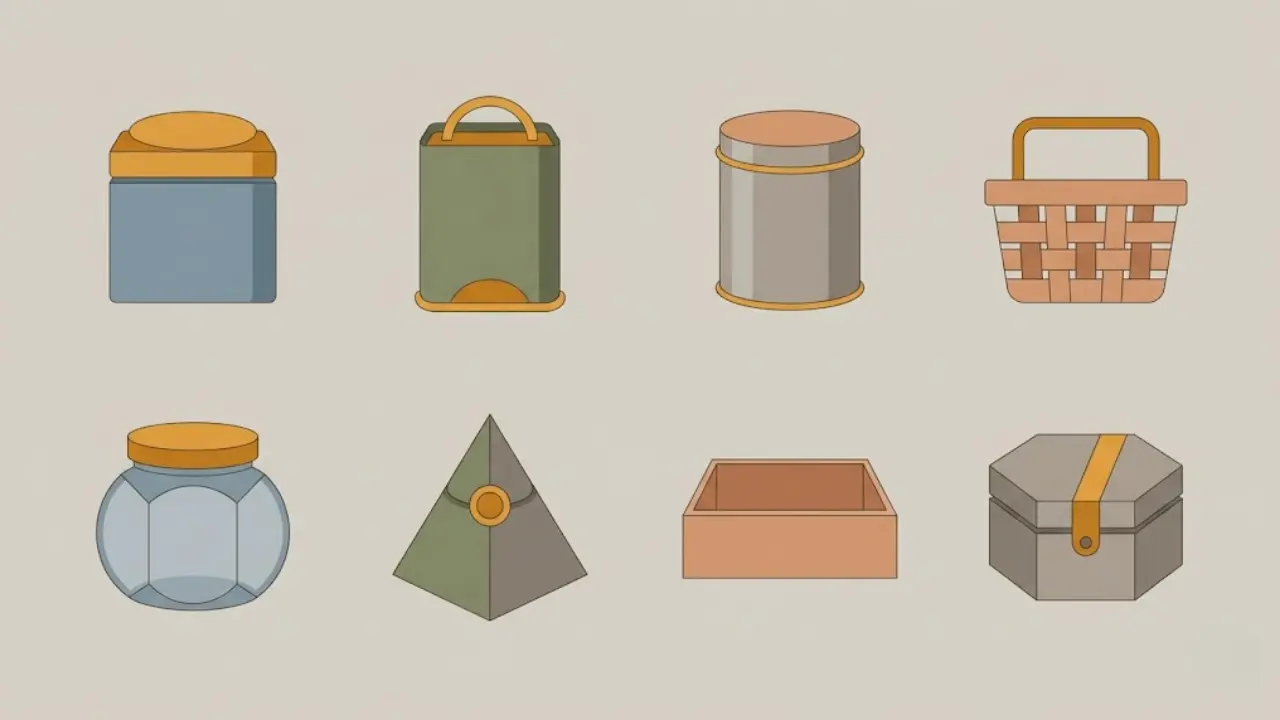
These are the eight shapes we lean on most. Each one is a proven container you can pour almost any niche into.
1. The story arc
A single narrative with a setup, a turn, and a resolution. It works because humans are wired to follow a story to its end. Great for history, true crime style retellings, personal-style narration, and case studies. Open on the tension, hold the outcome back, and pay it off in the last few seconds.
2. The countdown or listicle
Ranked items counted toward a number one. The open loop is built in, because people wait to see what tops the list. Perfect for tips, tools, facts, and rankings. Put your strongest item near the front to prove value, then tease that number one is coming.
3. The fact drop
Rapid, surprising facts stacked back to back on a theme. Each fact is a mini payoff, so retention stays high with almost no filler. Ideal for science, geography, money, and did-you-know channels. Lead with the most shocking fact so the first three seconds do the heavy lifting.
4. The explainer
One question, one clear answer, broken into simple steps. It satisfies search intent directly and gets saved for later. Strong for how-to, finance, tech, and study niches. State the question in the hook exactly the way a viewer would ask it.
5. The text or reaction story
A message thread, a confession, or a story that unfolds line by line. The curiosity gap between one line and the next is what pulls people through. This is the engine behind fake text stories and Reddit-style reads. Keep the reveals coming and never dump the ending early.
6. The question format
A prompt that makes the viewer answer in their head, like a would-you-rather or a quick quiz. Participation raises watch time and often drives comments. Good for entertainment, relationship, and gaming niches. Make the choice genuinely hard so people stay to see the reveal.
7. The transformation
A before and after, a process from messy to finished, or a progress arc over time. The promise of the after keeps people watching the before. Works for design, fitness-style, DIY, and glow-up content. Flash the after for half a second in the hook, then earn it.
8. The myth-buster
Take a common belief and overturn it with evidence. The contradiction is the hook, and the correction is the payoff. Strong for health, money, and productivity topics. Say the myth plainly, then spend the video dismantling it.
3. How to pick the right structure for your niche
You do not need all eight. You need the two or three that fit your niche and your voice, then depth over variety.

Match the structure to what your audience wants:
- Teaching something practical? Explainer or countdown. People come to learn and stay for a clear answer.
- Telling stories or retellings? Story arc or text story. Narrative pulls harder than lists here.
- Fast, snackable entertainment? Fact drop or question format. Low effort to watch, high replay value.
- Showing a change or result? Transformation. The after is your built-in hook.
- Correcting bad advice? Myth-buster. Controversy in service of truth earns attention and trust.
A quick way to decide: write your idea as a one-line hook three different ways, once as a question, once as a countdown, once as a bold claim. Whichever version makes you want to keep reading is pointing you at the structure to use.
4. Build any of these structures inside Faceless Lab
This is where the structure stops being theory. Inside Faceless Lab you choose the shape first, then the app builds the rest around it. Here is the flow we use daily.
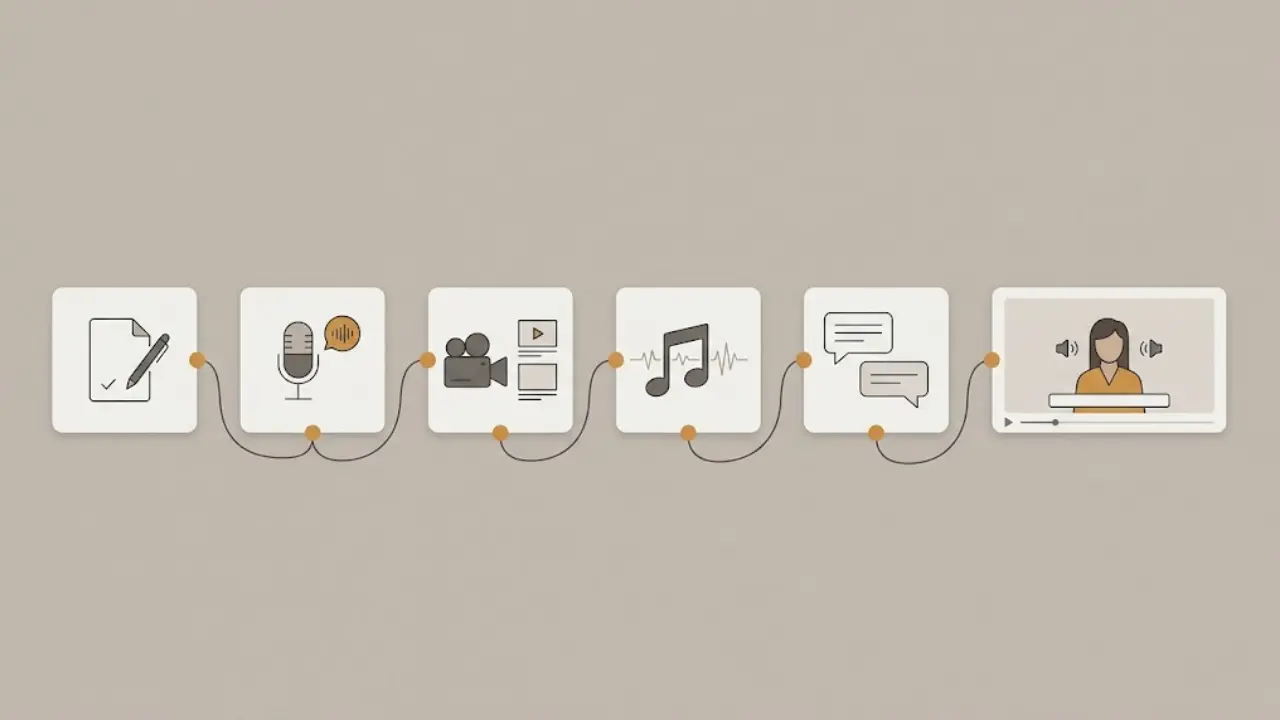
- Start a new video and pick your structure. Faceless Lab ships eight built-in structures, so you select the shape that fits your idea instead of formatting from a blank page.
- Drop in your topic or a short prompt. The AI writes a script that follows the structure you chose, with a hook up front and a payoff at the end. Edit any line you want.
- Choose a voice. There are 200+ ElevenLabs voices, so you can pick one that matches the niche, from calm narration to high-energy delivery, in the language you publish in.
- Set the visual style. With 39 styles and multiple image models through Replicate, you lock one look so the video matches your channel instead of changing character every post.
- Let it assemble the rest. The app adds visuals, background music, and captions, then syncs everything into a publish-ready file.
- Schedule or auto-publish. Queue it to YouTube, Instagram, Facebook, and LinkedIn on a rhythm. Autopilot is in beta for hands-off runs. TikTok is left out of fully automatic publishing because it needs your explicit consent, so you keep that step in your hands.
The whole point is that the structure does not add work. You pick the shape once, and the parts that used to eat an afternoon get handled.
💡 Ready to build your first structured video? Start free, no credit card.
5. Where a fixed structure helps and where it can hurt
We would rather be honest than oversell, so here is the balanced view.
Where a fixed structure clearly helps:
- You publish faster. A known shape removes the blank-page problem, so you go from idea to draft in minutes.
- You learn faster. Repeating one structure across ten videos gives you clean data on what your audience responds to.
- Your channel feels coherent. Viewers know what they get from you, which is what turns a random view into a follow.
Where it can hurt if you are not careful:
- Sameness fatigue. Run the exact same structure with the same opening line every day and regular viewers tune out. Vary the hook even when the shape stays.
- Wrong fit. Forcing a countdown onto an emotional story flattens it. Let the idea choose the structure, not the other way around.
- Structure without substance. A tidy shape around a weak idea is still a weak video. The format buys attention, the content has to keep it.
Structure is a tool, not a guarantee. Use it to remove friction and to run experiments, and keep judgment about when to break the pattern.
6. Turn one structure into a repeatable series
Once a structure clicks with your audience, the highest-leverage move is to run it as a series rather than a one-off. A series trains viewers to expect the next episode, and it compounds.
How to turn a winning structure into a series:
- Name the format. Give it a recurring title so each new video is instantly recognizable as part of the set.
- Keep the shape, swap the topic. Same structure, fresh subject every time, so production stays fast and quality stays even.
- Batch it. Make a week or a month of the same series in one sitting, then let it publish on a schedule.
Faceless Lab is built for exactly this. You can spin a single idea into a Series and let it run, and batch a stack of videos in one afternoon so your channel keeps posting while you step away.
Conclusion
The verdict is simple. Your topic gets the click, but the structure keeps the viewer, and watch time is what earns you reach. Learn these eight shapes, pick the two or three that fit your niche, and run them until you know exactly what your audience finishes. That is how a faceless channel goes from scattered to consistent.
You can test every structure in this guide on the free plan at €0, with no credit card, then move up to Starter at €19, Growth at €59, or Pro at €149 when you are posting enough to need the volume. Start with one structure today and make ten videos with it before you judge it.
If a structure here helps your channel, repost it to a creator who is stuck picking formats, and if you want to earn while you share, our affiliate program pays you for the people you send our way.
Try Faceless Lab free and build your first structured video
Read more
Frequently asked questions
What is the best structure for a faceless video?
There is no single best structure, only the best fit for your niche and goal. If you are teaching, an explainer or a countdown works because people want a clear answer. If you are telling stories, a story arc or a text story pulls harder. For fast entertainment, a fact drop or a question format keeps replay value high. The reliable move is to pick two or three structures that suit your content, then repeat them across many videos so you learn what your audience actually finishes. Depth in a few shapes beats dabbling in all of them.
How many faceless video structures should I use?
Start with one, then expand to two or three. Using every format at once splits your learning and makes your channel feel random. When you repeat a single structure across ten videos, you get clean feedback on hooks, pacing, and payoffs, because the only thing changing is the topic. Once one structure is working, add a second that fits a different type of idea. Most consistent faceless channels rotate a small set of formats rather than reinventing the shape every post, which is also what makes their content instantly recognizable.
Does video structure really affect the algorithm?
Indirectly, yes, and strongly. Platforms do not rank you on structure itself, they rank you on watch time, completion, and rewatches. A clear structure is what carries a viewer to the end and sometimes into a loop, and those are the signals the feed rewards. A video with a strong hook but a shapeless middle tends to leak viewers halfway, which drags down its reach. So the format is not a ranking factor on paper, but it is one of the biggest levers you have on the metrics that do decide how far a video travels.
Can I make these structures without editing skills?
Yes. That is the reason Faceless Lab exists. You choose one of the eight built-in structures, add your idea or a short prompt, and the app writes a script in that shape, then generates the voiceover, visuals, background music, and captions and syncs them into a publish-ready file. You never open a timeline or fix an export. You can still edit the script, swap the voice, or change the visual style before you finalize, so you keep control without needing any video editing experience. Most videos are ready in a few minutes.
Which structure is best for growing a new channel fast?
Pick one structure that fits your niche and run it as a series, because consistency and recognizability grow a new channel faster than variety. For most beginners the countdown or the fact drop is a strong starting point, since both have a built-in open loop and are quick to produce. Give the format a recurring name, keep the shape while you swap topics, and batch a week or a month at once so you never miss a posting day. Regular, recognizable output is what turns first-time viewers into followers early on.
How do I keep a structure from feeling repetitive?
Keep the shape, but vary the surface. Change your opening line every video even when the structure stays the same, because a fresh hook is what stops regular viewers from tuning out. Rotate between two or three structures across the week so your feed has texture. Use different voices or a slightly different pacing for different series. The structure is the skeleton, and it should stay stable, while the hook, the topic, and the delivery are where you keep things new. Sameness comes from repeating the hook, not from repeating the format.
Related articles
Style a Dream Room Every Day With Faceless Interior Design Videos
Start a faceless interior design channel with AI rooms, a calm voiceover and captions. Batch a week of home decor videos in one afternoon and schedule them to post themselves.
A Daily Horoscope Channel Is the Easiest Faceless Series to Keep Alive
Horoscopes come with a built-in content calendar. Here is how to pick a lane, build one repeatable format and post daily or weekly astrology readings without ever showing your face.
You Can Build a Fitness Channel Without Filming a Single Workout
Start a faceless fitness channel with AI visuals, a clear voiceover and captions. Batch a month of workout Shorts now, schedule them, and be ready before January hits.