Your Faceless Videos Aren't Getting Views. Here Is What to Change
Flat views on your faceless channel are almost never bad luck. Here are the five real reasons faceless videos stall, and the exact fixes that turn a dead upload into reach.


Stefano Ventrudo
CTO at Faceless Lab
A clear look at why faceless videos stall, and the five fixes that actually move views.
Why are your faceless videos not getting views when you are posting the same kind of content everyone else seems to blow up with? It is one of the most demoralizing feelings in this whole game. You wrote the script, picked the voice, watched it export, hit publish, and then the counter froze at 74. We have both been there. I run three faceless channels and I still get the occasional upload that lands with a thud. The good news is that flat views on a faceless channel are almost never random. There is usually one specific thing quietly breaking, and once you see it you cannot unsee it.
Executive Summary: Faceless videos that get no views are rarely a victim of the algorithm. In nearly every case the problem is one of five fixable things: a weak first three seconds, poor mid-video retention, posting too little or too randomly, packaging that confuses the platform about who the video is for, or a niche the format cannot support. The creators who break out are not luckier. They ship more attempts, keep one recognizable style, and let a tool handle the production grind so they can spend their energy on hooks and consistency. Fix the hook and the retention first, hold a steady posting rhythm, and most dead channels start moving within a few weeks.
Table of Contents
- No views is almost never a luck problem
- Your first three seconds are doing all the work
- Retention is where most faceless videos quietly die
- You are posting too little and too randomly
- Your packaging is sending mixed signals
- How to fix low views inside Faceless Lab
- Where Faceless Lab helps and where it will not
1. No views is almost never a luck problem
When a video flops, the first story we tell ourselves is that the algorithm buried it. Sometimes that is partly true. Most of the time it is a comfortable excuse that stops us from looking at the thing we can actually control.
Here is how short-form distribution really works in plain terms. The platform shows your video to a small test batch of viewers. It watches what they do. If enough of them stay, react, or rewatch, it widens the pool. If they swipe away fast, it stops. Your view count is not a verdict from a mysterious system. It is a scoreboard for how a few dozen real people responded in the first several seconds.
What this means for you: every fix in this article is really about giving that first test batch a reason to stay. You do not need to beat the algorithm. You need to not lose the first 40 people.
2. Your first three seconds are doing all the work
If I could only fix one thing on a struggling faceless channel, it would be the opening. The first three seconds decide whether the test batch stays. Everything else is downstream of that.

The most common opening mistakes I see:
- A slow warm-up. "In this video we are going to talk about..." is a swipe. There is no warm-up on short-form. Start in the middle of the interesting part.
- A hook that promises nothing. The viewer needs a reason to expect a payoff. "Here is why nobody talks about this" sets up a gap the brain wants closed.
- A visual that matches the words too literally. If the voice says "money" and the screen shows a stock photo of coins, there is no tension. Pair the line with a visual that raises a small question.
A quick test for your hook
Mute the video and watch the first three seconds. Then read only the first sentence of the script on its own. If either one fails to make you curious, the whole upload is fighting uphill. Rewrite the first line before you touch anything else.
3. Retention is where most faceless videos quietly die
A strong hook gets people in. Retention keeps the test batch watching long enough for the platform to widen the pool. This is the stage where faceless videos fail silently, because the view count still looks alive for a day before it flatlines.
The things that make people swipe away
- Dead air. Any moment where nothing changes on screen for more than a couple of seconds bleeds viewers. Cut it.
- A monotone read. A flat voiceover feels like a robot reading a paragraph. Pace, small pauses, and the right voice for the topic keep attention.
- Captions that lag or crowd the frame. Most people watch on mute. If the words on screen are late, tiny, or covering the visual, they leave.
- A payoff that never arrives. If your hook promised a reveal, deliver it before the halfway mark, then use the second half to expand. Holding the answer to the last second only works when the whole video is short and tight.
A simple retention habit
Watch your own video the way a stranger would, thumb ready to swipe. Every time you feel the smallest urge to move on, mark that second. Those marks are your edit list. Faceless videos win on pacing far more than on production polish.
4. You are posting too little and too randomly
Here is the hard truth nobody starting out wants to hear. One good video is a coin flip. Thirty good videos is a channel. Most people who say faceless does not work quit at video number eight.
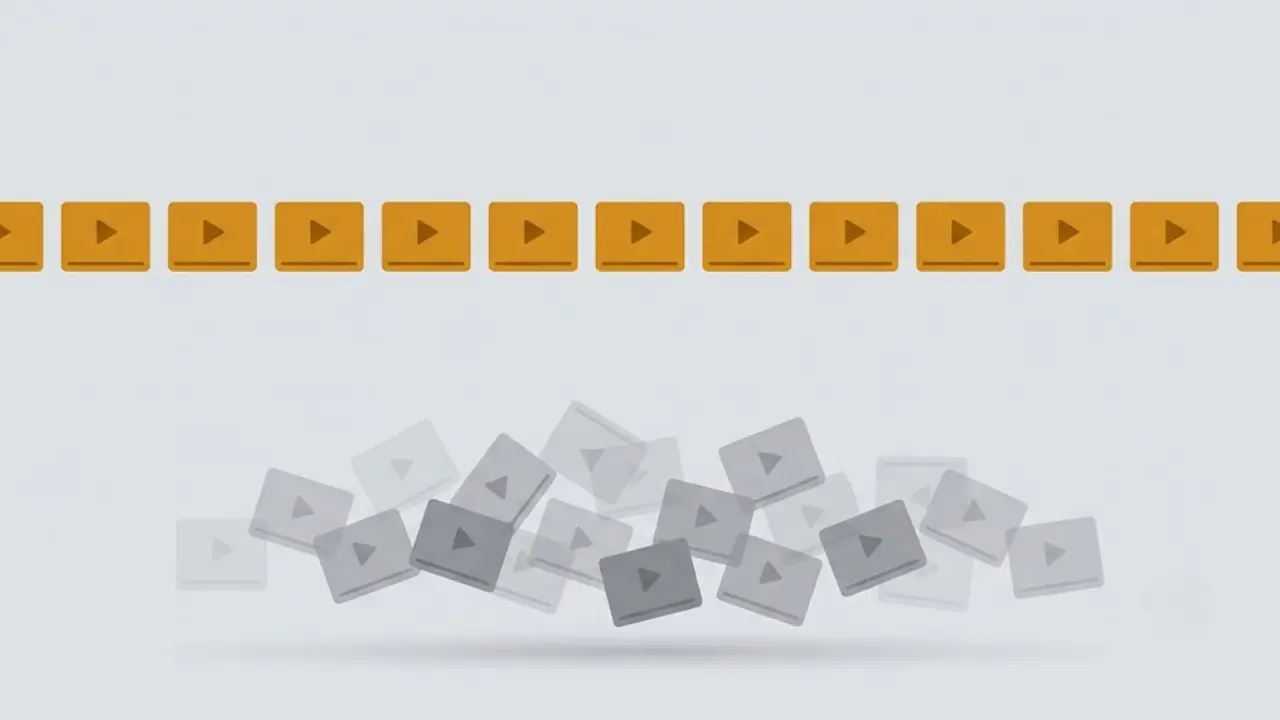
Short-form rewards volume for two reasons. First, you get more test batches, so more chances for one video to catch. Second, the platform learns who your audience is faster when you feed it a steady, consistent signal. A channel that posts five times in week one and then goes quiet for three weeks teaches the algorithm nothing.
What a workable rhythm looks like
- Pick a cadence you can actually hold. One video a day is powerful. Three a week is fine. Zero for a fortnight is the real killer.
- Batch, do not scramble. Trying to make a video from scratch every single day is where motivation dies. Produce a batch in one session, then release on a schedule.
- Give it real time. Thirty to sixty days of consistent posting before you judge the channel. Short-form growth is lumpy. One video often carries a month.
5. Your packaging is sending mixed signals
Packaging is everything around the content that tells the platform and the viewer what this video is. On faceless short-form that means the hook text on screen, the first frame, the topic framing, and the visual style. When these disagree, the video underperforms even if the content is good.
Two signals matter most.
Consistency of style. If every video looks like a different channel, the platform struggles to build an audience for you, and returning viewers do not recognize you in the feed. One recognizable look, one voice family, and a repeatable format do more for growth than constant reinvention.
Clarity of promise. The viewer should know within a second what kind of value they are about to get. A motivation clip, a Reddit story, a "did you know" fact drop. Blurring genres inside one channel splits your audience and confuses the recommendation system about who to show you to.
A fast packaging audit
Open your channel feed and look at the last nine thumbnails or first frames as a grid. Do they look like they belong together? Could a stranger guess your niche in three seconds? If not, that is a bigger drag on views than any single script.
6. How to fix low views inside Faceless Lab
Everything above is diagnosis. Here is the practical part. This is the loop I run when a channel is flat, done inside Faceless Lab so the production side stops eating my week.
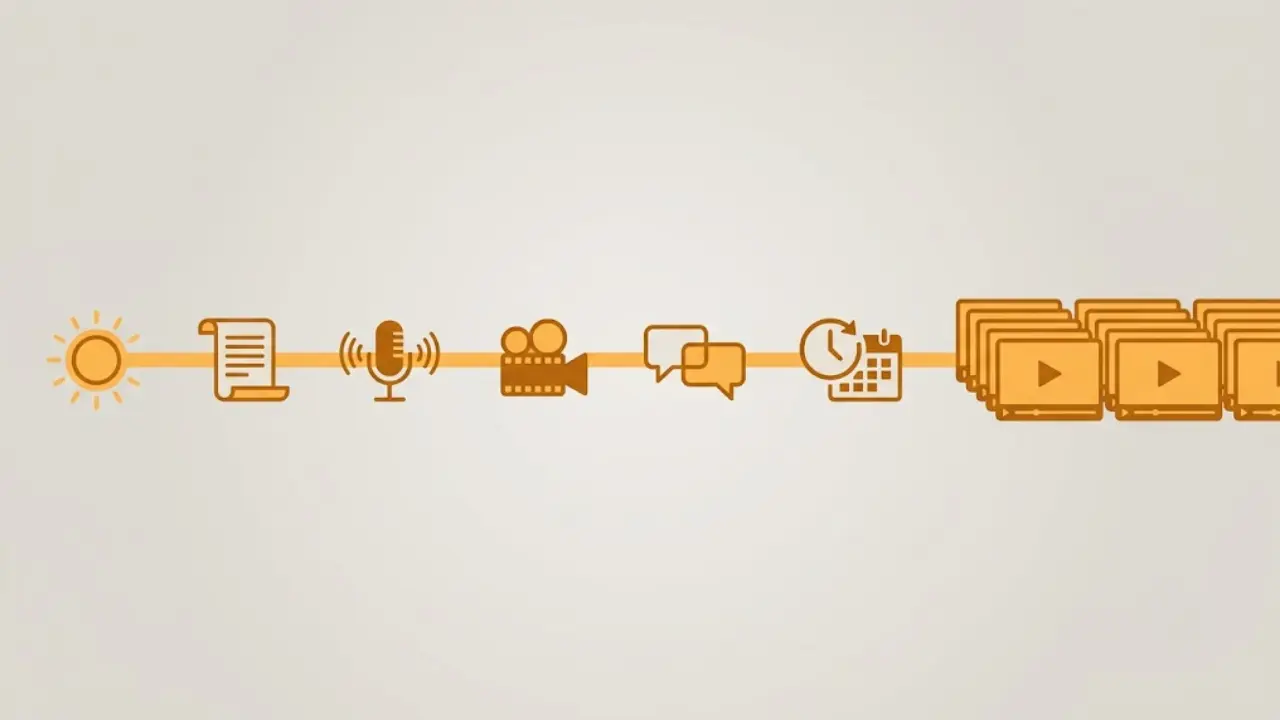
- Start from the idea, not a blank timeline. Type your topic or paste a script. The app generates a full script with a structured hook, so you are shaping an opener instead of staring at an empty page. Rewrite the first line by hand until it makes you curious.
- Pick a voice that fits the topic. There are over 200 ElevenLabs voices available. A calm narrator for a reflective clip, a punchier read for a fact drop. The right voice is a retention lever, so audition a couple before committing.
- Choose one visual style and keep it. With 39 styles and multiple models through Replicate, it is tempting to switch every video. Do the opposite. Pick one that fits your niche and reuse it so your feed reads as a single channel.
- Let captions and music come in automatically. Subtitles and background music are generated with the video, so the retention basics are handled without a night of manual syncing. Check that captions are timed to the voice and are not covering the visual.
- Batch a week in one session. Use Series to spin one idea into a run of videos, then schedule them. This is how you get volume and consistency without burning out.
- Auto-publish on a rhythm. Connect your platforms and let scheduled posting keep the cadence for you. A quick honesty note. Autopilot is in beta, and TikTok is excluded from fully automatic publishing because it needs your explicit consent, so you approve those yourself.
The point of doing it this way is simple. When production takes minutes instead of hours, you can afford to post enough to actually give the channel a fair test, and you can spend your real attention on hooks and packaging where it counts.
💡 Want to run this loop yourself this week? Create a free account and generate your first batch.
7. Where Faceless Lab helps and where it will not
I would rather you trust this article than oversell you, so here is the honest boundary.
Where Faceless Lab genuinely helps. It removes the production grind that makes consistency impossible for one person. Script, voice, visuals, captions, and music come together in minutes, and scheduling plus auto-publish keep the rhythm. If your channel is stalling because you cannot keep up the volume, or because manual editing is killing your motivation, this is the exact problem it was built for.
Where it will not save you. No tool fixes a bad hook or a niche nobody is searching for. If your openings are flat, faster production just means you publish flat videos faster. Faceless Lab makes it cheap to test and iterate, but you still own the ideas, the hooks, and the promise. It also will not fully auto-post to TikTok for you, by design, so that platform stays a manual approve step.
If you read that and thought the honest answer is that your hooks need work, good. That is the highest-leverage fix on this whole list, and now you can test new ones without a weekend of editing behind each attempt.
Flat views are a solvable problem far more often than they feel like one. Fix the first three seconds, tighten retention, hold a real posting rhythm, and give the channel a fair month before you judge it. The creators who make it are not the lucky ones. They are the ones who kept shipping while the production stayed cheap. If this helped, repost it to someone whose channel is stuck, and if you want to earn while you share the tools you use, our affiliate program is open. Ready to make consistency actually doable? Try Faceless Lab free.
Read more
Frequently asked questions
Why are my faceless videos getting no views?
In almost every case it is one of five fixable things, not the algorithm punishing you. The most common is a weak first three seconds that loses the small test batch the platform shows your video to. After that come poor mid-video retention, posting too little or too irregularly, and packaging that confuses viewers about your niche. Start by muting your last upload and watching only the opening. If it does not make a stranger curious in three seconds, fix that before anything else, because every other improvement is downstream of the hook.
How many faceless videos should I post before deciding it is not working?
Give it thirty to sixty days of consistent posting before you judge a channel. Short-form growth is lumpy, and one video often carries a whole month, so a small sample tells you almost nothing. A workable rhythm is one video a day or at least three a week, held steadily rather than five in one burst and then silence. The creators who quit at video eight never gave the channel enough test batches to catch. Volume and consistency are what let a single breakout happen.
Do faceless videos get fewer views than videos with a face?
No. Plenty of faceless channels reach millions of views, because short-form rewards a strong hook, tight pacing, and clear packaging far more than a visible presenter. What matters is that your first three seconds create curiosity and your retention holds. A face can build a personal connection over time, but it does not rescue a slow opening or a confusing niche. If your faceless videos are flat, the fix is almost always the hook and the posting rhythm, not showing your face.
Does buying views or using engagement tricks help low-performing videos?
No, and it usually hurts. Fake views and pods send the platform a false signal about who your audience is, which can make your real distribution worse because the recommendation system learns the wrong pattern. The only durable fix is content that keeps a genuine test batch watching. Spend the energy on rewriting hooks, cutting dead air, and posting consistently. Those are slower but they compound, while bought engagement gives you a vanity number and a confused algorithm.
How important are captions and music for faceless video views?
Very. Most people watch short-form on mute, so captions that are timed to the voice and do not crowd the frame are one of the cheapest retention wins available. Music sets pace and mood, and a track that fits the topic keeps people in the video longer. Neither will save a weak hook, but both quietly leak views when they are done poorly. Generating captions and music together with the video, then checking the caption timing, removes two of the most common silent killers of retention.
Can an AI faceless video tool actually fix my low views?
Partly. A tool removes the production grind, which is what makes consistent posting possible for one person, and consistency is a real driver of views. Faceless Lab generates the script, voice, visuals, captions, and music in minutes and can schedule and auto-publish, so you can post enough to give the channel a fair test. What it cannot do is invent a good hook or pick a niche people want. You still own the ideas. The tool just makes testing them cheap and fast.
Related articles
Post Your Faceless Videos When Your Audience Is Actually Watching
The best times to post faceless videos on YouTube Shorts, TikTok and Instagram Reels, why the first hour decides your reach, and how to automate it so you never watch the clock.
Make Faceless ASMR Videos Without Recording a Single Sound
Sleep and relaxation content is one of the few niches that stays calm and keeps paying. Here is how to build a faceless ASMR channel with AI voice, visuals and music, no camera and no mic needed.
Start a Faceless Psychology Channel That Turns Everyday Behavior Into Daily Shorts
Psychology is one of the most watchable faceless niches going. Here is how to pick a sub-angle, script hooks that hold attention, and post human-behavior shorts every day without showing your face.