How Often to Post Faceless Videos to Actually Grow
How often should you post faceless videos to grow? Here is the real cadence for YouTube Shorts, TikTok and Reels, what the data shows, and how to keep a rhythm without burning out.


Roberto Pasqualini
CMO at Faceless Lab
A practical 2026 guide to how often to post faceless videos on YouTube Shorts, TikTok and Reels, the real growth data behind each cadence, and how to keep a rhythm without burning out.
So how often should you post faceless videos if you actually want the channel to grow? We get this question more than almost any other, and it usually lands right after someone makes their first three or four videos and realizes the hard part was never making one video. It is making the next one, and the one after that. Posting frequency sits at the center of every faceless channel that works, and getting it wrong in either direction, too slow or too fast, is one of the quietest reasons channels stall out before they ever find an audience. Here is what the 2026 data says, and how we think about cadence for the channels we run ourselves.
Executive Summary. For most faceless creators in 2026, the sweet spot is one short-form video per day on your main platform, built up gradually from three or four a week. Analyses across YouTube Shorts show channels posting two to three Shorts a day growing noticeably faster than channels posting once, while anything past three a day adds very little and posting ten or more in a single day can trip spam filters. On TikTok the practical range is one to three posts a day, and on Instagram Reels a steady four to seven a week holds up well. The number that beats all the others is the one you can keep every week without dreading it. Faceless Lab exists to make that rhythm realistic, so you can batch a week or a month of videos in one sitting and let the app publish one a day on schedule.
Table of Contents
- Why posting frequency is the real growth lever
- What the 2026 data says about how often to post
- How often to post on YouTube Shorts, TikTok and Reels
- Why a steady rhythm beats posting in bursts
- How to hit a real posting rhythm inside Faceless Lab
- Where posting more helps and where it does not
- A weekly posting plan you can actually keep
1. Why posting frequency is the real growth lever
Short-form platforms run on supply. Every video you upload is a fresh test the algorithm can push to a small group, measure, and decide whether to widen. The more tests you run, the more chances you have to land one that catches, and the faster the platform learns what your channel is actually about.
More videos mean more at-bats. A creator posting once a week gets roughly four swings a month. A creator posting daily gets thirty. Even if the hit rate is identical, the daily creator finds their breakout video far sooner, and each breakout pulls the whole channel up with it.
Fresh uploads keep you in rotation. YouTube and TikTok both lean toward channels that feed them a steady stream of new content. A quiet week reads as a channel going dormant, and the system quietly stops testing you as hard. Regular uploads keep your account in active rotation.
Your real ceiling is production time. Here is the part nobody says out loud. The reason most faceless creators cannot post daily has nothing to do with ideas. It is the three to four hours it takes to script, voice, source visuals, caption, and export a single video by hand. Frequency is capped by how long one video takes to make, which is exactly the bottleneck we built Faceless Lab to remove.
2. What the 2026 data says about how often to post
The numbers behind posting frequency are more specific than most creators expect, and they point in a clear direction up to a point.
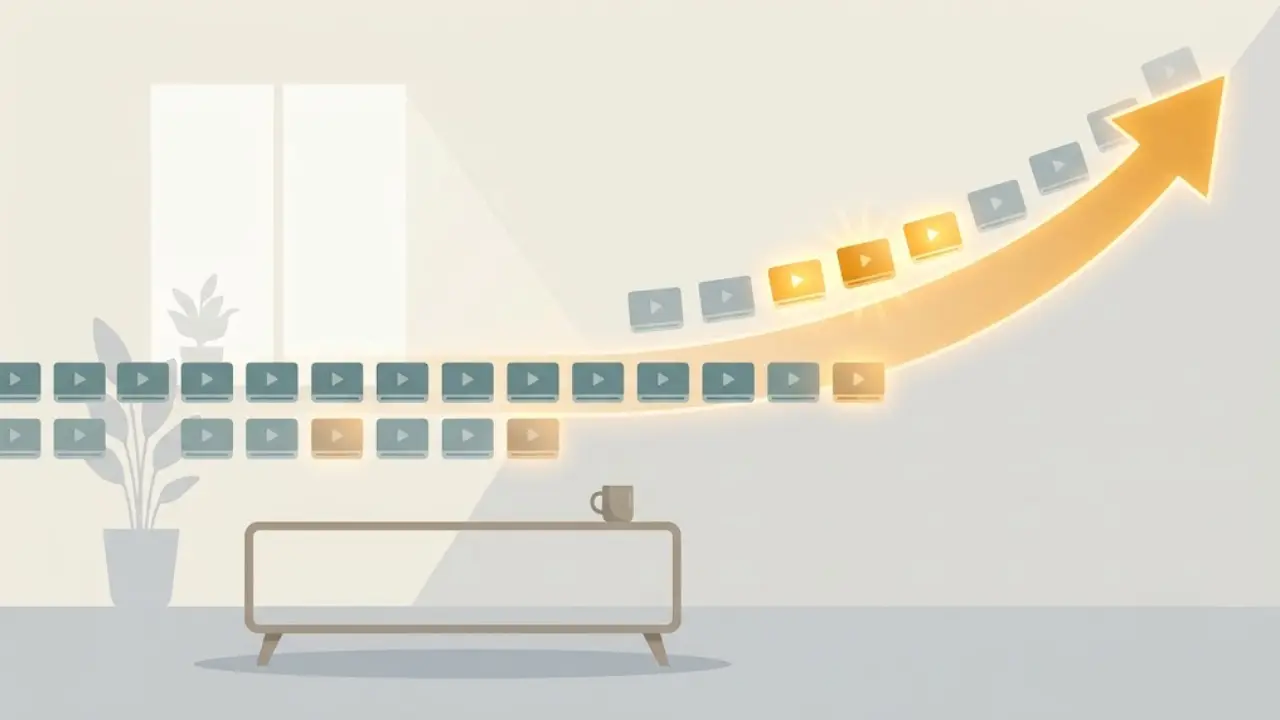
YouTube Shorts. One 2026 analysis found channels posting three Shorts a day averaging around 3,500 new subscribers a month, compared to roughly 800 for channels posting once a day at the same quality. The jump from one to two Shorts a day nearly tripled growth in that data. The catch is that returns flatten fast. Going from three to four or more Shorts a day added only about eight percent. Push it too far and it backfires, since posting ten or more Shorts in a single day can trigger spam detection and cut your reach. When you do post several a day, space them at least two to three hours apart.
TikTok. TikTok's own creator guidance points to one to four posts a day, but treat the top of that range as aspirational rather than a target. In practice, one to three a day is the workable band, and analyses of high-growth accounts in 2026 keep landing on the same conclusion. A steady three to five strong posts a week beats a flood of mediocre ones on almost every metric that matters.
The quality gate. None of these numbers help if the videos are weak. Volume multiplies whatever your baseline quality is, so ten forgettable videos a day just teach the algorithm faster that your channel is forgettable. Frequency is a lever, and it only lifts a channel that is already making something worth watching.
3. How often to post on YouTube Shorts, TikTok and Reels
Each platform rewards a slightly different rhythm. Here is where we land for faceless channels.
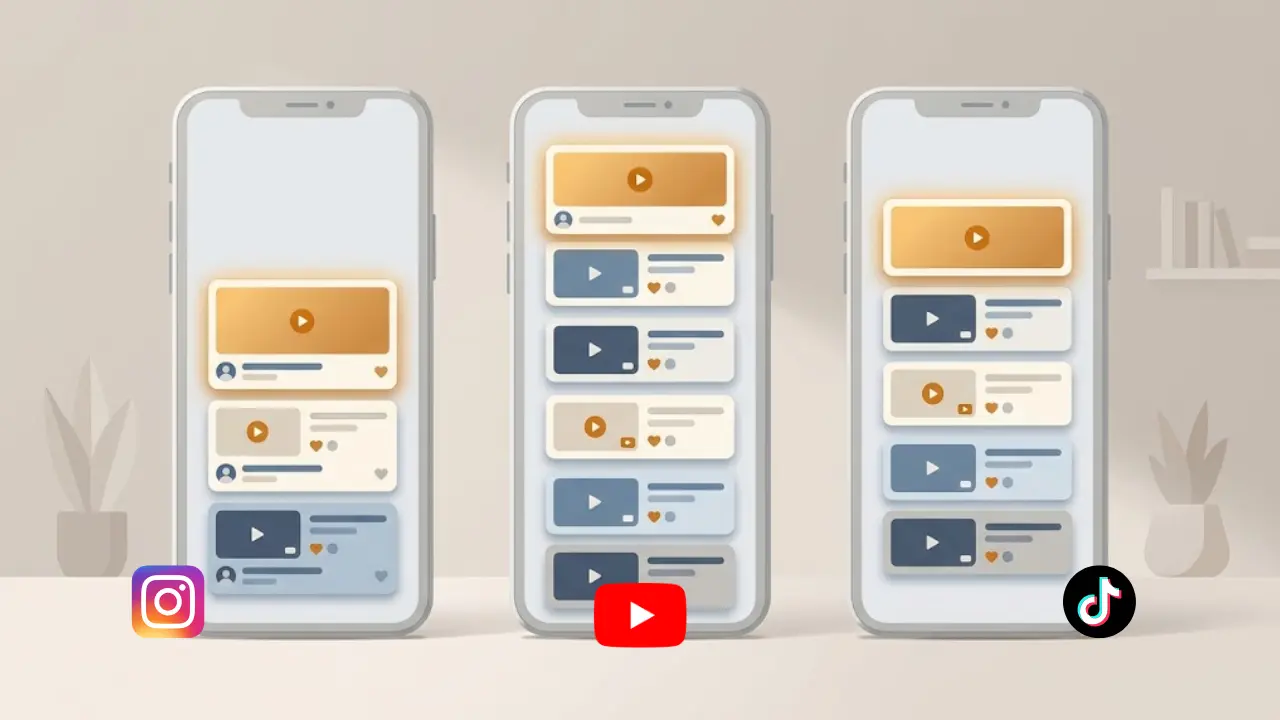
YouTube Shorts
One to two Shorts a day is the sustainable sweet spot for most channels, with room to push to three while your quality holds. If you are just starting, three or four a week is plenty to get the algorithm reading your channel. Space multiple daily uploads a few hours apart, and resist the urge to dump a huge batch all at once.
TikTok
One to three posts a day works, but consistency carries more weight here than raw volume. TikTok rewards accounts that show up on the same schedule every day, and it punishes the stop-start pattern more than a lower steady cadence. Riding a trend or sound while it is hot can justify an extra post on a given day.
Instagram Reels
Reels reward a calmer pace. Four to seven a week is a commonly recommended range that keeps you visible without flooding the feed. Because Reels have a longer shelf life than a TikTok, quality per post tends to pay off more than sheer frequency.
One note on publishing. Faceless Lab can auto-publish and schedule directly to YouTube, Facebook, Instagram and LinkedIn. TikTok is deliberately left out of fully automatic auto-publish and needs your explicit consent for each upload, which keeps you on the right side of TikTok's rules while still letting you produce for it in batches.
4. Why a steady rhythm beats posting in bursts
Almost every faceless channel that fizzles followed the same pattern. A burst of motivation, twenty videos in a week, then silence for a month. It feels productive and it grows nothing.
Algorithms reward reliability. A channel that posts one video every single day sends a clear, repeated signal that it is active and worth testing. A channel that posts twenty in three days and then vanishes sends the opposite signal right when the first batch was starting to gain traction.
Audiences form habits around consistency. People start to expect your videos when you show up predictably. That expectation is what turns a one-time viewer into a subscriber who watches the next one, which is the single biggest driver of short-form reach.
Bursts burn you out. The manual grind of making a dozen videos in a weekend is exactly what makes people quit two weeks later. A rhythm you can hold for six months beats a sprint you abandon after one, every time.
The trick is decoupling how often you create from how often you publish. You can do the creative work in one focused session and still hand the audience a daily drip. That gap is where scheduling earns its keep.
5. How to hit a real posting rhythm inside Faceless Lab
This is the workflow we use to keep a daily channel running without it eating our week.
Step 1. Pick a niche and a stack of hooks. Decide what the channel is about and jot down ten to twenty hook ideas. This is the only part that really needs your judgment, and it is the part we want you spending your time on.
Step 2. Generate in a batch. Drop each idea into Faceless Lab and let it build the full video: script, voiceover, visuals, background music and captions in one pass. There is no jumping between apps and no fixing exports at midnight. A week of videos comes together in one sitting.
Step 3. Shape the look and voice. Choose from 39 visual styles and 8 story structures to match your niche, and pick a voice from 200+ ElevenLabs options so the channel sounds like itself every time. Visuals run on multiple Replicate models under the hood, so you are not locked into one look.
Step 4. Schedule one a day. Instead of publishing the whole batch at once, set the videos to release one per day. Your creation happens in an afternoon, your audience gets a steady daily rhythm.
Step 5. Turn on Autopilot and Series. Autopilot (in beta) keeps the pipeline running so the channel does not go quiet when you get busy, and Series turns one idea into an ongoing run of related videos that publishes on its own.
Step 6. Auto-publish across platforms. Let Faceless Lab push and schedule to YouTube, Facebook, Instagram and LinkedIn automatically. For TikTok, you confirm each upload yourself, since TikTok is excluded from fully hands-off publishing by design.
💡 Ready to try a cadence you can actually keep? Start free and make your first faceless video.
6. Where posting more helps and where it does not
We would rather be straight with you than oversell frequency, because posting more is not a fix for everything.
Where a higher cadence clearly helps. New channels benefit most, since more uploads help the algorithm figure out who to show you to. It is also the fastest way to test niches and hooks, and it builds a back catalog that keeps earning views long after you post it. If you are in your first few months, leaning into frequency is usually the right call.
Where it does not help. If your videos are not landing, posting more of them just scales the problem. Frequency will not save a topic nobody searches for, a hook that does not grab, or captions people cannot follow. It also does not help if the pace makes you miserable, because a rhythm you resent is a rhythm you will drop. And no amount of volume replaces reading your analytics and adjusting. Faceless Lab removes the production grind, but it will not tell you your niche is boring. That judgment stays with you.
7. A weekly posting plan you can actually keep
Pick the tier that matches where you are, then hold it for at least a month before you judge it.

Starting out (three to four a week). Post on set days, say Monday, Wednesday, Friday and Saturday. Enough to keep the algorithm reading your channel, light enough that you never dread it. Batch all four in one short session.
Growth mode (one a day). The reliable workhorse cadence. Batch seven videos in an afternoon, schedule one per day, and let the channel run for the week while you focus on the next batch of ideas.
Aggressive (two a day, quality permitting). Only step up to this once you can hold the quality bar at daily. Batch fourteen, schedule two a day spaced a few hours apart, and watch your analytics for any dip that signals you have pushed volume past what your content can carry.
Whichever tier you choose, the win is the same. Do the creative work in bursts, hand the audience a steady stream, and keep the rhythm long enough for it to compound.
The honest verdict: how often you post matters a lot, but only after you have made the posting sustainable. Decide on a cadence you can hold for six months, batch your videos so a daily channel takes an afternoon a week instead of an hour a day, and let scheduling turn that batch into a rhythm. Start with the free trial (€0), keep it going on Starter (€19), Growth (€59) or Pro (€149) when you outgrow it, and give yourself a month before you change anything.
If this helped, repost it to a creator who keeps starting channels and going quiet, and if you want to earn while you share it, our affiliate program pays you for every creator you send our way.
Try Faceless Lab free and give your channel a rhythm it can actually keep.
Read more
Frequently asked questions
How often should you post faceless videos to grow in 2026?
For most faceless creators, one short-form video a day on your main platform is the reliable growth cadence in 2026, built up gradually from three or four a week when you start. Published analyses show channels posting two to three Shorts a day growing faster than those posting once, with returns flattening past three a day. The right number is the one you can keep every week without burning out, which is why batching and scheduling matter as much as the target itself. Consistency over months beats a short burst of high volume every time.
How many YouTube Shorts should I post per day?
One to two Shorts a day is the sustainable sweet spot for most channels, with room to push to three while quality holds. One 2026 analysis found the jump from one to two daily Shorts nearly tripled subscriber growth, while going from three to four or more added only around eight percent. Avoid posting ten or more in a single day, since that can trigger spam detection and cut your reach. If you post several a day, space them at least two to three hours apart so they do not compete with each other for the same first push.
How often should I post on TikTok versus YouTube?
On TikTok, one to three posts a day is the practical range, and consistency on a fixed daily schedule matters more than raw volume. On YouTube Shorts, one to two a day is the sweet spot, with three as an upper limit while quality holds. The biggest difference is that TikTok punishes stop-start posting harder, so a steady lower cadence there often beats an uneven higher one. On both platforms, riding a live trend can justify an extra post on a given day, but your baseline rhythm should be something you can sustain.
Does posting more faceless videos always mean faster growth?
No. Frequency multiplies whatever your baseline quality is, so posting more weak videos just teaches the algorithm faster that your channel is not worth pushing. Volume helps most for new channels that need the algorithm to learn who to show them to, and for testing niches and hooks quickly. It does not fix a boring topic, a weak hook, or captions people cannot follow, and it will not help if the pace burns you out. Treat frequency as a lever that lifts an already-decent channel, not a substitute for making videos people actually want to watch.
How can I post daily without spending hours on each video?
Separate creation from publishing. Instead of making one video a day, batch a week or a month in a single focused session, then schedule them to release one per day. Faceless Lab builds each video end to end, script, voiceover, visuals, music and captions, so a week of content comes together in an afternoon rather than an hour per video. From there you schedule the batch, and Autopilot (in beta) plus Series keep the pipeline running. That gap between how often you create and how often you publish is what makes a daily channel realistic.
Can Faceless Lab auto-publish my videos on a schedule?
Yes. Faceless Lab can schedule and auto-publish directly to YouTube, Facebook, Instagram and LinkedIn, so you set the cadence once and the app handles the daily uploads. TikTok is deliberately excluded from fully automatic auto-publish and requires your explicit consent for each upload, which keeps you compliant with TikTok's rules while you still produce for it in batches. The practical workflow is to batch your videos, schedule the auto-publish platforms to drip one a day, and confirm your TikTok uploads yourself when they are due.
Related articles
Post Your Faceless Videos When Your Audience Is Actually Watching
The best times to post faceless videos on YouTube Shorts, TikTok and Instagram Reels, why the first hour decides your reach, and how to automate it so you never watch the clock.
Make Faceless ASMR Videos Without Recording a Single Sound
Sleep and relaxation content is one of the few niches that stays calm and keeps paying. Here is how to build a faceless ASMR channel with AI voice, visuals and music, no camera and no mic needed.
Start a Faceless Psychology Channel That Turns Everyday Behavior Into Daily Shorts
Psychology is one of the most watchable faceless niches going. Here is how to pick a sub-angle, script hooks that hold attention, and post human-behavior shorts every day without showing your face.