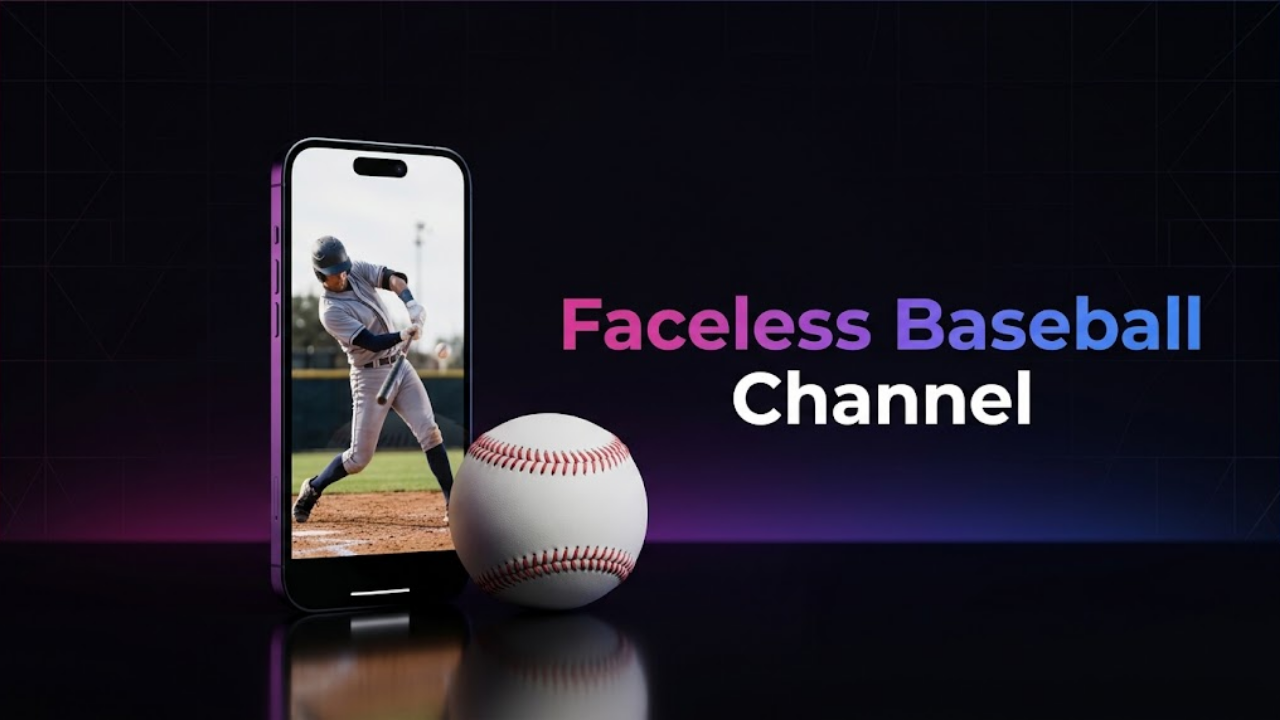
Build a Faceless Baseball Channel Before the MLB Playoffs Are Over
The MLB postseason hands faceless creators a month of ready-made content. Here is how to start a faceless baseball channel and post every day without filming anything.
Roberto Pasqualini
CMO at Faceless Lab
The postseason is the one month of the year when baseball writes your content calendar for you.
So you want to start a faceless baseball channel while the playoffs are actually happening? That instinct is right. A faceless baseball channel is a sports channel where you never appear on camera and never film a game. You narrate the stories, break down the numbers, and let voice, visuals and captions carry the video. The 2026 MLB postseason starts on September 29, and the World Series begins October 23, which means you have a rare stretch where millions of people are searching baseball every single night. That is free demand, and most of it is going to creators who started before the first pitch.
Executive Summary: A faceless baseball channel turns the MLB playoffs into a daily posting engine without a camera, a stadium ticket, or broadcast footage. The postseason supplies the topics for you: matchups, player stories, wild stat lines, "on this day" history, and hot takes that people argue about in the comments. You script a short, pick an AI voice, generate matching visuals, add captions and music, then schedule it. The trick is speed and consistency, because the playoff window is short and the algorithm rewards accounts that show up every day. Faceless Lab handles the full pipeline from idea to publish-ready short, so one person can run a channel that looks like a small team. Talk baseball and tell stories, and you avoid the copyright trap that kills channels that repost game clips.
Table of Contents
- Why the postseason is the easiest content window of the year
- What kind of faceless baseball videos actually get watched
- The content calendar the playoffs write for you
- How to make a faceless baseball video inside Faceless Lab
- Keep it legal: talk baseball without touching broadcast footage
- Where a faceless baseball channel is and isn't the right move
- What to post after the World Series ends
1. Why the postseason is the easiest content window of the year
Starting a channel is usually hard because you have to invent a reason for people to care. During the playoffs that problem disappears. The event creates the audience, and your job is to be there when they go looking.
Demand is already searching. Twelve teams reach the postseason, six games can run on a single day early in the bracket, and every game creates a new set of questions people type into YouTube and TikTok that night. You are not building interest from zero. You are catching interest that is already in motion.
The calendar refreshes daily. A slow niche gives you one idea and leaves you staring at a blank page. A playoff run gives you a fresh topic after every game, so the "what do I post today" question answers itself for a full month.
Short-form fits the moment. People want the reaction, the one stat, the quick story, and they want it fast. A 30 to 60 second faceless short is exactly the format they share in the group chat, which is where most of your early growth actually comes from.
2. What kind of faceless baseball videos actually get watched
You are not reposting highlights. You are making the videos that live around the highlights, the ones people watch before and after the game.

- Story shorts. The rookie nobody drafted, the trade that changed a franchise, the comeback that took ten years. Baseball is stuffed with these, and narrated stories travel far because they work even for people who missed the game.
- Stat breakdowns. One surprising number, explained in 40 seconds. "This pitcher has not allowed a run in the postseason since..." style hooks perform because they settle an argument or start one.
- Hot takes and predictions. Pick the series, call the upset, rank the teams left. Opinion drives comments, and comments drive reach.
- On this day. A famous playoff moment from years past, retold on its anniversary. Evergreen, easy to batch, and it keeps posting even on an off day in the schedule.
- Explainers. How the wild card round works, why a bullpen game is risky, what a certain rule actually means. Casual fans search these constantly during October.
Pick a lane, then stay in it. A channel that only does "baseball stories nobody talks about" is easier to grow than one that does a bit of everything, because the algorithm learns exactly who to show you to. One angle, one voice, one look.
3. The content calendar the playoffs write for you
Here is the part that makes the postseason unfair in your favor. You can plan a full month of posts before it even starts, and let the results fill in the blanks.
Before a game (morning or afternoon):
- A preview of the matchup framed as a question fans are already asking.
- A "key player to watch" story short.
- A prediction with a clear, arguable opinion.
After a game (that night or next morning):
- A reaction to the biggest moment, told as a 30 second story.
- One stat that captures what happened.
- A "what this means for the series" explainer.
On off days:
- On this day in postseason history.
- A ranking of the teams still alive.
- A myth-busting explainer about a rule or strategy.
That is three to five video ideas per day, every day, for a month, without a single original idea required from you. The event does the creative work. You do the production, and production is where a faceless workflow either saves your month or eats it.
4. How to make a faceless baseball video inside Faceless Lab
This is the whole point of going faceless. One person, one afternoon, a week of videos ready to publish. Here is the flow inside Faceless Lab, step by step.
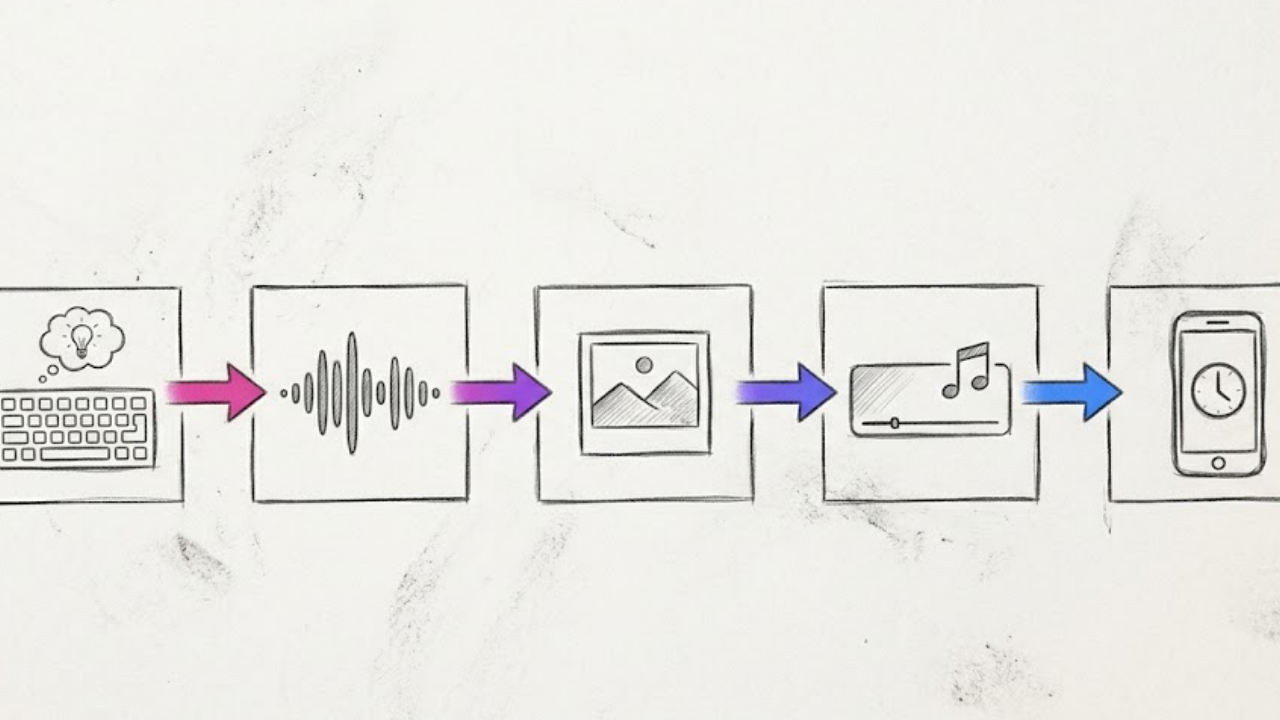
- Drop in your topic. Type the idea, for example "the biggest upset in wild card history" or "why this bullpen game is a gamble." The AI writes a short script built on one of our 8 proven video structures, so the hook, the middle and the payoff are already shaped for retention. You can edit any line before moving on.
- Pick a voice. Choose from 200+ ElevenLabs voices and find one that sounds like a real sports narrator, calm and confident rather than robotic. The voice becomes your channel's identity, so pick one and keep it.
- Generate the visuals. Faceless Lab pulls from multiple image and video models through Replicate and gives you 39 visual styles to match the mood, from clean stadium-night tones to bold graphic looks. These are your own generated visuals, which keeps you clear of copyright.
- Add captions and music. Captions are added automatically and styled to keep people watching with the sound off, which is how most shorts are actually viewed. Then drop in background music that fits the pace.
- Schedule and publish. Connect your accounts and set the posting times, and Faceless Lab publishes for you across platforms. Autopilot (currently in beta) can keep a channel posting on a rhythm with almost no hands on it. One note to be straight with you: fully automatic auto-publishing does not include TikTok, which requires your explicit consent for each post, so TikTok stays a quick manual step.
You can start on the Free trial at €0 to make your first videos, then move up as you scale. Starter is €19, Growth is €59, and Pro is €149, and the plans mostly differ by how many videos you generate each month, which matters a lot when you are trying to post daily through a playoff run.
💡 Ready to make the first one? Create your free account and build a video today.
5. Keep it legal: talk baseball without touching broadcast footage
This is the section that saves your channel, so read it twice. The fastest way to get a faceless sports channel taken down is to repost game footage you do not own. Broadcast clips, league highlight reels, and network graphics are protected, and reuploading them is the most common reason sports channels get struck.
The faceless approach sidesteps this by design, because you are making original content around the sport instead of copying the sport.
- Use your own generated visuals. The images and clips you create inside Faceless Lab are yours to publish. No borrowed footage means no strike.
- Narrate facts and stories. Scores, records, historical moments and public information are fair to talk about. You are commenting and storytelling, which is a different thing from rebroadcasting.
- Skip the logos and jerseys where you can. Team names in text are fine. Recreating official logos and marks with AI is a gray zone, so lean on generic baseball imagery and let the script carry the specifics.
- Add real value. The more your video is your analysis, your angle and your storytelling, the safer and the stronger it is. A pile of someone else's clips is weak content and a legal risk at the same time.
Play it this way and your channel is built on something you own, which is the only kind of channel worth growing.
6. Where a faceless baseball channel is and isn't the right move
I run faceless channels every day, so I will be honest about the tradeoffs instead of selling you a fantasy.
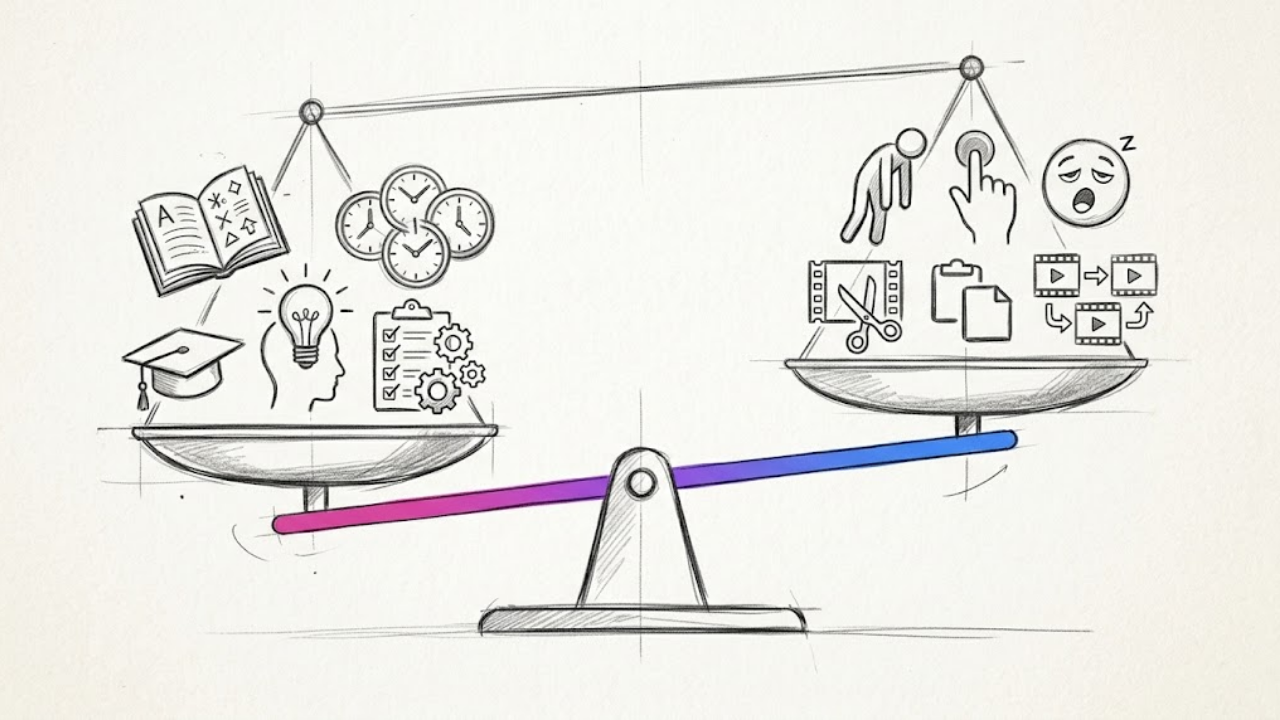
It is a great fit if:
- You know baseball well enough to have opinions and spot the good stories. Knowledge is your edge, and AI cannot fake it.
- You want to test a channel fast during a moment of high demand without spending on gear.
- You can commit to posting daily for the length of the playoffs. Consistency is the whole strategy.
It is the wrong move if:
- You want it to run with zero input. AI handles production, and you still choose the topics, the takes and the hooks. A channel with nothing human in it gets ignored.
- You are hoping to repost highlights for easy views. That path ends in strikes, and this workflow deliberately does not do it.
- You expect overnight numbers. Most channels need weeks of consistent posting before the algorithm commits. The playoffs shorten that runway, and they do not remove it.
If those tradeoffs sound fair, you are exactly who this works for.
7. What to post after the World Series ends
The mistake most trend-riders make is quitting the day the trend cools. The channel you built in October does not have to go quiet in November.
The postseason is your launch, and the offseason is your proof of consistency. Roll straight into on this day baseball history, all-time player stories, offseason trade and free-agency reactions, and rule and strategy explainers that work in any month. You already have the voice, the look and the posting habit, so you keep the same channel identity and just change the topic supply. By the time next season starts, you are not a new account chasing a trend. You are an established channel the algorithm already trusts.
That is the real win here. The playoffs give you a reason to start today, and a system that keeps working long after the last out.
The playoffs will not wait for you to feel ready, so start now while the demand is at its peak, make your first few videos free, and post something every day the bracket is alive. If a video does well, reshare it and tell a friend who is trying to grow a channel, and if you want to earn from sending people our way, our affiliate program is open. Start your faceless baseball channel free today at facelesslab.video.
Read more
- The NFL Season Is the Easiest Time to Grow a Faceless Football Channel
Frequently asked questions
Can you start a faceless baseball channel during the MLB playoffs and still grow?
Yes, and the playoffs are the best time to try. The postseason creates a spike in baseball searches every night, so you are catching demand that already exists instead of building interest from scratch. Twelve teams reach the 2026 postseason starting September 29, and each game generates fresh questions people search for that evening. If you post daily story shorts, stat breakdowns and predictions through the run, you give the algorithm a lot of chances to find your audience quickly. The window is short, so the creators who start before the first pitch have a real head start over those who wait.
Do I need to show highlights to make faceless baseball videos?
No, and you should not. Reposting broadcast footage or league highlight reels is the most common reason sports channels get copyright strikes, because that content is protected and owned by the leagues and networks. A faceless baseball channel works differently. You narrate stories, break down stats, and use your own AI-generated visuals, which are yours to publish. You are commenting on and telling stories about the sport rather than rebroadcasting it. This keeps your channel safe and actually makes it stronger, because original analysis and storytelling hold attention far better than a pile of borrowed clips.
What kind of baseball videos work best for a faceless channel?
Five formats consistently perform. Story shorts about players, trades and comebacks travel far because they work even for people who missed the game. Stat breakdowns that explain one surprising number in under a minute settle or start arguments. Hot takes and predictions drive comments, which drive reach. "On this day" history is easy to batch and posts even on off days. Explainers about rules and strategy catch casual fans searching during October. Pick one lane and stay in it, because a focused channel is easier for the algorithm to place than one that does a little of everything.
How do I make a faceless baseball video without filming anything?
You script it, voice it, and build the visuals with AI, then schedule it. Inside Faceless Lab you type your topic, and the AI writes a short script on one of 8 proven structures. You pick from 200+ ElevenLabs voices for a natural narrator sound, generate matching visuals from 39 styles using multiple models, and captions and music are added for you. Then you connect your accounts and schedule the post. The full pipeline runs from a single idea to a publish-ready short in minutes, which is what lets one person post daily through a month-long playoff run without a camera or editing software.
How often should I post during the postseason?
Every day the bracket is alive, if you can manage it. The playoffs are a short, high-demand window, and short-form algorithms reward accounts that post consistently during a moment of interest. Aim for at least one video per game day, and more if you can batch ahead. A realistic rhythm is a preview or prediction before games and a reaction or stat short after. The good news is you do not have to invent topics, because the schedule supplies three to five ideas per day on its own. Batching a week in one session is the sane way to keep that pace without burning out.
What do I do with the channel after the World Series ends?
Keep it running with offseason content. The biggest mistake trend-riders make is quitting when the event cools, which wastes the audience and the posting habit you built. Roll straight into "on this day" baseball history, all-time player stories, offseason trade and free-agency reactions, and evergreen rule and strategy explainers. You keep the same voice, visual style and posting rhythm, so the channel identity stays consistent and the algorithm keeps trusting it. By the time next season opens, you are an established channel rather than a new account chasing a trend, which is a far stronger position to grow from.
Related articles
The 2D Stickman Trend Is the Easiest Faceless Channel to Start Right Now
Stickman animation is blowing up on Shorts, Reels and TikTok. Here is how to start a faceless 2D stickman channel this week, script to publish, without drawing a single frame.
The GTA 6 Countdown Is the Easiest Time to Grow a Faceless Gaming Channel
GTA 6 lands November 19. That gives you weeks of rising search and hype to grow a faceless gaming channel now, so it is already ranking when the game drops. Here is the playbook.
Black Friday Rewards the Faceless Creators Who Batched in September
The shopping season goes to creators who queued their videos in September. Here is what faceless Black Friday videos to make, how to batch a month of them, and how to schedule the whole run so your channel posts on time.