Build a Faceless History Channel That Posts a New Story Every Day
History is one of the last faceless niches that keeps getting easier to grow. Here is how to turn a single event into a channel that posts a fresh story every day, without filming.


Roberto Pasqualini
CMO at Faceless Lab
A practical guide to making faceless history videos with AI, from a single event to a channel that publishes on its own schedule.
How do you make faceless history videos that people actually watch to the end, without filming anything or reading a single script on camera? It is a fair question, because history looks intimidating from the outside. You picture archives, narration booths, and hours of research per clip. A good faceless history video is a strong story, a clear voice, visuals that match the era, and captions that hold attention. All of that can come from one idea and a few minutes of setup.
We run faceless channels every day, and history keeps coming up as one of the niches we recommend to people who want something durable. It does not chase a trend that dies in a week. A story about a forgotten explorer or a strange law from the 1800s is just as watchable next year as it is today. That is rare in short-form, and it is worth building on.
Executive Summary: Faceless history videos work because the niche is evergreen, the research reads as genuinely valuable under stricter platform rules, and the format fits automation almost perfectly. Inside Faceless Lab you type a topic or paste a script, and the app writes the narration, generates a voiceover from a large ElevenLabs library, builds era-appropriate visuals, times the captions, and adds music. From there you turn one idea into a Series that publishes a new historical story every day, with auto-publishing to YouTube, Instagram, Facebook and LinkedIn. History rewards consistency more than production budget, which is exactly what a faceless workflow is built to deliver.
Table of Contents
- Why history is one of the easiest faceless niches to keep alive
- What kind of history videos actually get watched
- How to make a faceless history video inside Faceless Lab
- Turning single videos into a history series that posts itself
- Picking a voice and visual style that fit the era
- Where a faceless history channel is and isn't the right choice
- What to post first: 10 history video ideas to steal
1. Why history is one of the easiest faceless niches to keep alive
Most faceless niches burn out because they depend on novelty. A trend format gets copied by a thousand accounts in a month, and the views dry up. History does not work that way. The supply of interesting stories is effectively unlimited, and the appetite for them never really fades.
It is evergreen by nature. A well-made video about the last day of Pompeii or the woman who ran a spy ring during a war can pull views for years. You are not racing a clock. That changes how you think about your library, because every video you publish keeps working long after you post it.
It reads as genuinely valuable. Platforms have tightened the rules around low-effort, repetitive uploads. History sits on the right side of that line when it is done properly, because a researched, narrated story is real content with a point of view. You are teaching someone something they did not know, and that is exactly the kind of watch time algorithms want to reward.
It scales without your face or your voice. There is no set to build and no camera to face. The story carries the video. That is the whole promise of faceless content, and history fits it better than almost any other category.
2. What kind of history videos actually get watched
Not every history idea holds attention for 45 seconds. The ones that do tend to share a shape. They open on tension or a surprise, they deliver one clear payoff, and they never assume you already care.
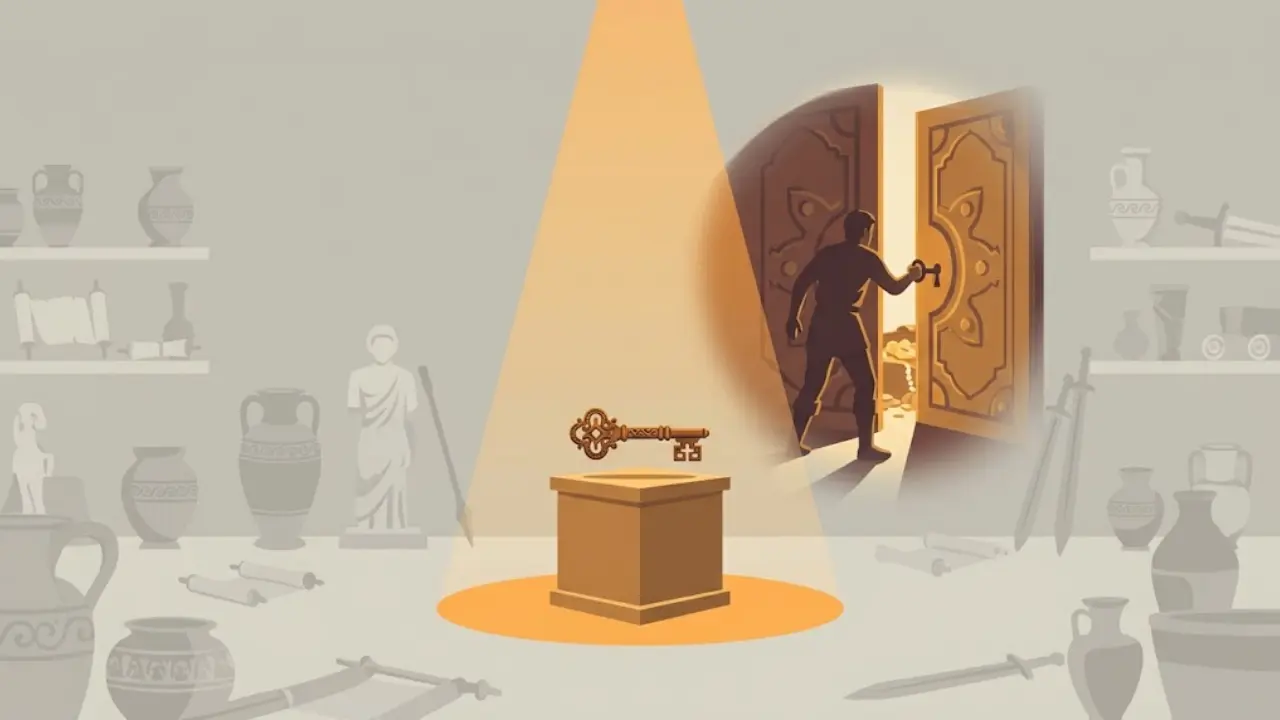
Single-story deep cuts. One event, one person, one mystery. "The town that vanished overnight" beats "a history of towns" every time. Narrow wins because it promises a specific payoff.
Myth versus reality. People love having a belief corrected. "What Vikings actually wore" or "the truth about medieval life expectancy" works because it sets up a gap between what viewers think they know and what really happened.
Everyday history. How people brushed their teeth, paid rent, or sent messages a few centuries ago. The small, human details travel further than grand battles, because they are easy to picture and easy to share.
Then versus now. A quick before-and-after framing gives the viewer an instant reason to keep watching. It also plays perfectly to short-form pacing.
The common thread is a hook in the first three seconds. If your opening line does not create a question in the viewer's head, the rest of the video rarely gets a chance.
3. How to make a faceless history video inside Faceless Lab
Here is the actual workflow we use. It takes minutes, not an afternoon.
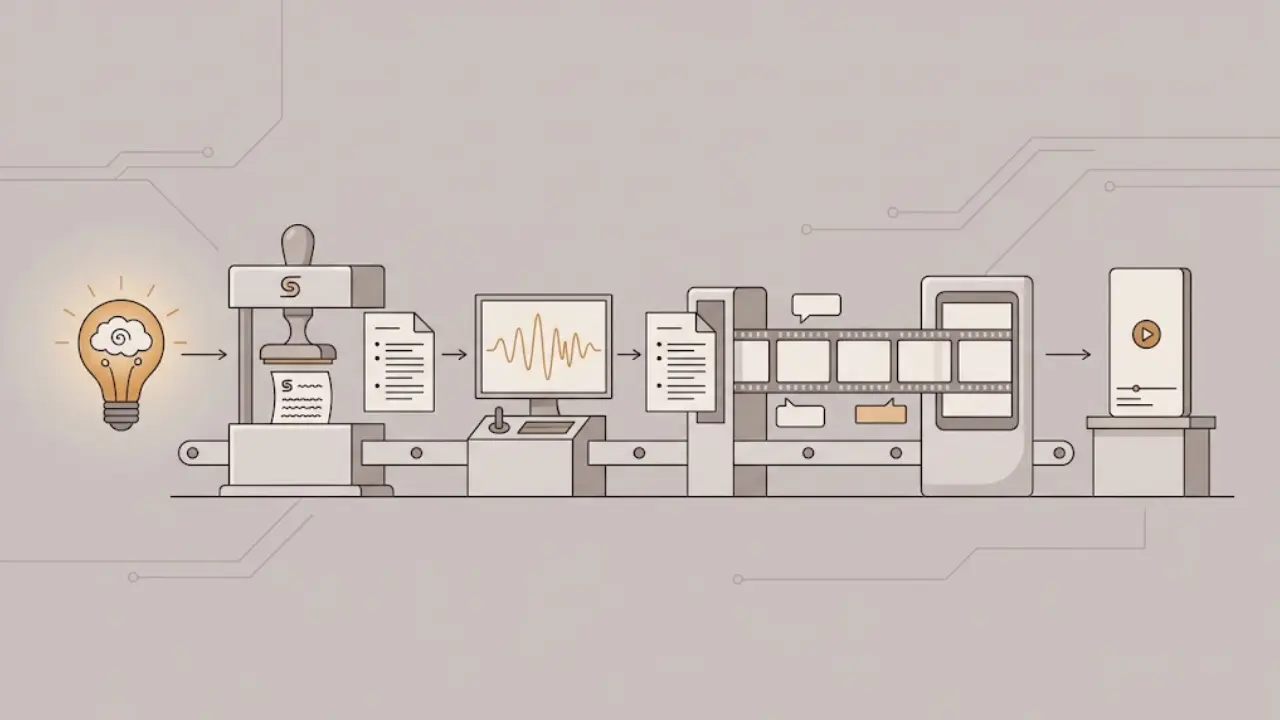
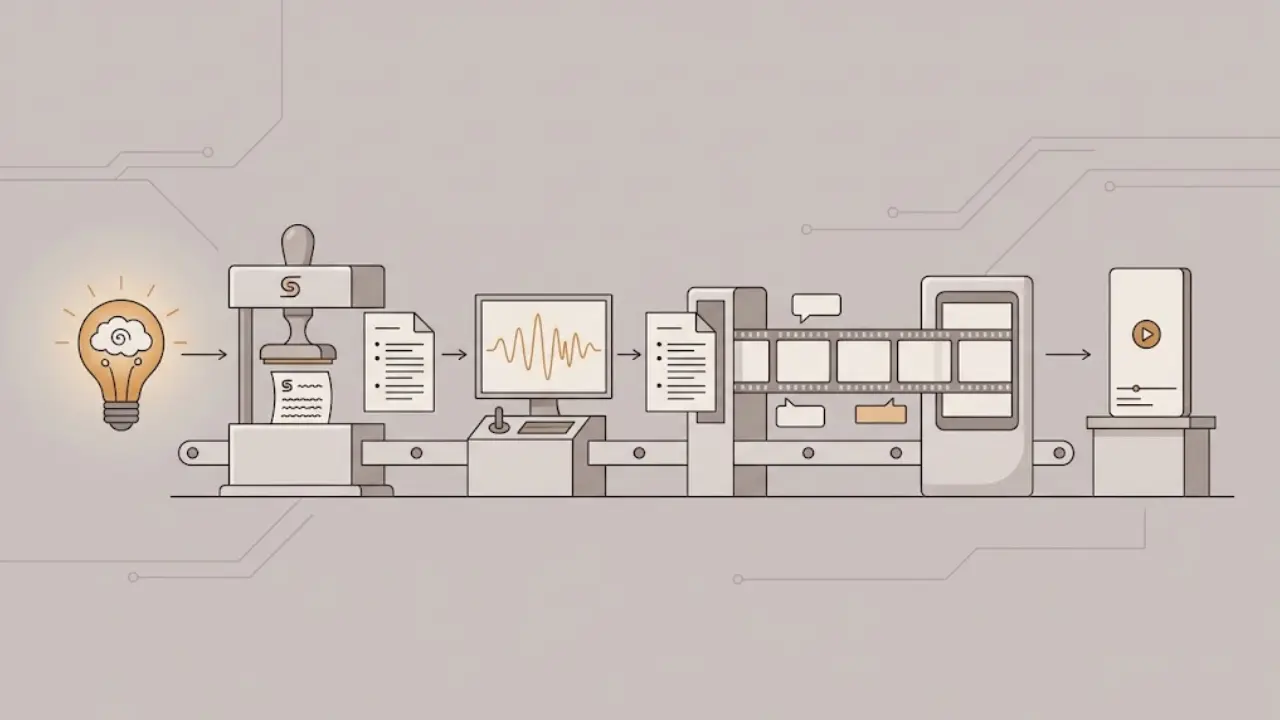
Step 1: Start from an idea or a script. Open the dashboard and type a topic like "the great emu war of 1932" or paste a script you already wrote. If you only have the topic, Faceless Lab writes the script for you, structured to hold attention rather than read like an encyclopedia entry.
Step 2: Choose a story structure. Pick from the built-in structures so the narration has a shape. For history, a hook-then-reveal or a countdown of surprising facts usually lands best. The structure decides pacing before a single visual is generated.
Step 3: Generate the voiceover. Select a narrator from the ElevenLabs voice library, which gives you a wide range of tones and accents. A calm, documentary-style voice suits most history content. You can preview and swap until it feels right.
Step 4: Let the visuals build. The app generates era-appropriate visuals scene by scene and syncs them to the script, so a line about ancient Rome does not land on a modern city shot. You choose the overall visual style up front and it stays consistent across the video.
Step 5: Review captions and music. Captions are timed automatically. Skim them for names and dates, since proper nouns are where auto-captioning slips most. Add a background track that matches the mood, and keep it low so the narration stays clear.
Step 6: Publish or schedule. Export a publish-ready file, or send it straight to your connected accounts. Auto-publishing covers YouTube, Instagram, Facebook and LinkedIn. TikTok is handled a little differently and needs your explicit consent for each post rather than fully hands-off publishing, so you stay in control there.
💡 Ready to try it on your first story? Create your free account and make one history video before you decide anything.
4. Turning single videos into a history series that posts itself
Making one video is fine. The channels that grow make many, on a rhythm. This is where a faceless setup stops being a novelty and starts being a real content engine.
With Series, you turn a single theme into a stream of videos. Set up a theme like "one forgotten invention every day" or "strange laws from history," and Faceless Lab keeps producing episodes in that lane so your channel has a recognizable identity instead of a random mix.
Pair that with Autopilot, currently in beta, and the production and scheduling run with far less hands-on work from you. You batch the ideas, the app handles the assembly line, and videos go out on a cadence you set. History is ideal for this because the theme rarely runs dry. You will run out of afternoons long before you run out of stories.
The practical move is to batch. Spend one session brainstorming 20 to 30 story ideas, drop them into a series, and let the schedule spread them across the month. That single afternoon can cover weeks of posting.
5. Picking a voice and visual style that fit the era
History lives or dies on tone. A story about a shipwreck told in a hyped, fast-cut style feels wrong, and viewers feel it before they can explain it. Matching voice and visuals to the subject is the difference between a channel that feels credible and one that feels generic.
Voice. Reach for a measured, warm narrator for most history. The large ElevenLabs library means you can settle on one signature voice and keep it across every video, which is how viewers start to recognize your channel without ever seeing a face. Consistency here matters more than variety.
Visual style. Faceless Lab offers a broad set of visual styles, and history is one place where the choice really shows. A cinematic or painterly look suits older eras, while a cleaner style fits recent decades. Lock one style per channel so your feed looks like a channel, not a folder of unrelated clips.
Pacing. Let the narration breathe. History rewards a slightly slower rhythm than, say, a hype countdown. Give the viewer a beat to picture the scene before you move on.
6. Where a faceless history channel is and isn't the right choice
We would rather be honest than oversell, so here is the straight version.
It is a strong choice if you like research and storytelling, you want a library that keeps earning long after you post, and you want a niche that does not depend on you chasing whatever is trending this week. History rewards patience and consistency, and a faceless workflow removes the production grind that usually kills that consistency.
It is a weaker choice if you were hoping to go viral in your first week. History tends to build steadily rather than explode. It also asks for a minimum of care with facts. AI writes a strong first draft, but you should sanity-check names, dates and claims before you publish, because getting history wrong is the fastest way to lose a history audience.
Where the app helps and where you still lead. Faceless Lab removes the slow parts: scripting, voicing, sourcing visuals, timing captions, and publishing on schedule. What it does not do is replace your judgment about which stories are worth telling and whether a claim checks out. Think of it as your production team, with you as the editor who signs off.
7. What to post first: 10 history video ideas to steal
Use these as your first series. Each one is a single-story hook, which is exactly what performs.
- The war a country fought against birds and lost
- The year without a summer and why the sky turned strange
- The map mistake that gave away half a continent
- The everyday job that used to be one of the deadliest
- The message that arrived too late to stop a battle
- The invention we credit to the wrong person
- The city that was built and abandoned in a single generation
- The law that is technically still on the books and makes no sense today
- The ordinary object that started as a failed experiment
- The rescue that should have been impossible but worked
Drop these into a series, generate them in one sitting, and you have almost two weeks of posting ready before you have finished your coffee.
The verdict: history is one of the few faceless niches that gets more valuable the longer you commit to it. The stories never run out, the videos keep working after you publish, and the whole workflow fits automation better than almost anything else in short-form. If you have been waiting for a niche that does not punish you for taking a week off, this is it. Start your free trial, publish your first story today, and let a series carry the rest. If a video does well, repost it across your other accounts, and if you love the tool, our affiliate program is open to you.
Try it free and make your first faceless history video now: https://facelesslab.video/
Read more
Frequently asked questions
Are faceless history videos allowed to be monetized on YouTube?
Yes, when they are real content rather than low-effort reposts. YouTube's tighter rules target repetitive, mass-produced uploads with no added value. A researched history video with original narration, a clear point of view and visuals that support the story sits on the right side of that line. The key is that a viewer learns something and the video feels made on purpose. Keep your facts accurate, avoid recycling the same template with no changes, and add your own framing to each story. Done that way, a faceless history channel is as monetizable as any other niche.
Do I need to be a history expert to start a channel?
No, but you do need to care about getting things right. AI can draft a strong, well-structured script from a topic, which removes the hardest part of the work. Your job is to pick good stories and sanity-check the details before publishing, especially names, dates and famous claims. A quick cross-check against a reliable source is usually enough. Audiences forgive a simple channel, but they will not forgive obvious mistakes in a niche built on facts. Treat AI as your researcher and writer, and treat yourself as the editor who signs off.
How long should a faceless history video be?
For short-form, aim for roughly 30 to 60 seconds and build the whole thing around one story with one payoff. History tempts you to include every detail, but short-form rewards restraint. Open with a hook in the first three seconds, deliver the surprising fact or turn, and end before the energy drops. If a topic genuinely needs more room, Faceless Lab supports longer videos up to a few minutes, which suits a deeper YouTube upload. As a rule, cut anything that does not push the single story forward.
Can I really publish a history video every day without editing?
Close to it. Inside Faceless Lab you set up a Series around a theme, batch a set of ideas in one sitting, and schedule them across the month. Autopilot, currently in beta, handles much of the production and scheduling so you are not touching each video by hand. Auto-publishing sends finished videos to YouTube, Instagram, Facebook and LinkedIn. TikTok needs your explicit consent per post rather than fully automatic publishing. You still review for accuracy, but the daily grind of assembling and posting is largely handled.
What voice works best for history narration?
A calm, measured, documentary-style voice suits most history content, because it signals credibility and lets the story lead. Faceless Lab uses a large ElevenLabs voice library, so you can audition tones and accents and then settle on one signature voice for your whole channel. Consistency matters more than variety here. When viewers hear the same trusted voice on every upload, your channel becomes recognizable without ever showing a face. Save the more dramatic voices for stories that genuinely call for tension, and keep your default narrator steady.
Is a faceless history channel free to try?
Yes. Faceless Lab has a free trial at €0 so you can make a real history video before paying anything. Paid plans start at Starter for €19, then Growth at €59 and Pro at €149, scaling with how much you produce and publish. The honest way to choose is to make one video on the free trial, see how the script, voice and visuals feel for your niche, and only upgrade once you know you will post consistently. History rewards volume over time, so pick the plan that matches the cadence you can actually keep.
Related articles
Write Faceless Video Titles, Captions and Hashtags That Get Found
A good faceless video still stalls with a vague title. Here is a simple routine for titles, captions and hashtags that helps the right viewers and platforms find your videos.
Style a Dream Room Every Day With Faceless Interior Design Videos
Start a faceless interior design channel with AI rooms, a calm voiceover and captions. Batch a week of home decor videos in one afternoon and schedule them to post themselves.
A Daily Horoscope Channel Is the Easiest Faceless Series to Keep Alive
Horoscopes come with a built-in content calendar. Here is how to pick a lane, build one repeatable format and post daily or weekly astrology readings without ever showing your face.