Start a Faceless Space Channel That Turns Big Cosmic Questions Into Daily Shorts
Space is one of the calmest, most evergreen faceless niches. Here is how to pick angles that get watched and turn each idea into a finished, scheduled short without ever filming a thing.
Roberto Pasqualini
CMO at Faceless Lab
A practical guide to launching a faceless space and science channel, from picking the angles that get watched to generating, voicing and scheduling every short without a camera or a telescope.
Can you run a space channel that pulls real views without ever showing your face, owning a telescope, or filming a single frame? A faceless space channel is one of the calmest niches to build, because the star of every video is the universe and not you. People stop scrolling for a good question about black holes, distant planets, or how big the sun actually is, and they stay for a clear, calm answer. In this guide we, Stefano and Roberto, walk through how we would set one up today: the angles that keep people watching, and the workflow that turns each idea into a finished short in minutes instead of a lost weekend.
Executive Summary. A faceless space channel works because curiosity about the cosmos is endless, the visuals are cinematic by nature, and none of it requires you on camera. The winning formula is simple: one strong question per video, a calm voice that sounds like a person and not a robot, cinematic space visuals, and a steady posting rhythm the algorithm can trust. With Faceless Lab you type the idea, pick one of 8 proven structures and a visual style, generate the script, voiceover, visuals, music and captions in a few minutes, then schedule and auto-publish across YouTube, Instagram, Facebook and LinkedIn. Space and science tend to attract patient, high-intent viewers that advertisers value, which is part of why the niche stays worth building. Start with 20 to 30 questions you find genuinely interesting, batch a week at a time, and let the channel post on a schedule you can actually keep.
Table of Contents
Table of Contents
- Why space is one of the best faceless niches right now
- What a faceless space channel actually looks like
- The content angles that pull the most views
- How to make a faceless space video inside Faceless Lab
- Voices, visuals and music that fit the cosmos
- Where a faceless space channel is and isn't the right choice
- Posting rhythm and turning one idea into a series on autopilot
1. Why space is one of the best faceless niches right now
Space sits in a rare spot for a faceless creator. The subject is fascinating to almost everyone, it never runs out of material, and it carries none of the on-camera pressure that burns people out.
Endless questions, zero filming. There are more good space questions than you could cover in ten years of daily posting. How many stars are there. What happens inside a black hole. Why is Mars red. Could we live on Europa. Each one is a video, and none of them needs you to point a camera at anything.
Cinematic by default. Most niches fight to look interesting. Space looks stunning with almost no effort, because nebulae, planets and starfields are naturally dramatic. That gives a faceless channel a visual edge from the first second.
An audience advertisers like. Science and education viewers tend to be curious, patient and engaged, and that kind of attention is valued on the ad side. We will not throw fake CPM figures at you, because rates swing by country, season and format. The honest version is this: educational and science content is widely considered one of the more rewarding categories to be in, which is a good reason to plant a flag here.
Family-safe and durable. Space content ages well. A clear explainer about Saturn's rings works just as well next year, so your back catalogue keeps earning views long after you post it.
2. What a faceless space channel actually looks like
A faceless space channel is a stream of short, self-contained videos that each answer one interesting question with a calm voice and cinematic visuals. No presenter, no set, no filming.
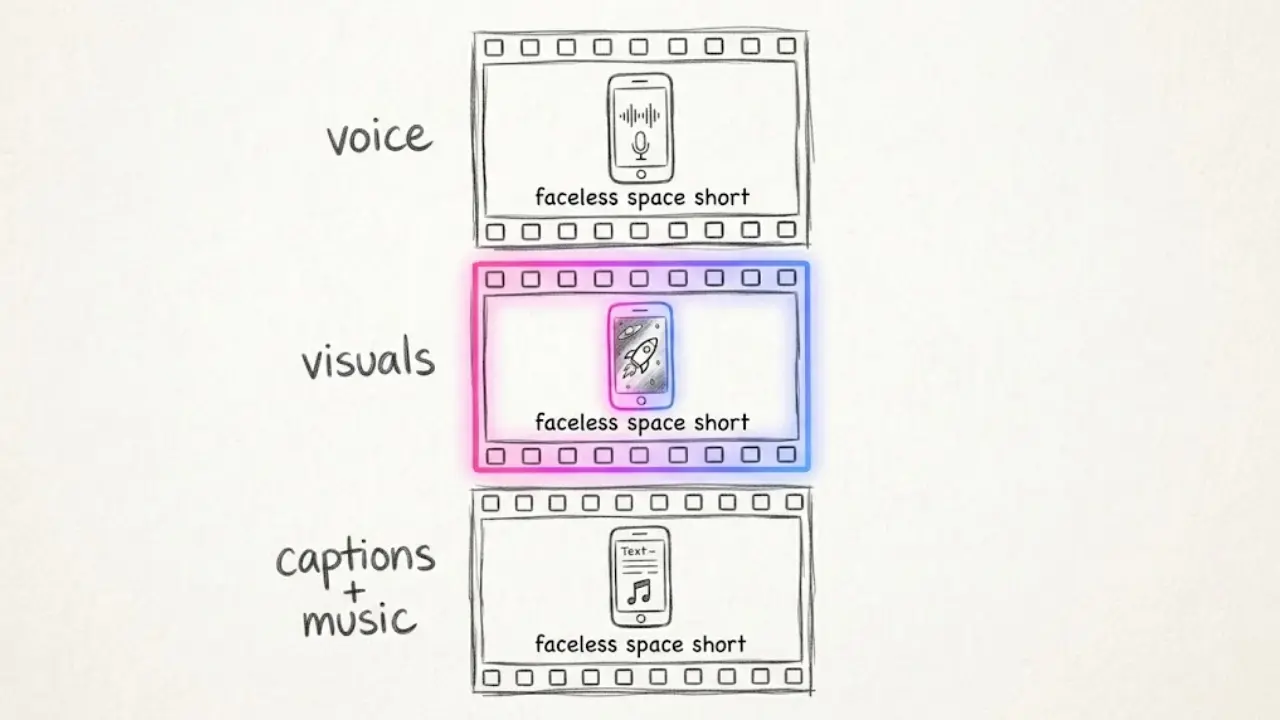
The three fixed ingredients. Every video leans on the same three pillars, and Faceless Lab generates all of them for you.
- A voice that reads the script in a natural, human tone, chosen from over 200 ElevenLabs voices.
- Visuals that match the words on screen, generated through multiple Replicate models so you are not stuck with one look.
- Captions and music that keep silent scrollers watching and set the mood.
The format that fits. Most space videos live in the 20 to 45 second range for Shorts, Reels and TikTok, with room to go longer when a topic deserves it. Faceless Lab specialises in short-form from roughly 15 to 60 seconds and supports longer videos up to about 5 minutes when you want a deeper explainer.
One consistent look. The channels that grow pick a single visual identity and keep it. A dark, cinematic deep-space style for one channel. A brighter, illustrated science style for another. Faceless Lab gives you 39 visual styles to choose from, so you can lock one in and stay recognisable.
3. The content angles that pull the most views
The topic is space. The angle is what makes someone stop scrolling. Here are the formats that reliably earn watch time, mapped to the kind of structure you would use.
The big question. Open with a question people have wondered about since they were kids. "How big is the universe, really?" Then answer it in a way that keeps building. This is the bread and butter of the niche.
The scale shock. Comparisons that reset your sense of size. How many Earths fit inside the sun. How long light from the nearest star takes to reach you. Numbers become emotional when you frame them well.
The "what if" scenario. "What would happen if you fell into a black hole?" Hypotheticals invite people to imagine, and imagination keeps them to the end.
The countdown or top list. The strangest planets we have found. Five places in the solar system that could hide life. Lists give viewers a reason to stay until number one.
The myth check. Correct a thing most people get wrong. Space is silent, the far side of the moon is not the dark side, and so on. Being gently surprised is very shareable.
4. How to make a faceless space video inside Faceless Lab
Here is the exact path from a blank idea to a scheduled space short. The whole thing takes a few minutes once you know the steps.
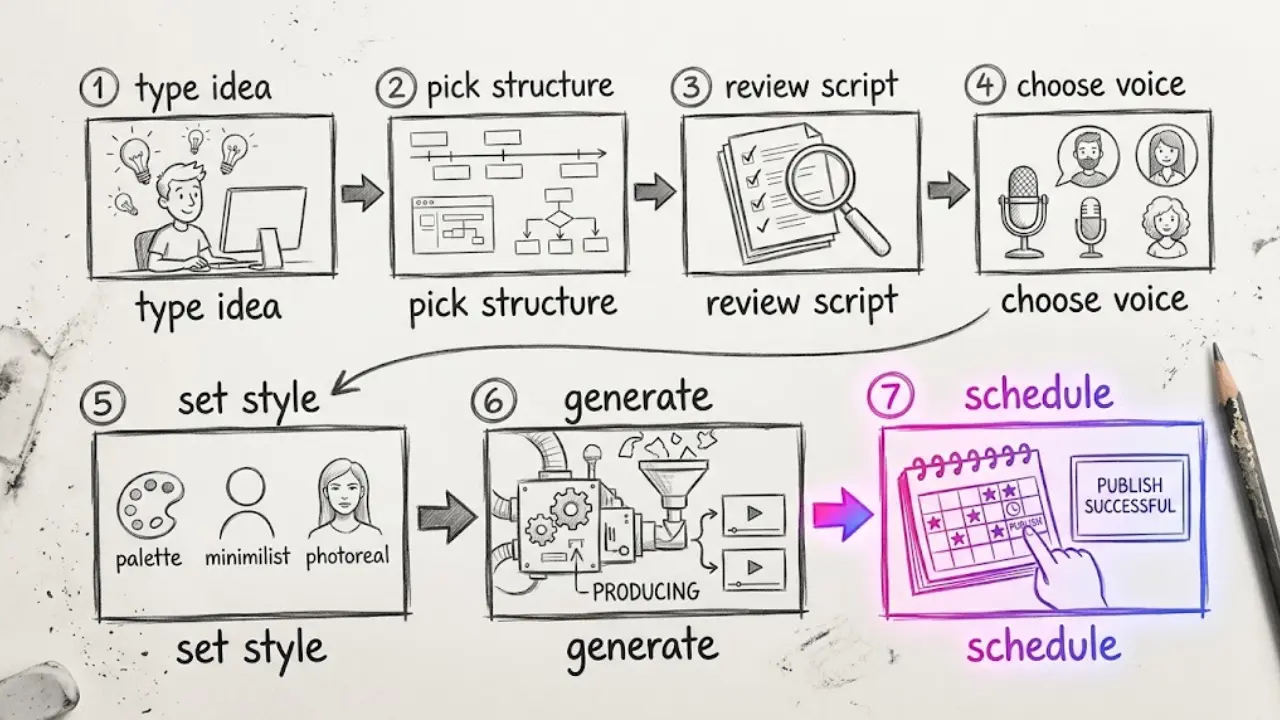
- Start a new video and type your idea. Something as small as "how big is the sun compared to Earth" is enough. You do not need a finished script.
- Pick a structure. Choose one of the 8 structures that fits your angle, for example a big-question opener or a countdown. This shapes the hook and the pacing for you.
- Generate and review the script. Faceless Lab writes the script. Read it once, tighten any line that feels off, and swap a word if you want it in your own voice. You stay in control of the text.
- Choose a voice. Pick from over 200 voices until one matches the calm, curious tone that space content needs. Save your favourite so every video sounds like the same channel.
- Set the visual style. Lock in one of the 39 styles, a cinematic deep-space look works well here, so the whole channel stays consistent.
- Generate the full video. The app produces voiceover, visuals, captions and background music together, usually in about 2 to 5 minutes.
- Schedule and publish. Send it straight to your connected platforms or add it to the queue so it goes out on your posting schedule.
💡 New here? You can create your first faceless video free and follow these exact steps.
A note on auto-publishing. Faceless Lab can push finished videos to YouTube, Instagram, Facebook and LinkedIn automatically. TikTok is deliberately left out of fully automatic publishing and asks for your explicit consent each time, so you post there with one tap rather than hands-off. Autopilot, which strings the whole idea-to-post flow together, is currently in beta.
5. Voices, visuals and music that fit the cosmos
Space content lives or dies on tone. Get these three right and an ordinary fact feels like a small revelation.
Voice: calm, warm, unhurried. The niche rewards a voice that sounds like a thoughtful friend explaining something cool, not a hyped announcer. Test a few of the 200-plus voices on the same script and keep the one that makes you lean in. Consistency matters more than perfection, so once you find it, reuse it.
Visuals: cinematic and coherent. Deep, dark backgrounds with a single striking subject read beautifully on a phone. Because Faceless Lab pulls from multiple visual models, you can find a look you like and then hold it across every video with one of the 39 styles. A recognisable style is what turns scattered views into a subscriber.
Music: quiet awe, not action-movie. Space works with slow, atmospheric beds that leave room for the voice. Let the music sit under the narration so the words carry, and let it swell only when you reveal the payoff.
6. Where a faceless space channel is and isn't the right choice
We would rather you start with clear eyes than quit in week three. Here is the honest picture.
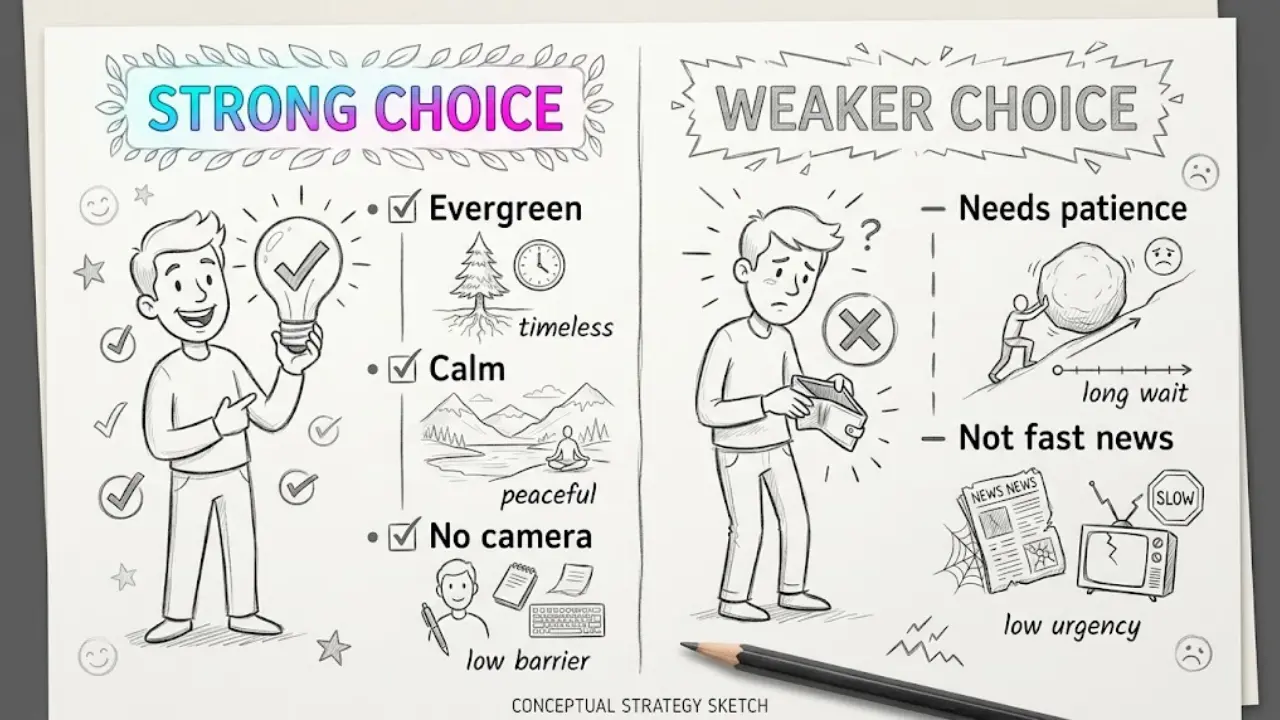
It is a strong choice if you enjoy the topic enough to keep finding questions, want an evergreen library that keeps earning, and value a calm production process with no camera anxiety. It also suits anyone who wants to batch content and let it post on a schedule.
It is a weaker choice if you need overnight virality, or if you want to chase fast-moving news. Space rewards patience and a steady back catalogue more than one lucky hit.
Where you still have to do the work. AI handles script, voice, visuals, captions and music, and that removes the grind. It does not remove judgement. You still pick the questions, you still make sure the facts are right, and you still choose which videos are worth posting. Space especially demands accuracy, because science audiences will correct a wrong number in the comments fast. Treat the tool as your production team and yourself as the editor who signs off.
Where Faceless Lab fits. If your bottleneck is turning ideas into finished videos fast and posting them consistently, this is exactly the problem the app was built to solve. If your bottleneck is deciding what to say, no tool replaces your taste, and that is a good thing, because taste is what makes a channel yours.
7. Posting rhythm and turning one idea into a series on autopilot
Growth on short-form comes from showing up on a rhythm the algorithm can trust, and that is far easier when you batch.
Batch, then drip. Set aside one focused session, write 10 to 20 space questions, and generate the videos in a row. Then schedule them to release one per day. You did the thinking once and the channel stays active for weeks.
Turn a theme into a series. Instead of random one-offs, run a themed series. "The planets, one at a time." "Weird moons of the solar system." "Space myths, busted." A series gives viewers a reason to follow and gives you a ready pipeline of ideas. Faceless Lab's Series feature is built for exactly this, so one idea can become a run of videos that keeps posting.
Let it run. Once your voice, style and schedule are set, the day-to-day becomes light. With auto-publishing to your connected platforms and Autopilot in beta stitching the flow together, keeping a space channel alive stops feeling like a second job.
The verdict is simple. Space is one of the best faceless niches you can start today: endless material, cinematic by default, evergreen, and calm to produce. Pick a look, find your voice, write your first 20 questions, and let a steady schedule do the compounding. If this is your year to finally launch the channel, the fastest way to see it working is to make one video and watch the whole thing come together.
If a video from your space channel does well, repost it, and if Faceless Lab helped you make it, our affiliate program is an easy way to earn from sharing the tool with other creators.
Start your faceless space channel free
Read more
Frequently asked questions
Do I need a telescope or any real footage to start a faceless space channel?
No. A faceless space channel needs zero filming and no equipment. The visuals are generated to match your script, the voice is an AI narrator, and the music and captions are added automatically. Inside Faceless Lab you type a question like "how big is a black hole," pick a structure and a visual style, and the app produces the voiceover, cinematic visuals, captions and music for you. Your only real inputs are choosing interesting questions and checking that the facts are correct before you publish. That makes space one of the lowest-friction niches to begin, because the hardest production steps are handled for you and you focus on ideas.
Is space actually a profitable faceless niche?
Science and education content is widely seen as one of the more rewarding categories on short-form, because it attracts curious, engaged viewers that advertisers value. We avoid quoting exact CPM numbers because they change with country, season and format, and anyone promising a fixed figure is guessing. What makes space durable is that the content is evergreen: a clear explainer about Saturn keeps earning views long after you post it. The realistic path is patience plus consistency. Build a back catalogue of strong, accurate videos, post on a steady rhythm, and let the library compound over months rather than expecting one viral hit.
How long should a faceless space video be?
For Shorts, Reels and TikTok, most space videos work best in the 20 to 45 second range, long enough to build a payoff and short enough to hold attention. Faceless Lab specialises in short-form roughly between 15 and 60 seconds, which fits the niche well. When a topic genuinely deserves more room, such as a detailed explainer, you can go longer, up to about 5 minutes. A good rule is to let the question decide: a quick scale comparison stays short, while a "what if" scenario can breathe a little more. Keep the hook in the first three seconds regardless of length.
Where can Faceless Lab publish my space videos automatically?
Faceless Lab can publish finished videos automatically to YouTube, Instagram, Facebook and LinkedIn once those accounts are connected. TikTok is deliberately excluded from fully automatic publishing and asks for your explicit consent each time, so you still post there, just with a tap rather than fully hands-off. You can also schedule videos in advance, which is how most creators keep a daily rhythm without logging in every day. Autopilot, the feature that stitches the whole idea-to-post flow together, is currently in beta, so the fully hands-off experience is still being refined while the core scheduling and publishing already work.
How do I keep my space channel looking consistent?
Consistency comes from locking in one voice and one visual style and reusing them on every video. Faceless Lab offers over 200 voices, so pick one calm, warm narrator and keep it as your channel's sound. It also offers 39 visual styles, so choose a single look, a cinematic deep-space style is a natural fit, and apply it to every upload. A recognisable style and voice are what turn scattered views into subscribers, because people start to recognise your channel before they even see the name. Running themed series with the Series feature adds another layer of consistency and gives viewers a reason to follow.
How many space videos should I post to grow?
The honest answer is that a rhythm you can keep beats a burst you cannot. Daily posting grows a short-form channel faster, but only if the quality holds. The practical approach is to batch: write 10 to 20 questions in one session, generate the videos in a row, then schedule them to release one per day. That way you do the thinking once and stay active for weeks. Start with a schedule you are confident you can maintain, even three a week, and increase it as batching gets faster. Consistency signals to the algorithm that your channel is worth showing.
Related articles
Keep the Same Character in Every Faceless Video Without Redrawing Anything
AI characters tend to change face, outfit and style from one video to the next. Here is how to keep one recurring character across a whole faceless channel, step by step.
Turn Everyday Life Hacks Into Faceless Videos People Save and Share
Life hacks are short, useful and easy to share. Here is how to build a faceless life hacks channel with AI, from formats and testing to a month of scheduled videos.
Make Faceless Real Estate Videos That Bring in Local Leads
Agents, brokers and investors can grow a local audience with market updates, buyer tips and neighborhood guides, all made as faceless videos with AI and scheduled ahead of time.