Faceless What If Videos Are the Easiest Way to Turn Curiosity Into Views
Curiosity sells, and you never have to show your face. Here is how to make faceless what if videos with AI, which formats hold attention, and how to turn one idea into a daily series.

Stefano Ventrudo
CTO at Faceless Lab
How to make faceless what if videos with AI, from the formats that hold attention to a script shape that works and a way to publish a whole series without filming anything.
How do you make faceless what if videos that people actually watch to the end? What if the Moon were twice as close, what if you never slept again, what if every phone vanished tomorrow. Questions like these pull clicks because the brain wants the answer, and they work with no presenter at all. We run faceless channels ourselves, and this is one of the few formats where the idea does almost all the work. Here is how we would build a faceless what if channel from zero, using AI for the script, voice, visuals, music and captions.
Executive Summary
Faceless what if videos are short scenario explainers that start with one curious question and walk through what would happen step by step, narrated over AI visuals. They suit faceless creators because the hook is the question itself, the script follows a repeatable shape (question, escalation, answer), and the visuals can be illustrated or cinematic scenes instead of footage of a person. The creators who keep growing check every claim against a reliable source, keep each video to one idea, and publish on a steady schedule. Faceless Lab handles the script, voiceover, visuals, music and captions, and can schedule the finished videos, so your time goes into picking strong questions and checking the facts.
Table of Contents
- Why what if videos work without a face
- The what if formats worth making
- How to make a faceless what if video inside Faceless Lab
- Write the script: the question, the escalation, the answer
- Keep it accurate, because curiosity videos get checked
- Where what if videos fit you, and where they don't
- Turn one video into a daily series
1. Why what if videos work without a face
A what if video sells one thing, an unanswered question. The title and the first sentence already contain the hook, so you do not need a personality, a studio or a face on screen. The narrator is a voice, and the star of the video is the scenario.
Why the format suits faceless creators:
- The hook is built in. Viewers decide in the first seconds, and a clear impossible question gives them a reason to stay.
- The visuals are easy to generate. Planets, cities, oceans, empty streets and dramatic skies are scenes that AI image and video models handle well, and they do not rely on a consistent human face.
- Ideas never run out. Science, history, technology, everyday life and pure fantasy all produce questions, which makes a long series realistic.
- It travels across platforms. The same vertical video fits YouTube Shorts, Instagram Reels, Facebook Reels and TikTok.
The honest catch is that curiosity content is crowded. A generic question with a generic answer disappears, so your angle matters more than the tool you use.
2. The what if formats worth making
Not every scenario holds attention the same way. These are the formats we would test first, and you can mix them inside one channel.
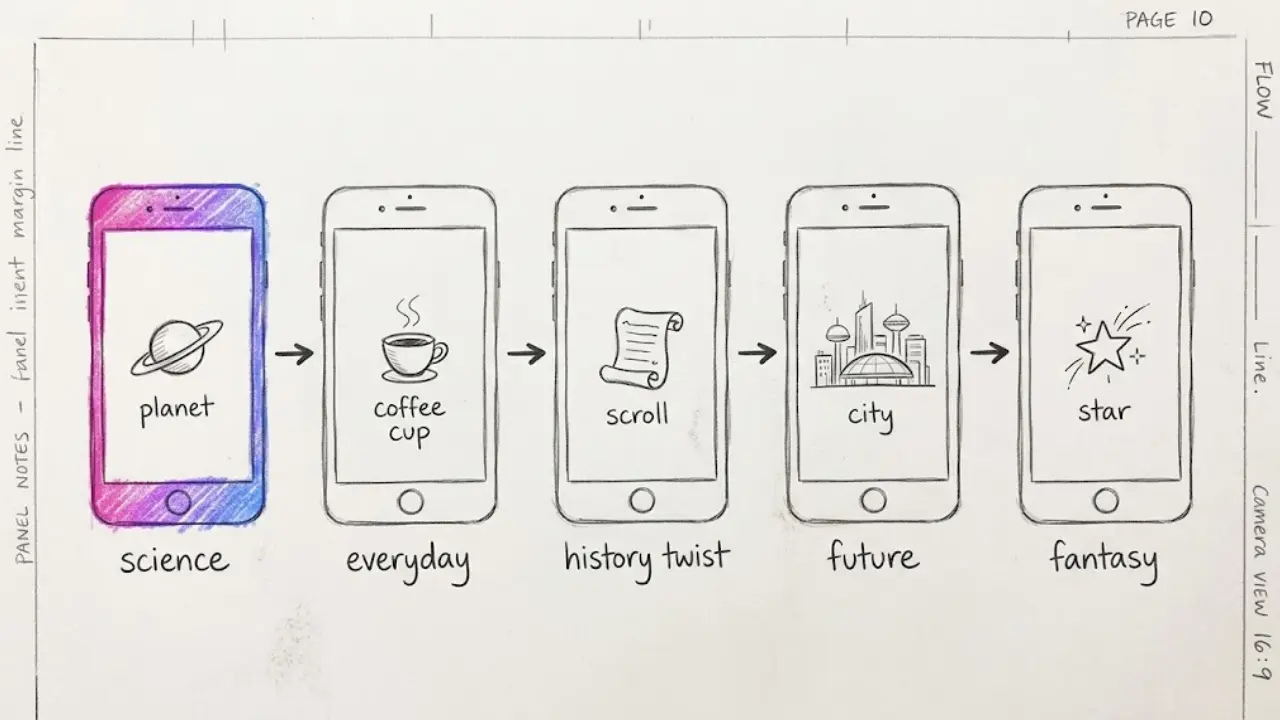
The science scenario
What would happen to the tides if the Moon were closer, or to your body at the bottom of the ocean. These need the most fact checking and reward you with the longest shelf life.
The everyday scenario
What if you stopped using your phone for a month, or every road were one way. Relatable questions get comments because viewers compare them to their own lives.
The history twist
What if a famous event had gone the other way. Keep these clearly framed as speculation and base the starting facts on reliable sources.
The future scenario
What if cities banned cars, or everyone worked four days a week. Future questions are easy to tie to news and trending topics.
The pure fantasy
What if the sky were green, or gravity switched off for ten seconds. These need little research, which makes them a fast way to build a first batch while you learn what your audience likes.
Each of these maps onto one of the video shapes we describe in our structures guide, usually the explainer, the countdown or the question format.
3. How to make a faceless what if video inside Faceless Lab
This is the workflow we use for a scenario video, from the first question to a file ready to schedule.
- Start from a topic or a script. Type the question, for example "what if the Moon were twice as close", or paste a script you already wrote. If you want control, edit the generated script before anything else is built.
- Pick a structure. Faceless Lab has 8 video structures. The explainer and question structures fit most what if videos, and the countdown fits "what would happen hour by hour".
- Choose a voice. There are 200+ ElevenLabs voices. A calm, curious voice usually beats a dramatic one, because the scenario already carries the tension.
- Set the visual style. Choose from 39 styles, and use the multi-model setup through Replicate to match the look to the scene. Realistic space and weather scenes suit a cinematic style, while playful everyday questions suit an illustrated one.
- Let it assemble. The app builds the voiceover, visuals, background music and captions into a finished vertical video, usually in a few minutes.
- Review and fix. Read the captions, check each fact in the script, swap any visual that feels off, then send the video to your schedule.
You decide the question, the angle and the tone. The production work is what goes away.
💡 Ready to try it with your first question? Create a free account and make your first what if video.
4. Write the script: the question, the escalation, the answer
A what if script is short and has a clear shape. We use three beats.
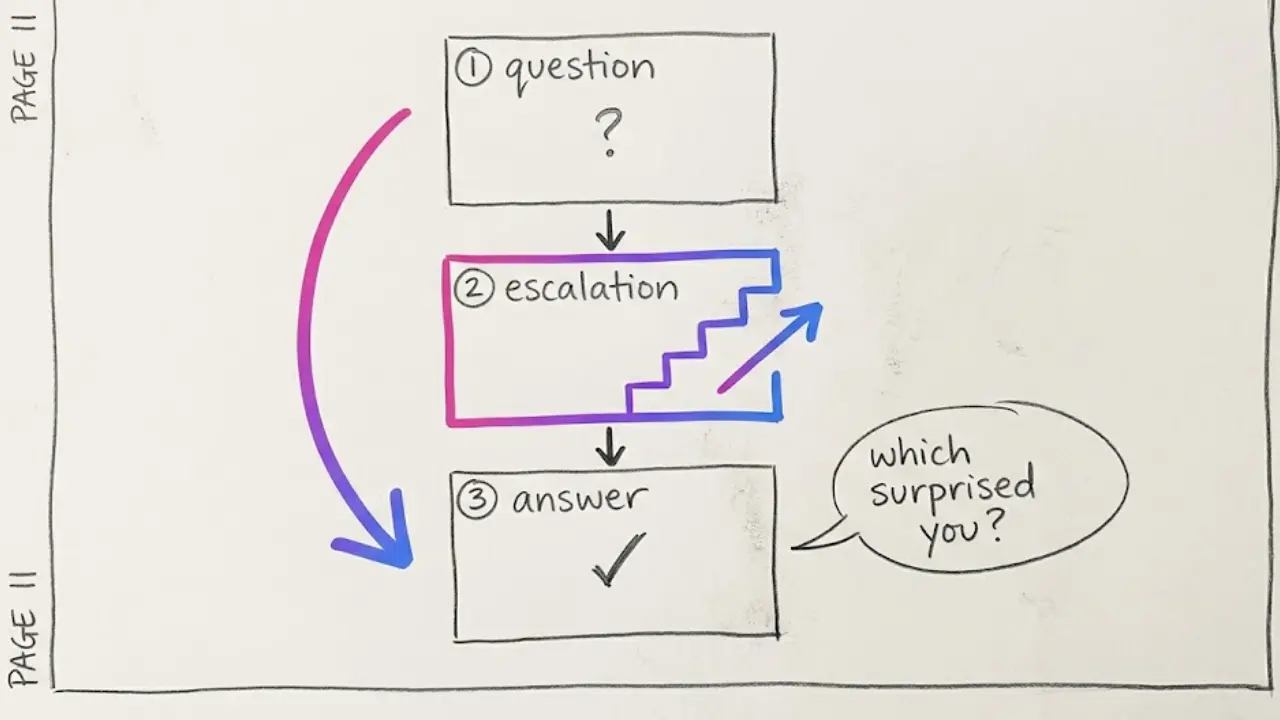
The question. Open with the scenario in one plain sentence, ideally the title itself. Do not warm up. "What if the Moon were twice as close?" is already the hook.
The escalation. Walk through the consequences in order, one clear step per scene. The first effect should be surprising, and each following effect should be bigger or stranger than the one before. This is what keeps people watching, because every scene promises a bigger payoff.
The answer. Close with the real conclusion, a short summary of what would actually happen, and one line that invites a comment, such as asking viewers which effect surprised them most.
A few small habits improve the result:
- Keep each video to one scenario. Two ideas in one short split attention.
- Aim for one sentence per scene so the captions and visuals change often.
- Put the most surprising consequence early, not last.
- Use plain words. Explaining a hard idea simply is the whole value of the format.
If you want a deeper look at hooks, our script guide covers the first three seconds in detail.
5. Keep it accurate, because curiosity videos get checked
Curiosity videos attract commenters who love to correct you. That is useful, because it means people are paying attention, and it is also a reason to be careful.
Separate fact from speculation. If a claim comes from physics or biology, check it against a reliable source before you script it. If it is a guess about an imaginary world, say so in the narration with a phrase like "scientists would expect" or "in theory".
Avoid invented numbers. A made-up statistic sounds authoritative and gets pulled apart in the comments. If you cannot source a figure, describe the effect in words.
Watch the sensitive topics. Disasters, real tragedies and real people are not good material for a speculative scenario. Pick questions that stay on the safe side of taste.
Be transparent about AI. Faceless Lab produces AI-assisted videos, and platforms have their own labeling and originality rules. Add your own research, your own angle and your own commentary so each video has a clear human contribution. A consistent look also helps your channel feel intentional, which we cover in our visual style guide.
6. Where what if videos fit you, and where they don't
We would rather you start with clear expectations.
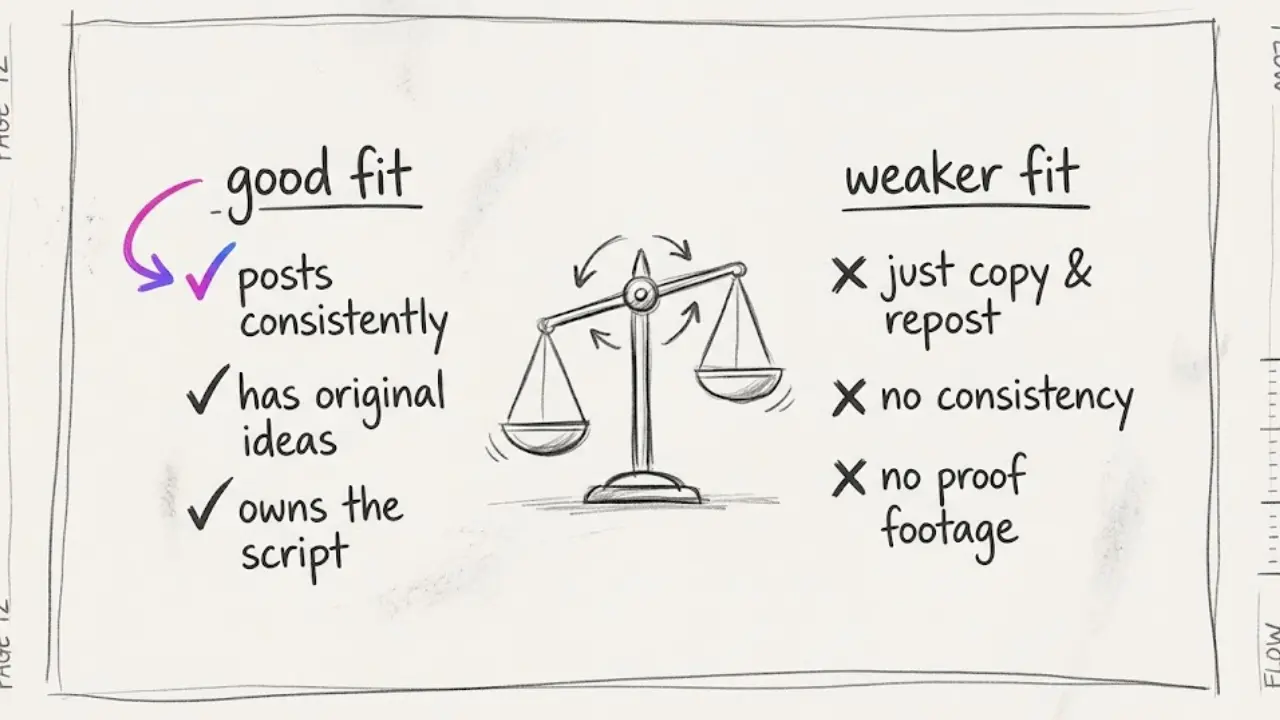
What if videos fit you when:
- You enjoy research and explaining things simply.
- You want a format with plenty of fresh ideas and a repeatable script.
- You plan to publish consistently and improve from your own analytics.
They are the wrong fit when:
- You want guaranteed views. A good question helps, and nothing replaces testing and consistency.
- You would rather skip fact checking. Faceless Lab removes the editing grind, and it cannot verify a claim for you.
- You need the exact look of a high-budget film. AI visuals have limits, and some scenes will need a few regenerations.
On platforms, Faceless Lab can schedule and publish to your connected accounts. One honest note: TikTok is excluded from fully automatic auto-publish and needs your explicit consent, so plan a short manual step there.
7. Turn one video into a daily series
One video is a test. A series is a channel. Because the what if format reuses the same shape every time, it is a good fit for a recurring show.
- Pick a weekly theme. For example space on Monday, everyday life on Wednesday and fantasy on Friday.
- Batch your questions. Write ten questions in one sitting and produce the videos in one afternoon.
- Use the Series feature. Series keeps the look, voice and structure consistent across episodes, so each new video starts from the same setup.
- Try Autopilot. It is still in beta, and it moves the process further toward hands-off, so check the results before you rely on it.
- Read your numbers. After a few weeks, double down on the scenario types with the best watch time.
Faceless what if videos reward a good question, a clean script and steady publishing, and Faceless Lab covers the production side so you can focus on those. Start with one scenario you are curious about, make the video this week and see how your audience responds. If a video does well, repost it on your other platforms and share the app with a friend who is stuck on editing. And if you like Faceless Lab, our affiliate program is an easy way to earn while you share it.
Try Faceless Lab free and make your first what if video today.
Read more
Frequently asked questions
What are faceless what if videos?
Faceless what if videos are short scenario explainers that open with a curious question, such as what would happen if the Moon were closer, and then walk through the consequences step by step. A narrator voice and AI visuals replace any presenter, so you never appear on camera. The format works because the title is the hook and viewers stay to hear the answer. It suits YouTube Shorts, Reels, Facebook Reels and TikTok, and it repeats easily, which makes it a good base for a daily series.
How do I make a faceless what if video with AI?
Start with one clear question and write a short script with three beats: the question, the escalation and the answer. In Faceless Lab you type the topic or paste your script, pick one of the 8 structures, choose a voice from 200+ ElevenLabs voices, and set a visual style from 39 options. The app then builds the voiceover, visuals, music and captions into a vertical video in a few minutes. Review the facts, fix any scene you dislike, and schedule it.
What topics work best for what if videos?
Science scenarios, everyday life questions, history twists, future ideas and pure fantasy all work. Science scenarios have the longest shelf life but need the most fact checking. Everyday questions earn comments because viewers compare them to their own lives. Fantasy ideas are the quickest to script, so they are a good way to fill a first batch. Avoid real tragedies, disasters and real people. Pick a few categories, test them for a few weeks, and keep the ones with the best watch time.
How long should a what if video be?
Most what if videos work well as short vertical videos, roughly 30 to 60 seconds, with one scenario and about one sentence per scene so the visuals and captions change often. Longer formats are possible, but a short video forces you to cut the warm-up and put the most surprising effect early. Test a few lengths on your own channel and compare average watch time. Our video length guide covers how to read those numbers in more detail.
Do I need to fact check AI-made what if videos?
Yes. Curiosity videos attract viewers who enjoy correcting mistakes, and a wrong claim hurts trust quickly. Faceless Lab builds the video, and the facts remain your responsibility. Check scientific claims against reliable sources, avoid invented statistics, and mark speculation with phrases like in theory or scientists would expect. Adding your own research and angle also helps each video show a clear human contribution, which matters under the originality and AI labeling rules some platforms apply.
Can I post what if videos automatically?
Yes. Faceless Lab can schedule and publish finished videos to your connected platforms, so a batch you make in one afternoon can go live across the week. One exception applies: TikTok is excluded from fully automatic auto-publish and needs your explicit consent, so plan a quick manual step there. Series keeps the look and structure consistent across episodes, and Autopilot, which is still in beta, goes further toward hands-off, so review its output before relying on it.
Related articles
Keep the Same Character in Every Faceless Video Without Redrawing Anything
AI characters tend to change face, outfit and style from one video to the next. Here is how to keep one recurring character across a whole faceless channel, step by step.
Turn Everyday Life Hacks Into Faceless Videos People Save and Share
Life hacks are short, useful and easy to share. Here is how to build a faceless life hacks channel with AI, from formats and testing to a month of scheduled videos.
Make Faceless Real Estate Videos That Bring in Local Leads
Agents, brokers and investors can grow a local audience with market updates, buyer tips and neighborhood guides, all made as faceless videos with AI and scheduled ahead of time.