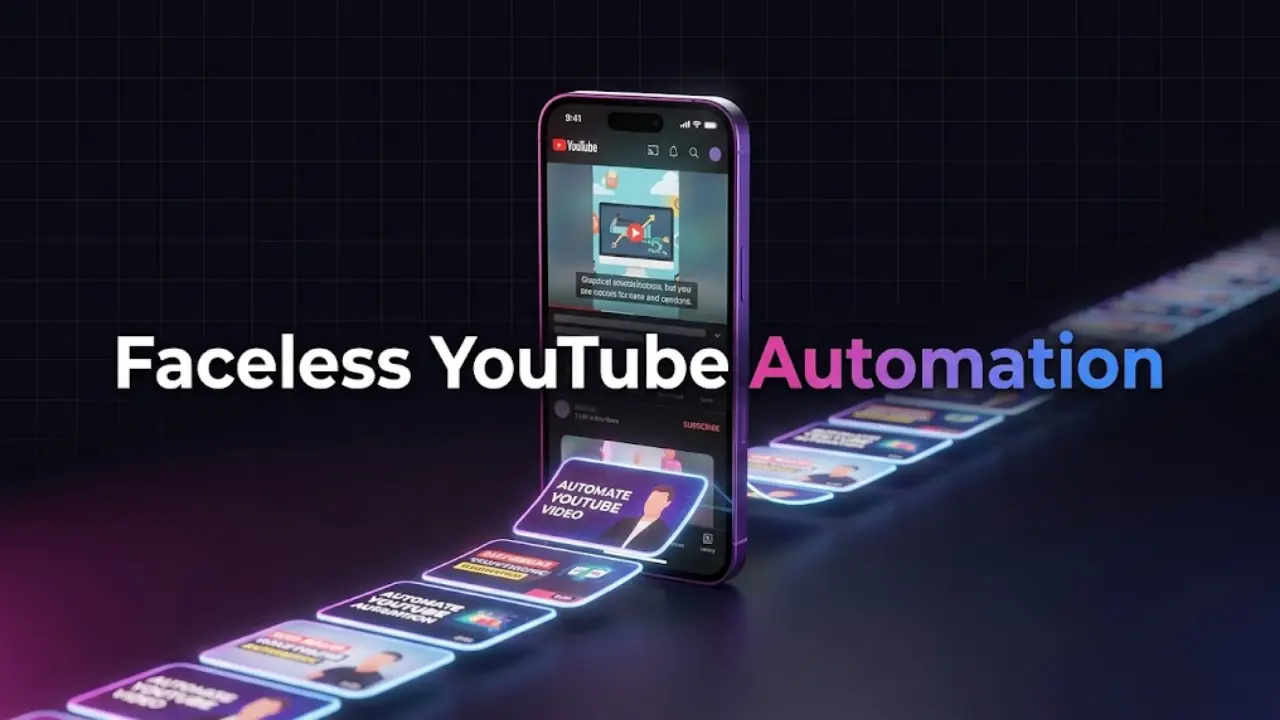
Faceless YouTube Automation, the Honest Way to Run a Channel on a System
Faceless YouTube automation is a production system, not passive income. Here is what it really takes to run a channel that keeps posting, and how we do it.

Roberto Pasqualini
CMO at Faceless Lab
A realistic look at what faceless YouTube automation is, the system that actually keeps a channel posting, and how to run one without filming, voicing, or editing anything yourself.
Can you actually automate a faceless YouTube channel, or is that just a phrase people put on the cover of a course? Faceless YouTube automation means building a repeatable system that turns an idea into a finished, published video without you sitting in front of a camera, recording a voiceover, or dragging clips around in an editor. It does not mean a channel that grows on its own while you sleep and never needs a human touch. We run three faceless channels between the two of us, and the part that genuinely works is the system underneath: research once, batch the production, and let the videos publish on a schedule you set in advance. This guide walks through what that system looks like in practice, what you should keep human, and how we set it up inside Faceless Lab.
Executive Summary
Faceless YouTube automation is a production system, not a money printer. You pick a niche and a repeatable format, generate the script, voiceover, visuals, music, and captions from a single idea, batch a week or a month of videos in one sitting, and schedule them to publish automatically. The automation removes the manual grind of scripting, editing, and exporting. It does not remove the judgment calls about topics, hooks, and what your audience actually wants to watch. Tools like Faceless Lab run the whole pipeline from idea to published Short across YouTube, Instagram, Facebook, and LinkedIn, while you stay in charge of the creative decisions that make a channel worth following. Done this way, one person can run several channels on a consistent posting rhythm without it turning into a second full-time job.
Table of Contents
- What faceless YouTube automation actually means
- Why most automation channels quit in the first month
- The system behind a channel that keeps posting
- How to set up faceless YouTube automation inside Faceless Lab
- What to automate, and what to keep human
- Where Faceless Lab is and isn't the right choice
- What it costs to run this
1. What faceless YouTube automation actually means
The phrase gets thrown around loosely, so it helps to separate two ideas that often get bundled together.
Faceless is about the format. Your face is never on screen. The video carries its weight through a voiceover, on-screen visuals, captions, and music. Explainers, list videos, stories, motivation, history, and finance breakdowns all work this way.
Automation is about the workflow. Instead of touching seven different apps for one video, you run a single pipeline that produces the script, the voice, the visuals, the captions, and the music, then publishes the result for you.
Put them together and faceless YouTube automation is a channel where the production and the posting run on a system, while you stay responsible for the ideas.
What it is not
- It is not passive income. A channel still needs a person choosing topics and reading the analytics. The system saves you time, it does not replace your taste.
- It is not fully hands-off from day one. Full auto-publish is something you switch on once you trust your output, not something you start with blind.
- It is not a loophole around quality. YouTube rewards videos people finish. Automation only helps if the videos are worth finishing.
2. Why most automation channels quit in the first month
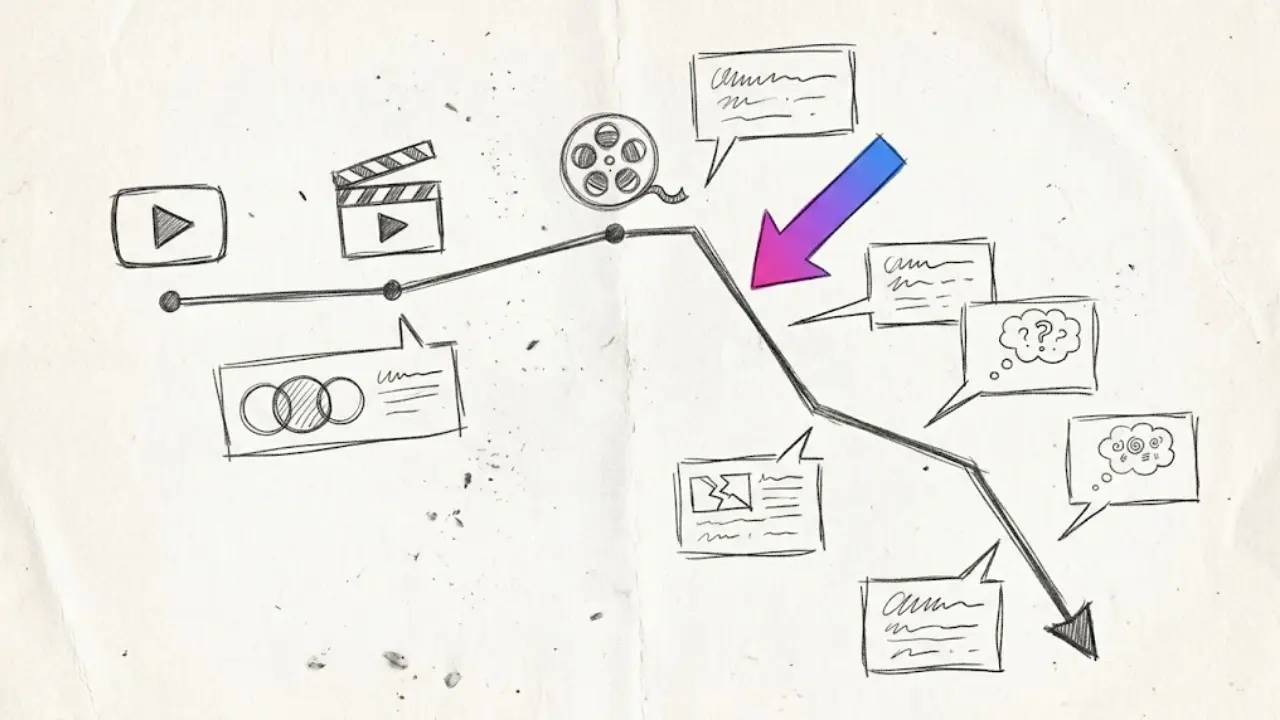
We have watched a lot of people start a faceless channel, post four videos, and disappear. The reasons are almost always the same, and none of them are about the tools.
They expected money before they had a system
The "earn $5,000 a month on autopilot" pitch sets people up to quit. The channels that make money spent weeks posting consistently first. If you start expecting income in week two, week three feels like failure and you stop.
They changed niche every few videos
Chasing whatever looked hot that week means the algorithm never learns who to show your content to. Picking one niche and one format, then staying with it long enough to get data, beats jumping around every time a video underperforms.
They had no repeatable process
Doing every video from a blank page is exhausting. By the fifth one, the friction wins. The creators who last build a process they can repeat without thinking, so posting becomes a habit instead of a decision.
They confused volume with automation
Posting ten random videos in a day is not a system. A system is knowing what you will post next week and having it already scheduled. That is the difference between busy and consistent.
3. The system behind a channel that keeps posting
Here is the shape of the system we actually use. It has four parts, and every one of them can be sped up with the right tool.
Research once, in batches
Sit down and pull thirty topic ideas for your niche in one session. Read the comments on videos in your space, note the questions people keep asking, and save every idea in one list. You are building a backlog so you never open the app wondering what to post.
Pick a format and a structure
A format is the recurring shape of your videos, for example "one surprising fact per video" or "a three-step explainer." Faceless Lab gives you 8 built-in video structures, so you are not reinventing the flow each time. Pick one or two and stick with them until the data tells you otherwise.
Batch the production
This is where automation earns its keep. Instead of making one video at a time, you turn ten ideas into ten finished videos in a single afternoon. Script, voiceover, visuals, captions, and music all get generated in one pass.
Schedule and publish on a rhythm
A finished video sitting in a folder does nothing. The system only pays off when the videos leave on a schedule. You set the days and times once, and the channel keeps posting while you go back to research and analytics.
4. How to set up faceless YouTube automation inside Faceless Lab
This is the part people ask about most, so here is the concrete flow from a blank account to videos publishing on their own.
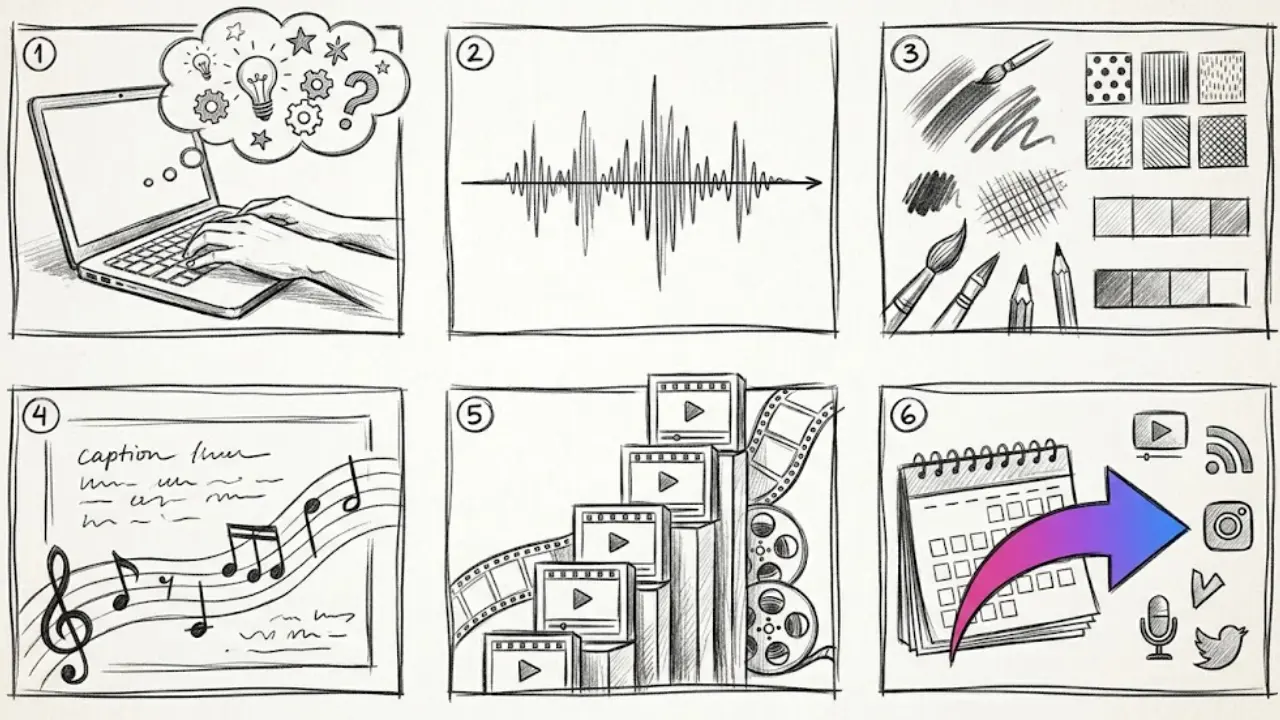
Step 1. Start from an idea. Type a topic or paste a rough idea. Faceless Lab writes the script for you using one of its 8 structures. Edit the script directly if you want to change the hook or tighten a line. The hook matters more than anything else, so this is the one place we always read carefully.
Step 2. Choose a voice. Pick from 200+ ElevenLabs voices. Match the voice to the niche, a calm read for a sleep or history channel, a punchy one for facts or motivation, then keep using the same voice so the channel sounds like itself.
Step 3. Set the visual style. Faceless Lab generates visuals through multiple models on Replicate and gives you 39 styles to choose from. Lock one style per channel so every video looks like it belongs to the same page.
Step 4. Add captions and music. Captions are generated automatically, which matters because most people watch on mute at first. Background music is added from the library, and copyright-free tracks are marked clearly.
Step 5. Turn one idea into a Series. The Series feature keeps a theme running so you can produce a run of related videos instead of starting over each time. This is what turns a single idea into a week of content.
Step 6. Schedule and auto-publish. Connect your accounts and set your posting days and times. Faceless Lab can publish automatically to YouTube, Instagram, Facebook, and LinkedIn. Autopilot is in beta for creators who want the pipeline running with the least hands-on time. One honest note: TikTok is excluded from fully automatic auto-publish and needs your explicit consent for each post, so you approve those yourself.
💡 Ready to try the flow above? Create your first automated video free and see how far one idea gets you.
5. What to automate, and what to keep human
Automation works best when you are honest about which jobs a machine does well and which ones still need you. Here is how we split it.
Let the tool handle the production
- Scriptwriting from your idea, so you start from a draft instead of a blank page.
- Voiceover, because recording and re-recording audio is the slowest manual step.
- Visuals, captions, and music, the assembly work that used to eat an hour per video.
- Exporting and publishing, the boring final mile that made you dread finishing.
Keep these in your own hands
- Topic selection. You know your audience better than any model. Feed the system good ideas and it rewards you. Feed it filler and it publishes filler.
- The hook. The first three seconds decide whether a Short lives or dies. Always read and, when needed, rewrite the opening line.
- Reading analytics. Once a week, look at which videos held attention and which lost people early, then push more of what worked into next week's batch.
- The occasional human layer. A specific opinion, a fresh angle, a detail only you would know. This is what keeps a channel from feeling generic, and it is exactly what YouTube's originality rules reward.
6. Where Faceless Lab is and isn't the right choice
We would rather you pick the right tool than the expensive one, so here is the straight version.
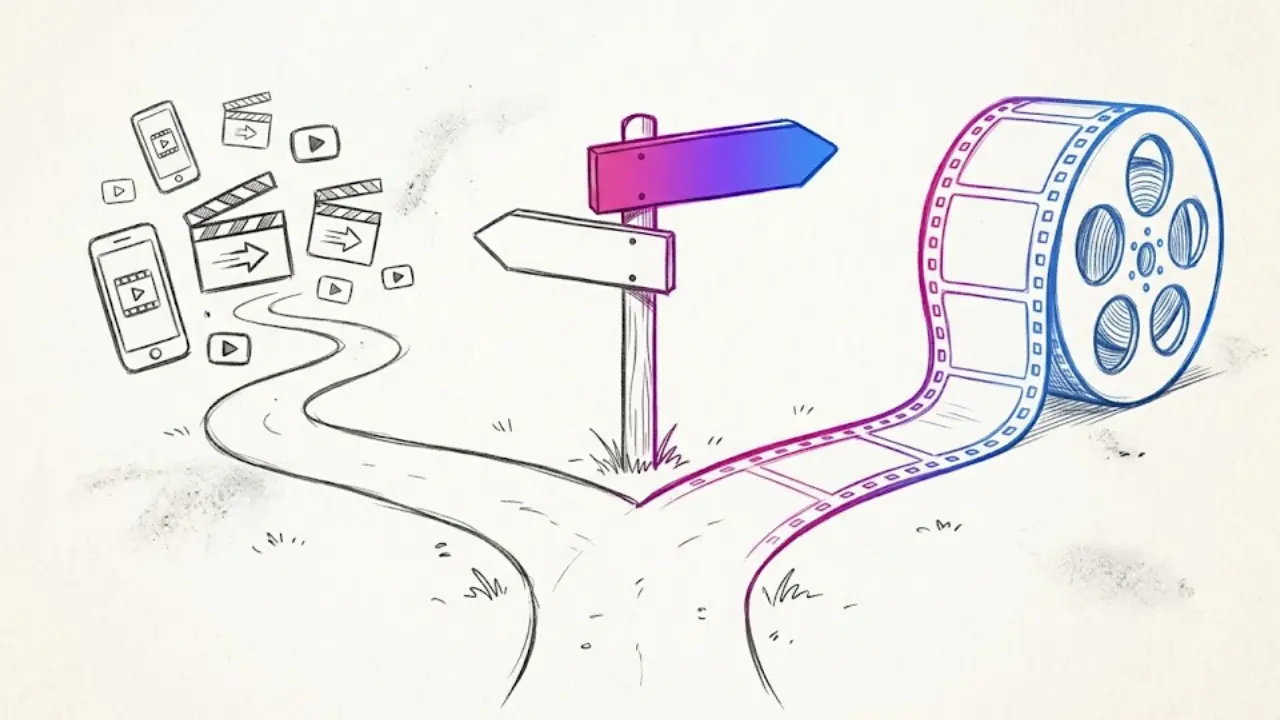
Faceless Lab is a strong fit if you
- Want one workflow from idea to published Short instead of stitching five apps together.
- Post short-form content and value a consistent rhythm over one-off perfection.
- Run one channel or several and want scheduling and auto-publish built in.
- Want to start free and only pay once you see it working for you.
Faceless Lab is not the right choice if you
- Need long-form, heavily edited documentaries with frame-by-frame control. That is a different kind of tool.
- Want a fully hands-off channel that needs zero human input. Autopilot reduces the work, it does not remove the need for good ideas and a quick review.
- Rely entirely on TikTok and want every post to go out with no approval step, since TikTok stays a consent-based publish by design.
Being clear about this saves everyone time. Most faceless creators making short-form on a schedule fit the first list, which is exactly who we built the app for.
7. What it costs to run this
You can test the whole system before paying anything. Here are the real plans.
- Free trial, €0. Try the full flow from idea to finished video and decide if the workflow fits how you work.
- Starter, €19 per month. For a single channel finding its rhythm.
- Growth, €59 per month. For creators posting more often or running more than one channel.
- Pro, €149 per month. For higher volume and running several channels in parallel.
Compare that to the real cost of doing it by hand. A single short-form video made manually across separate apps takes roughly three and a half hours once you add up scripting, voice, sourcing visuals, cleaning captions, finding music, syncing everything, and exporting. Three posts a week is a part-time job you never applied for. The point of automation is buying that time back so you can spend it on ideas.
The verdict
Faceless YouTube automation is real, and it is worth building, as long as you treat it as a system rather than a shortcut to passive income. Automate the production and the publishing, keep the topics and the hooks in your own hands, and post consistently long enough for the data to show up. That is the whole game, and it is very doable for one person.
If you want to see the workflow for yourself, try Faceless Lab free and turn your first idea into a finished, publish-ready video today.
If this helped, share it with someone who keeps saying they will start a channel and never does, and if you love the app, our affiliate program pays you for sending other creators our way.
Start creating faceless videos here: https://facelesslab.video/
Read more
Frequently asked questions
What is faceless YouTube automation?
Faceless YouTube automation is a way of running a YouTube channel where your face never appears on screen and the production runs on a repeatable system. An AI voiceover reads a script over visuals, captions, and music, and the finished videos publish on a schedule you set. It removes the manual work of scripting, recording, editing, and exporting, so one person can post consistently. It does not remove the human parts, which are choosing good topics, writing strong hooks, and reading your analytics. Think of it as a production line you supervise, not a channel that grows entirely on its own.
Can you really make a faceless channel run on autopilot?
You can automate most of it, but "autopilot" needs a realistic definition. The production and publishing can run with very little hands-on time, especially once you batch videos and schedule them in advance. Faceless Lab even offers an Autopilot mode, currently in beta, for the least hands-on workflow. What stays human is the judgment: picking topics your audience wants and reviewing hooks before they go out. A channel with zero human input tends to drift into generic content that does not hold attention, so the smart setup automates the work and keeps you on the creative decisions.
How much does faceless YouTube automation cost to start?
You can start for free. Faceless Lab has a free trial at €0 so you can run the full flow from idea to finished video before paying. Paid plans are Starter at €19 per month for a single channel, Growth at €59 per month for higher volume or multiple channels, and Pro at €149 per month for running several channels in parallel. Compared with making short-form video by hand, where one video can take around three and a half hours across separate apps, the value of automation is the time it gives back rather than the subscription itself.
Which platforms can I auto-publish to?
With Faceless Lab you can schedule and automatically publish to YouTube, Instagram, Facebook, and LinkedIn. You connect your accounts once, set your posting days and times, and the videos go out on that rhythm. TikTok is handled differently: it is excluded from fully automatic auto-publish and requires your explicit consent for each post, so you approve TikTok uploads yourself rather than letting them go out untouched. This keeps you compliant with how TikTok expects third-party posting to work, while the rest of your platforms run on schedule.
Do faceless automation videos still get monetized on YouTube?
Yes, faceless videos can be monetized, but the same rules apply as to any channel. You need to meet the YouTube Partner Program requirements, and every video needs original value rather than low-effort reuploads. YouTube also asks creators to disclose realistic AI-generated or altered content. Faceless automation is fully compatible with all of this, because the format is about not showing your face, not about skipping quality. The channels that monetize are the ones that pick a clear niche, add a genuine human layer to each video, and post consistently enough to build a real audience.
How many videos should I batch at once?
A good starting point is one to two weeks of content in a single session, which for most creators is between seven and fourteen videos. Batching works because you stay in one mode instead of switching between research, writing, and production every day. Once you have a format you trust, you can push to a full month in an afternoon. The key is to research your topics first and have them ready in a list, then run the production in one pass and schedule everything before you close the app. That way the channel keeps posting while you step away.
Related articles
True Crime Is Made for Faceless Video. Here Is How to Do It Right
True crime is one of the most watchable faceless niches, and it does not need your face or voice. Here is how to make faceless true crime videos that hold attention and stay monetizable.
Build a Faceless Book Summary Channel Without Reading on Camera
Start a faceless book summary channel with AI. Pick the right books, script summaries that hold attention, publish on a daily rhythm, and turn quiet reading into a channel that grows.
Build a Faceless Sleep and Meditation Channel That Runs While You Rest
Sleep and meditation is one of the calmest faceless niches to run. Here is how to make relaxing videos with AI voice, visuals and music, then publish them on a rhythm.