Build a Faceless Motivation Channel That People Actually Save and Share
Faceless motivation videos are one of the most durable short-form niches. Here is the full workflow to script, voice, and publish them at scale, without ever showing your face.

Stefano Ventrudo
CTO at Faceless Lab
A practical playbook for producing faceless motivation videos at scale, from the first line of script to a posting rhythm that keeps compounding.
Can you build a faceless motivation channel without ever filming yourself, hiring an editor, or spending your weekends stuck in a timeline? Yes, and it is one of the few short-form niches that still rewards patience. Faceless motivation videos travel well because the message carries the video, not the person saying it. A sharp line over a cinematic clip, read in a voice that means it, gets saved, reshared, and stitched long after you have moved on to the next idea. We are Stefano and Roberto, the co-founders of Faceless Lab, and we run faceless channels every day, so this is the exact workflow we use.
Executive Summary
Faceless motivation videos work when the hook lands in the first two seconds, the voice carries real weight, and the visuals match the emotion instead of fighting it. The niche stays durable because you are selling a feeling rather than a face, so one good idea can be reshaped into dozens of clips without burning out. The real bottleneck was never running out of things to say, it was production time. With Faceless Lab you type a topic, pick one of 8 story structures and 39 visual styles, choose from over 200 ElevenLabs voices, and get a publish-ready short with script, voiceover, footage, music, and captions in minutes. Batch a week in one sitting, let scheduling post on a rhythm, and the channel starts to compound.
Table of Contents
- Why faceless motivation videos still work
- The anatomy of a motivation short that gets saved
- Voice and visuals, the two choices that decide everything
- How to make a faceless motivation video inside Faceless Lab
- Turn one idea into a full week of videos
- Where a faceless motivation channel is not the right move
- The verdict
Why faceless motivation videos still work
Most short-form trends burn hot and fade in a few weeks. Motivation is different because the demand never really cools off. People look for a push on Monday morning, before the gym, after a setback, at the start of a new month. That steady demand is why the niche has stayed profitable for years while formats around it came and went.
A few reasons the format holds up:
- The message is portable. A line about discipline works on YouTube Shorts, TikTok, Instagram Reels, and Facebook without much rework. One script can feed several platforms.
- Saves and reshares beat raw views. Motivation content gets bookmarked and sent to friends, and those signals tell the algorithm to keep pushing it. A clip with a modest view count but heavy saves can outrun a flashier video.
- You are anonymous by design. No face, no personal brand pressure, no need to be on camera. That lowers the barrier to starting and makes it easy to run more than one channel.
- Evergreen means your back catalog keeps working. A video you posted in March can pick up again in July when someone new discovers it. That is rare in trend-chasing niches.
💡 New to the wider format? Start with our overview of the faceless niches that still perform, then come back here. 9 Faceless Video Niches That Still Work
The anatomy of a motivation short that gets saved
A motivation short is short by nature, usually 15 to 40 seconds, so every second has to earn its place. The structure that works most reliably has three moving parts.
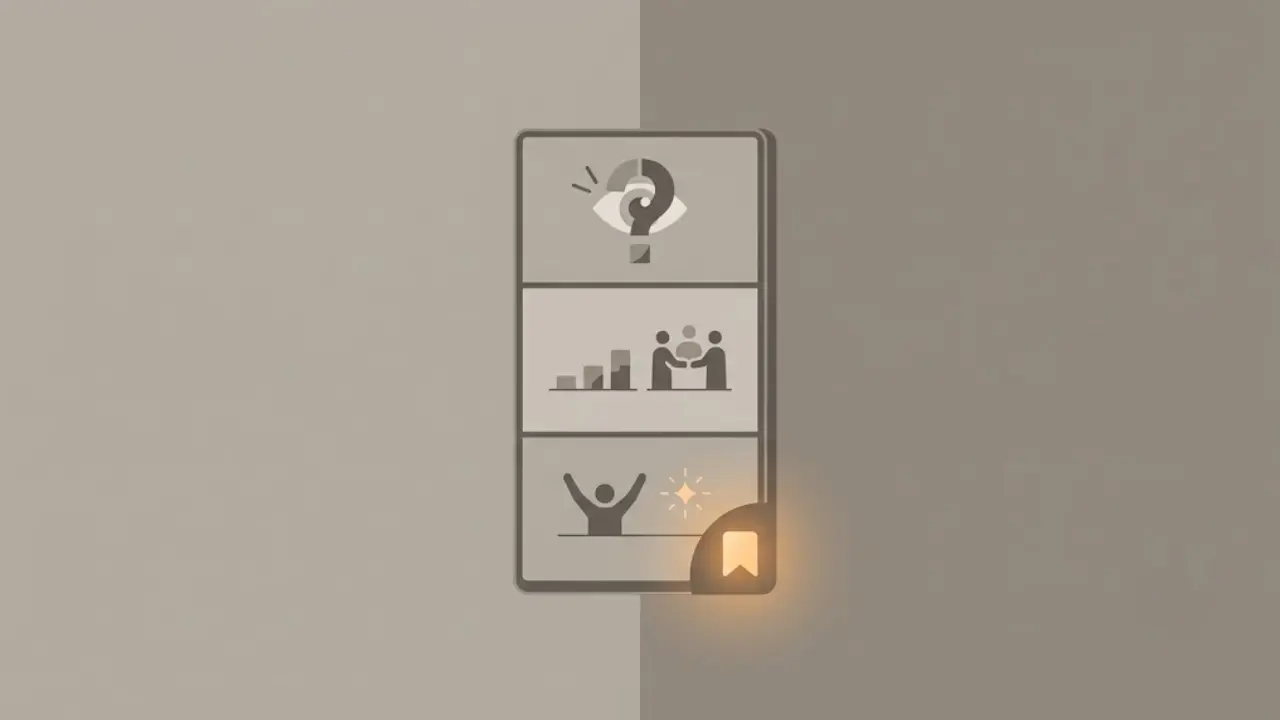
The hook (0 to 2 seconds)
This is where the video lives or dies. The first line has to name a tension the viewer already feels. "Nobody is coming to save you" works better than "Here are five tips for motivation" because it hits an emotion instead of promising a list. Put your strongest line first, not third.
The build (2 to 25 seconds)
Now you earn the payoff. Keep sentences short. Vary the rhythm so it does not read like a lecture. Concrete beats abstract, so "you woke up at 5am when you wanted to quit" lands harder than "you showed perseverance." This is also where the visuals should escalate, moving from calm to intense as the words do.
The payoff (final 3 to 5 seconds)
End on a single line the viewer can repeat to themselves or type in a comment. A clean closing line is what gets people to save the clip and tag a friend. Avoid trailing off. The last frame should feel like a full stop.
A quick data point from our own channels: the videos that hold retention past 80 percent almost always front-load the hook and keep the whole script under 90 words. Longer scripts drift, and drift kills retention.
Voice and visuals, the two choices that decide everything
You can get the script right and still lose the viewer if the voice sounds flat or the footage feels generic. These two choices carry most of the emotional weight.
The voice
Motivation depends on tone. A voice that sounds bored will sink a great line. Inside Faceless Lab you have over 200 ElevenLabs voices to choose from, which means you can match the delivery to the mood: a low, deliberate read for discipline content, a warmer tone for reflective pieces, a faster energetic read for gym and hustle clips. Test two or three voices on the same script before you commit, because the difference in save rate can be large.
The visuals
Faceless Lab pulls from multiple models on Replicate, so you are not locked into one look. With 39 visual styles you can go cinematic and moody for a discipline series, clean and bright for productivity tips, or stylized and dramatic for storytelling. The rule that matters: the visuals should rise with the script. Static or mismatched footage flattens the emotion. Movement and contrast lift it.
Music and captions
Background music sets the floor for the whole feeling, and Faceless Lab adds it automatically, with clearly marked royalty-free tracks so you can post anywhere without copyright worry. Captions are not optional in this niche. Most people watch on mute the first time, so on-screen text is what delivers your line. Faceless Lab generates synced captions automatically, so the hook is readable even with the sound off.
How to make a faceless motivation video inside Faceless Lab
Here is the start-to-finish flow. If you have never opened the app, this is roughly five minutes of work for your first video and less once you have a style dialed in.
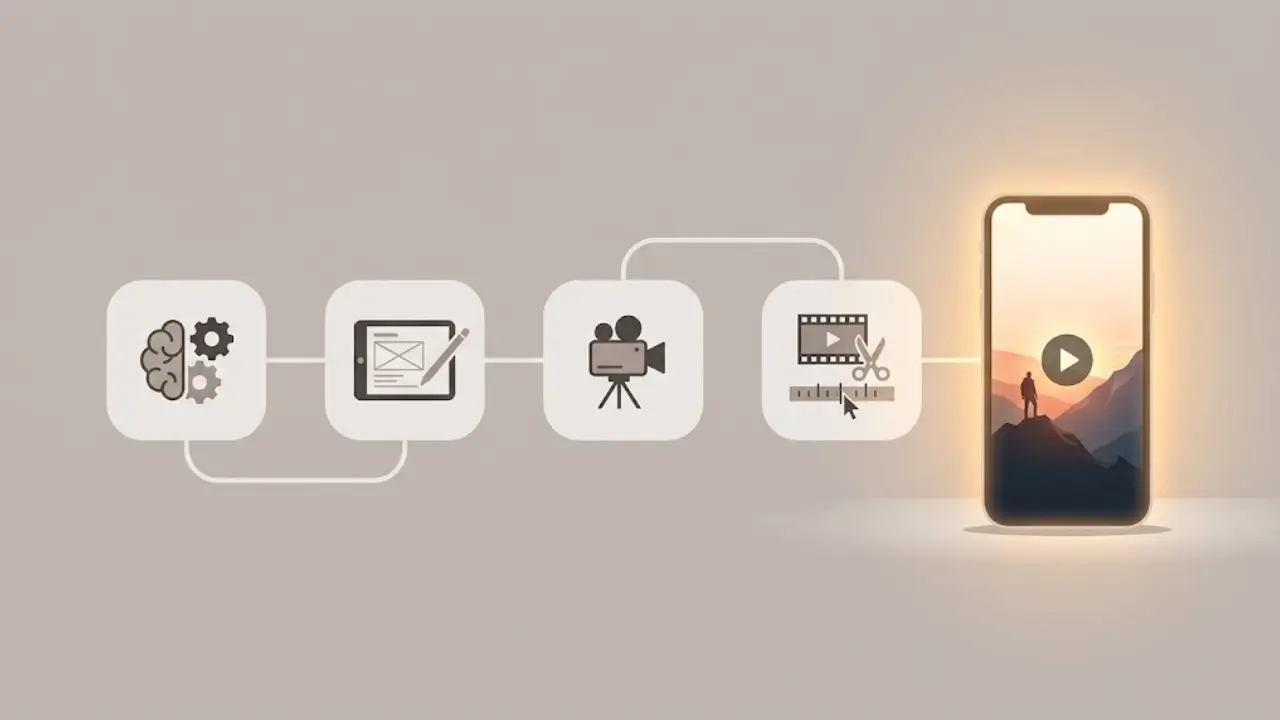
- Start from a topic. Type your idea, for example "discipline over motivation" or "the cost of staying comfortable." You can paste your own script if you already have one, or let the AI draft it.
- Pick a story structure. Choose from the 8 built-in structures. For motivation, a hook-build-payoff structure keeps the pacing tight.
- Choose a visual style. Pick from the 39 styles. A cinematic or moody style suits most motivation content. Keep one style per series so your channel looks consistent.
- Select a voice. Browse the 200-plus ElevenLabs voices and pick one that matches the tone. Preview it on your actual script before locking it in.
- Review the script and captions. Edit any line that feels off, tighten the hook, and confirm the captions are readable.
- Generate. Faceless Lab assembles the voiceover, footage, music, and synced captions into a publish-ready short, usually in a couple of minutes.
- Schedule or publish. Send it straight to your connected platforms or add it to your posting queue for later.
💡 Ready to try it on your own idea? Create your first motivation short free.
A note on getting the voice to feel human
If a read sounds slightly robotic, the fix is usually the script, not the voice. Add short sentences, natural pauses, and a little repetition, the way a person actually speaks when they mean something. We wrote a full guide on this.
Turn one idea into a full week of videos
The channels that grow are the ones that post consistently, and consistency is a production problem more than a creativity problem. This is where the faceless workflow pays off.
A realistic batching session looks like this:
- Pick one theme for the week, for example "discipline."
- Draft 7 angles on that theme, one per day. Discipline when no one is watching, discipline after failure, discipline on the boring days, and so on.
- Generate all 7 in one sitting, keeping the same visual style and voice so the series feels cohesive.
- Load them into the schedule and let them post one per day.
With Series, you can spin variations on a theme quickly instead of starting from scratch each time. With Autopilot, currently in beta, the app can take even more of the repetitive work off your plate. And auto-publishing pushes finished videos to your platforms on schedule, so the channel keeps moving even on the days you do not open the app. One honest caveat: TikTok is excluded from fully automatic publishing and needs your explicit consent per post, so plan for a quick manual step there.
💡 Want the full batching method? Read Batch a Month of Faceless Videos in One Afternoon.
Where a faceless motivation channel is not the right move
We would rather be straight with you than oversell. Faceless motivation is not the right fit for everyone.

- If you want fast money, look elsewhere. Motivation is evergreen, which also means it is patient. It rewards months of consistent posting, not a single viral hit. If you need income this week, this is the wrong niche.
- If the space feels crowded, that is because it is. Plenty of accounts post recycled quotes over stock clips. To stand out you need a real point of view and a consistent visual identity, not just volume.
- If you want to build a personal brand and be recognized, faceless is the wrong tool. The whole point is that the message travels without you. That is a strength for scale and a limitation if your goal is personal fame.
- If you are only going to post twice and quit, do not bother. The format compounds over time. Give it a real runway or pick something with a faster payoff.
Faceless Lab is a strong fit when you want to publish consistently, run one or more channels without a production team, and keep your costs predictable. It is a weaker fit if you need long-form documentary editing or heavy frame-by-frame control, which is not what a fast faceless workflow is built for.
The verdict
Faceless motivation videos remain one of the most reliable ways to grow on short-form, because the demand is constant and the format does not depend on your face. The only thing standing between an idea and a posted video used to be hours of production. That is the part Faceless Lab removes. Type the topic, pick a structure, a style, and a voice, and get a publish-ready short in minutes, then batch a week and let it post on a rhythm.
Start with the Free trial at €0 and make your first three videos this week. If you want more volume, Starter is €19, Growth is €59, and Pro is €149, so you can scale as the channel grows. If a clip does well, repost it across your other platforms and squeeze every view out of it, and if you love the app, our affiliate program pays you to tell other creators about it.
Try it now and make your first faceless motivation short: https://facelesslab.video
Read more
Frequently asked questions
What are faceless motivation videos?
Faceless motivation videos are short clips that deliver an inspiring or discipline-focused message without any person appearing on camera. They combine a written script, an AI or recorded voiceover, cinematic or stylized visuals, background music, and on-screen captions. Because the message carries the video rather than a presenter, they are easy to produce anonymously and to run across several channels at once. The format suits creators who want to grow on YouTube Shorts, TikTok, and Reels without filming themselves, and it stays popular because the demand for motivation is steady all year round.
How do I make a faceless motivation video with AI?
Start by writing or generating a short script built around a strong opening line. Pick a story structure, choose a visual style that matches the mood, and select a voice that fits the tone. Add synced captions and background music, then export a vertical clip for short-form platforms. Inside Faceless Lab this is one workflow: type a topic, pick from 8 structures, 39 styles, and over 200 voices, and the app assembles the voiceover, footage, music, and captions into a publish-ready video in a few minutes.
Are faceless motivation channels still profitable in 2026?
Yes, though the niche rewards consistency more than luck. Motivation content is evergreen, so older videos keep earning views long after you post them, and saves and reshares tend to be high, which helps distribution. Profitability comes from posting regularly over months, building a back catalog, and layering in income from platform monetization, affiliate links, or your own products. It is not a fast-money niche, but it is one of the more durable ones because the audience keeps looking for a push every single week.
What voice works best for motivation videos?
There is no single best voice, only the right voice for the mood of the clip. A low, deliberate delivery suits discipline and hard-truth content, a warmer tone fits reflective pieces, and a faster, higher-energy read works for gym or hustle videos. The practical advice is to preview two or three voices on your actual script before you commit, because the same words can feel completely different depending on the read. Faceless Lab gives you over 200 ElevenLabs voices, so you can match delivery to the emotion of each video.
How many motivation videos should I post per week?
Consistency matters more than any exact number, but most growing faceless channels post between five and seven times a week. The reason is simple: short-form platforms reward accounts that show up regularly, and more posts mean more chances for one to catch. The realistic way to hit that cadence without burning out is to batch. Pick one theme, draft seven angles, generate them in a single sitting, and schedule them to post one per day so the channel keeps moving even on your off days.
Do I need editing skills to make faceless motivation videos?
No. The entire point of a faceless AI workflow is that it removes the manual editing. You do not need to know how to cut clips, sync audio, or design captions. In Faceless Lab you provide the idea and the creative choices, structure, style, and voice, and the app handles script assembly, voiceover, footage, music, and synced captions automatically. Your job is picking good topics and strong hooks, which is a writing and taste skill, not a technical one. That is what makes the niche accessible to beginners.
Related articles
Faceless Shorts Can Have Thumbnails Now. Make Yours Earn the Click
YouTube just gave Partner Program creators custom thumbnails on Shorts. Here is how faceless creators, with no face to feature, build a frame that earns the click and lifts views.
Make Faceless Quiz Videos That Get People Answering in the Comments
Quiz and trivia shorts are some of the easiest faceless videos to grow with. Here is how the format works, the structures that hold attention, and how to make one in minutes.
Make Faceless Horror Story Videos That People Watch Until the End
Horror is one of the highest-retention faceless niches, and you do not need a camera or a scary voice of your own. Here is how to build a scary-story channel that posts on its own.