Relationship Advice Is Made for Shorts. Here Is How to Run a Faceless Channel Around It
Start a faceless relationship advice channel on Shorts, Reels and TikTok: pick an angle, write scripts that feel human, and publish every day without ever showing your face.

Roberto Pasqualini
CMO at Faceless Lab
A practical guide to **starting a faceless relationship advice channel **on YouTube Shorts, Instagram Reels and TikTok, with niche angles, script formulas, a step-by-step workflow and the safety lines worth keeping.
Can you run a relationship advice channel without ever showing your face? Yes, and the format fits faceless video better than most people expect. A faceless relationship advice channel posts short videos about dating, communication, breakups and life as a couple, carried by a voiceover, on-screen text and visuals instead of a presenter. People look for this kind of help late at night and on their phones, which is exactly where Shorts, Reels and TikTok live.
My co-founder Stefano and I run faceless channels every day, and relationship content keeps showing up in our own tests as one of the easiest topics to never run out of ideas for. This guide covers how we would start one from zero.
Executive Summary: A faceless relationship advice channel works because the topic is personal, the audience is huge and every viewer has a situation they want to see themselves in, so the presenter matters less than the script. The channel needs one clear angle (for example dating basics, communication scripts, red flags or breakup recovery), a hook in the first three seconds, a calm consistent voice and a steady posting rhythm. Faceless Lab turns an idea or a script into a publish-ready video with voiceover from 200+ ElevenLabs voices, visuals across 39 styles, music and captions, and schedules it to YouTube, Instagram, Facebook and LinkedIn, while TikTok publishing needs your explicit consent on each post. Because the topic is sensitive, the channel should always present general advice, never diagnose, and point people to professionals when a situation is serious. You can start on the free trial at €0 and upgrade when the rhythm sticks.
Table of Contents
- Why relationship advice suits faceless video
- Pick one angle inside the niche
- Write advice that sounds like a person, not a pamphlet
- Make your first relationship advice video in Faceless Lab
- Keep the channel safe and monetizable
- Where Faceless Lab is and isn't the right choice
1. Why relationship advice suits faceless video
Relationship content has a built-in advantage on short-form platforms: almost everyone has opinions, questions or a story about it. That gives you a topic with constant demand and very little risk of running out of material.
People often prefer an anonymous voice for personal topics. Someone watching a video about a rough breakup or a confusing text thread may feel more comfortable with a calm narrator and simple visuals than with a stranger staring into a camera. A faceless format can feel more private, and privacy is part of what the viewer came for.
The content is built to be saved and sent. Advice like "five signs the conversation is going nowhere" or "what to say instead of 'we need to talk'" is the kind of video people send to a friend or a partner. Saves and shares tell the platforms the video was useful, and that helps it travel.
Ideas come from the audience. Every comment is a prompt for the next video. A question under one video becomes tomorrow's script, which turns the channel into a loop that feeds itself.
The voice carries the emotion. In a faceless video the narration, pacing and music do the emotional work. That is a skill you can improve with scripts and voice choices, and you never need to be camera-ready.
2. Pick one angle inside the niche
"Relationship advice" is too broad to build a recognizable channel. Pick one angle you can post about daily and let the rest wait. These are the lanes I would look at first.
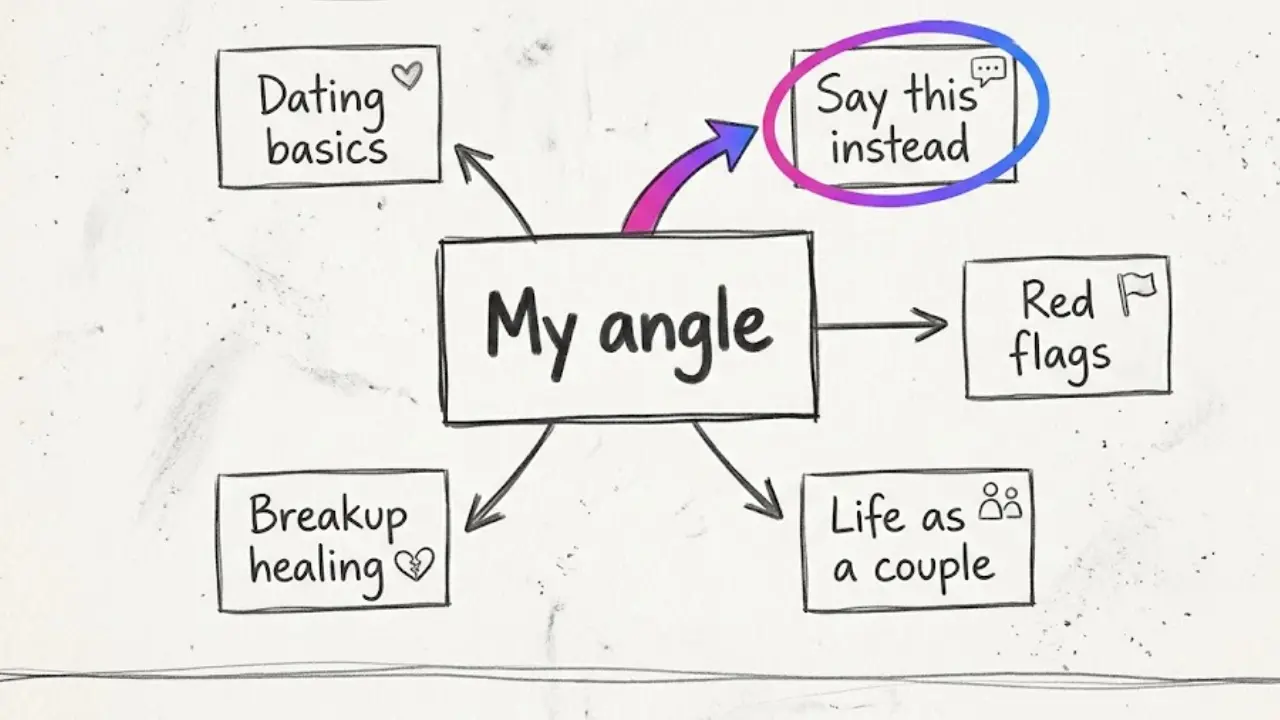
- Dating basics. First messages, first dates, how to read mixed signals, how to end things kindly. Strong for younger audiences and easy to script as short lists.
- Communication scripts. "Say this instead of that" videos give viewers exact words to use. They are very shareable because the value is concrete.
- Red flags and green flags. Quick, list-style videos that people argue about in the comments, which is useful for engagement.
- Breakup and healing. Calm, supportive content about moving on. It needs the most care with tone and the most honesty about what a video can and cannot do.
- Life as a couple. Habits, money talks, chores, long-distance, moving in together. This lane tends to hold an older audience and gives you long-running series.
How to choose. Pick the lane where you can write thirty distinct scripts without repeating yourself. Then give it one voice, one visual style and one recurring format, so a viewer who scrolls past two of your videos recognizes the third.
3. Write advice that sounds like a person, not a pamphlet
The script decides everything. Viewers decide in about three seconds whether the video speaks to them, and generic advice loses that moment.
Open with a situation, not a lecture
Start inside a moment the viewer recognizes. "You sent a long message and got back a single thumbs up." Lead with that, and the viewer already feels seen. Then give the advice.
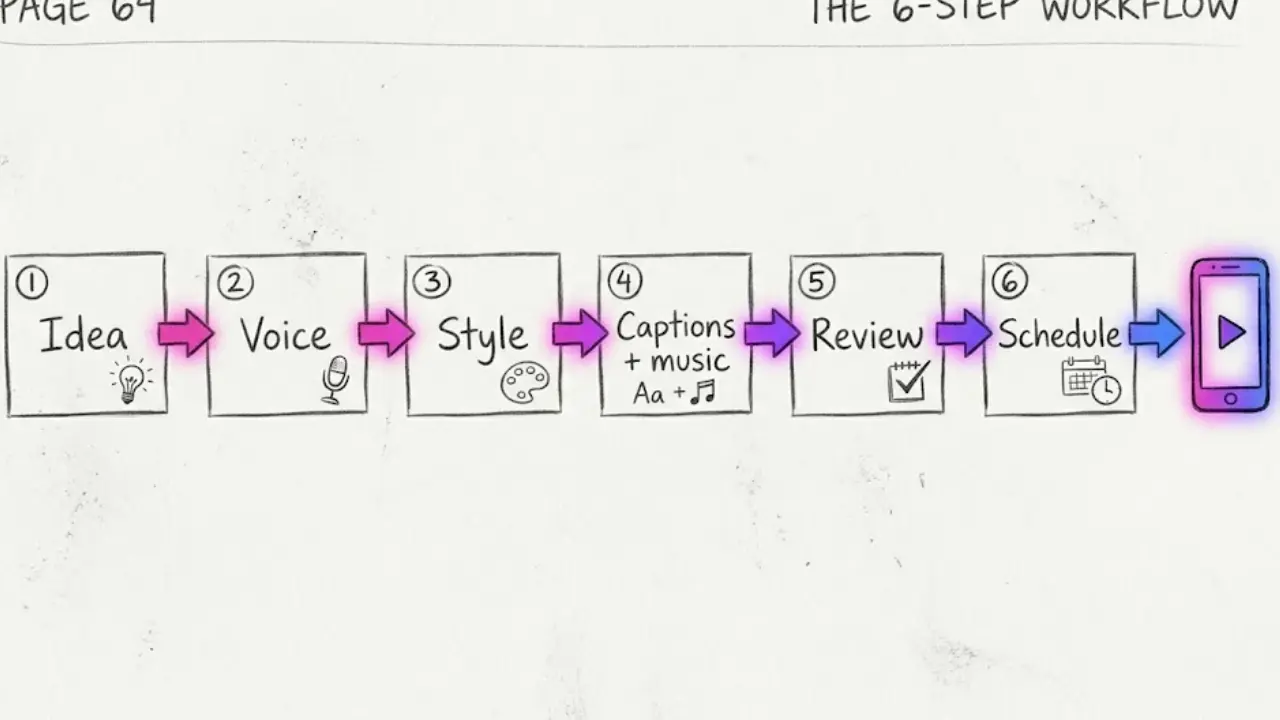
A simple 45 to 60 second formula
- Hook (0 to 3 seconds). One sentence describing a specific situation or a surprising claim.
- Relatable beat (3 to 12 seconds). Two short lines that show you understand what it feels like.
- The advice (12 to 40 seconds). Two or three concrete points, each with one example sentence the viewer could actually say or do.
- Close (last 5 seconds). A question that invites a comment, such as "What would you have said?"
Use words people really use
Read the script out loud. If a sentence sounds like a leaflet, rewrite it the way you would say it to a friend over coffee. Short sentences, plain words and one idea per line also make captions easier to read on a small screen.
Choose the structure that fits the idea
Faceless Lab includes 8 video structures, so you can match the pacing to the idea: a list for red flags, a story for a breakup scenario, an explainer for communication habits. Switching structure is a quick way to keep a long series from feeling repetitive.
4. Make your first relationship advice video in Faceless Lab
Here is the process from idea to a video ready to post. It takes a few minutes once you have a script.
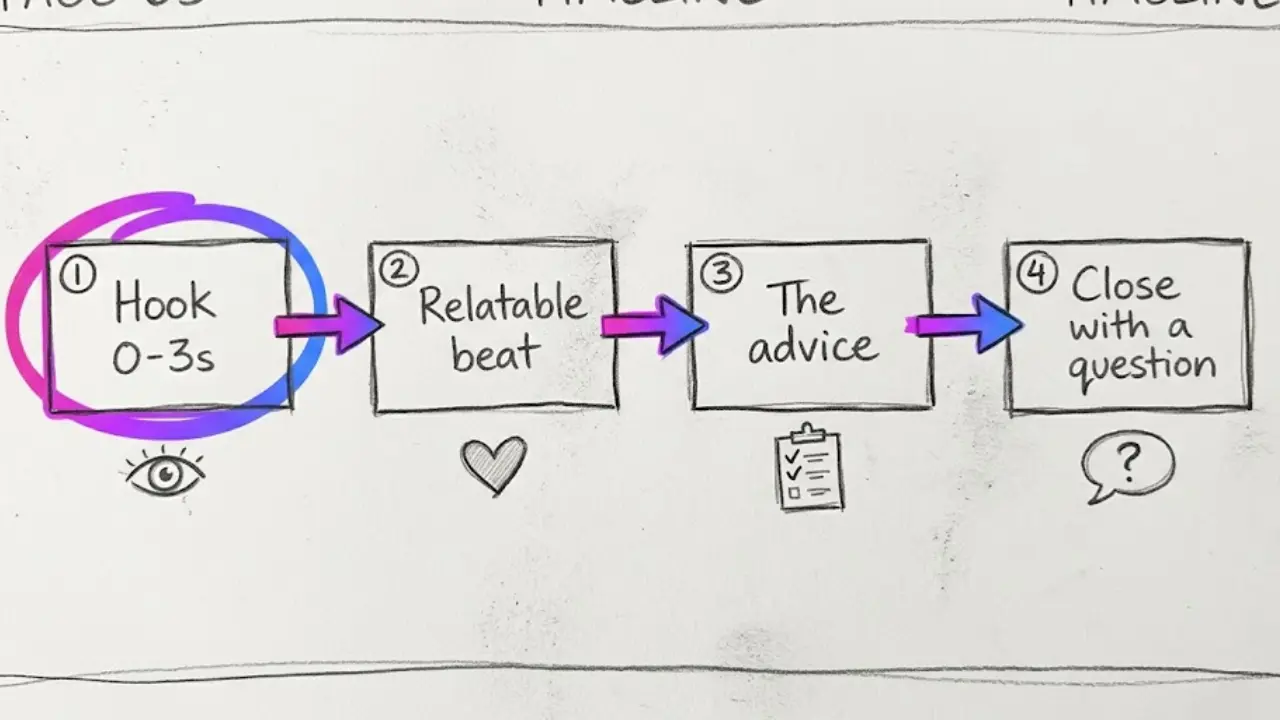
Step 1. Start with an idea or a script. Type a topic such as "three things to say after an argument", paste a script you wrote, or let the app expand a one-line idea. Pick the structure that fits (list, story or explainer).
Step 2. Choose your voice. Faceless Lab offers 200+ ElevenLabs voices. For relationship content I would test a warm, unhurried voice first, then keep the same voice on every video so the channel becomes recognizable.
Step 3. Lock a visual style. Visuals come in 39 styles, generated through multiple models on Replicate. Soft, simple scenes tend to suit emotional topics. Pick one look and stay with it for the whole series.
Step 4. Add captions and music. Captions are generated and synced for you, which matters because many viewers watch with the sound off. Choose gentle background music that supports the voice without covering it.
Step 5. Review the full video. Check the script, the pacing and the first three seconds. Swap a scene or edit a line if something sounds off. This is also where you add your safety line (more on that in the next section).
Step 6. Schedule it. Send the video to your connected platforms on the date and time you choose. YouTube, Instagram, Facebook and LinkedIn can publish automatically. TikTok is excluded from fully automatic auto-publish and needs your explicit consent, so you approve each TikTok post yourself.
Turn it into a series. Use Series to keep one recurring format running, such as "Red Flag Monday" and "Say This Instead Friday". Autopilot (currently in beta) can keep the schedule full once your format works.
💡 Ready to try it? Create your first faceless video free and see a full video come together in minutes.
5. Keep the channel safe and monetizable
Relationship topics touch real feelings, so a few habits protect your viewers and your channel.
- Say it is general advice. Add a short line in the caption or the closing frame: this is general information, not professional counseling. It sets the right expectation.
- Never diagnose. Avoid telling viewers that a partner has a disorder or that a relationship is abusive. Describe behaviors and suggest what to consider instead.
- Point to real help for serious topics. For anything involving safety, abuse or crisis, say clearly that a professional or a local support service is the right next step, and keep the video calm and short.
- Do not target real people. Keep examples generic or invented. Naming or mocking a real person creates problems for you and for them.
- Keep every video original. Platforms check for repetitive or reused content, so write fresh scripts and vary the structure, voice lines and visuals instead of posting near-copies. Check each platform's current monetization and AI-disclosure rules before you plan income, because they change.
- Label AI content where the platform asks. If your visuals are AI-generated, use the platform's disclosure option when it applies.
6. Where Faceless Lab is and isn't the right choice
I would rather you start with the facts than feel misled, so here is the honest version.
Where it is a strong fit:
- You want to post every day without editing every day. Script, voice, visuals, music and captions live in one place, and batching a week of videos in one sitting is realistic.
- You plan a series. Series and scheduling are made for a repeating format.
- You run more than one channel. The same workflow covers several niches or languages.
Where it is not the right choice:
- TikTok stays more hands-on. Publishing there needs your explicit consent for each post, so it will not be fully automatic like the other platforms.
- You want to appear on camera or interview real couples. Faceless Lab produces faceless, AI-assisted short-form videos. For on-camera content, use a camera.
- You want the tool to supply the expertise. It produces the video, and the ideas and the judgment about what is responsible to say are yours. If you have training in counseling or coaching, say so honestly in your channel description. If you do not, keep to general, everyday advice.
Plans are simple: a free trial at €0, then Starter at €19, Growth at €59 and Pro at €149. Start free and upgrade only when the rhythm sticks.
A faceless relationship advice channel is a low-friction way to build an audience around a topic people always search for. Pick one angle, write hooks that start inside a real situation, keep one voice and one look, and post on a rhythm you can keep. If this is the workflow you have been missing, the free trial is the easiest way to see it for yourself. And if you make something you like, reposting your favorite videos organically helps other creators find us, and our affiliate program is open if you want to share Faceless Lab with your own audience.
Try Faceless Lab free and make your first video
Read more
- Start a faceless psychology channel that turns everyday behavior into daily Shorts
Frequently asked questions
Can you run a relationship advice channel without showing your face?
Yes. A faceless relationship advice channel uses a voiceover, on-screen text, captions and visuals instead of a presenter. Many viewers find an anonymous narrator comfortable for personal topics like dating, breakups or communication in a couple. What matters most is the script: a hook that starts inside a situation the viewer recognizes, two or three concrete points and a closing question. A consistent voice and visual style make the channel recognizable even without a face. With Faceless Lab you can create each video from an idea or a script and schedule it to your platforms.
What are the best faceless relationship advice video ideas?
The easiest ideas to repeat are dating basics, "say this instead of that" communication scripts, red flag and green flag lists, breakup and healing tips, and habits for couples such as money talks or long-distance. Pick one lane first so the channel is easy to recognize. A good test is whether you can write thirty different scripts in that lane without repeating yourself. Comments are a steady idea source too, because every question from a viewer can become the next video.
Is it okay to give relationship advice if I am not a therapist?
You can share general, everyday advice and personal-experience style tips, as long as you are clear that you are not offering professional counseling. Add a short disclaimer in the caption or the closing frame, avoid diagnosing anyone, and do not make promises about outcomes. For serious topics such as abuse, safety or crisis, say plainly that a qualified professional or local support service is the right next step. If you do hold a relevant qualification, you can state it honestly in your channel description.
How long should a relationship advice Short be?
Most work well at 30 to 60 seconds: a hook in the first three seconds, a short relatable beat, two or three concrete points and a closing question. Shorter videos are easier to finish and rewatch, while slightly longer ones suit stories and breakup scenarios. If you also want to post to TikTok, check the platform's current length rules for monetization before you plan, since they change. Test a few lengths, then check your retention numbers and keep what holds viewers best.
Can I schedule relationship advice videos to every platform automatically?
Mostly. Faceless Lab can schedule and auto-publish to YouTube, Instagram, Facebook and LinkedIn. TikTok is the exception: it is excluded from fully automatic auto-publish and needs your explicit consent, so you approve each TikTok post yourself. Autopilot, which can keep a schedule filled, is currently in beta. Batching a week of videos in one session and scheduling them is the simplest way to keep a daily rhythm without burning out.
How much does it cost to start a faceless relationship advice channel?
You can start at €0 with the Faceless Lab free trial and see a full video come together. After that, the plans are Starter at €19, Growth at €59 and Pro at €149. Beyond the tool, you need no camera, no microphone and no editing software, because the voiceover, visuals, music and captions are generated for you. Start with one angle and a handful of videos, then upgrade only if your posting rhythm needs more.
Related articles
5 Analytics Numbers That Tell You What to Post Next on a Faceless Channel
Skip the dashboard overload. Check five numbers on YouTube, Instagram and TikTok, spot why a faceless video lost viewers, and use a 20-minute weekly routine to decide what to post next.
A/B Test Your Faceless Video Hooks Without Any Testing Tool
YouTube cannot A/B test Shorts, and Reels and TikTok have no hook tester either. Here is a simple one-variable method to find the opening line that keeps viewers watching on your faceless channel.
Brand a Faceless Channel So Viewers Recognize It Without a Face
No face means your brand has to do the remembering. Here are the five signals that make a faceless channel recognizable, and how to set them once and keep them steady across every video.