Build a Faceless Sleep and Meditation Channel That Runs While You Rest
Sleep and meditation is one of the calmest faceless niches to run. Here is how to make relaxing videos with AI voice, visuals and music, then publish them on a rhythm.

Stefano Ventrudo
CTO at Faceless Lab
A calm, practical guide to making faceless sleep and meditation videos with AI voice, visuals and music, and publishing them on a rhythm you can actually keep.
Can you really build a faceless sleep and meditation channel without recording your own voice or showing your face? Yes, and it is one of the gentlest niches to start with. Sleep, meditation and relaxation content is built on slow visuals, a soft voice and steady music, which is exactly the kind of video that AI handles well. People do not come to a sleep video for a charismatic host. They come to wind down, and they stay for the calm.
We are Stefano and Roberto, and we run faceless channels every day. This niche keeps coming up in our own tests because it rewards consistency over personality. If you can post a new sleep story or a short guided meditation on a regular schedule, the format does the rest of the work for you.
Executive summary: A faceless sleep and meditation channel works because the content itself is quiet by design, so a soft AI voice, slow ambient visuals and looping music feel natural rather than fake. You write or generate a calming script, pick a warm narration voice, pair it with soothing scenes and music, add optional captions, then publish on a steady schedule. Faceless Lab builds all of those pieces in one workflow and can schedule and publish for you, so the hardest part becomes choosing topics rather than editing. The niche pays off slowly and compounds, which makes it a strong fit for creators who want a channel that keeps posting while they sleep.
Table of Contents
- Why sleep and meditation is one of the calmest niches to run faceless
- What a faceless sleep video is actually made of
- How to make a faceless sleep video inside Faceless Lab
- Voices, visuals and music that help people wind down
- Where a faceless sleep channel is and isn't the right choice
- How to grow and monetize a faceless sleep channel
1. Why sleep and meditation is one of the calmest niches to run faceless
Most faceless niches ask you to hook a viewer in the first three seconds and keep them on edge. Sleep content asks for the opposite. The goal is to lower the energy, ease someone toward rest and hold a gentle mood for as long as possible. That single difference makes it one of the friendliest niches for a faceless creator.
The content suits AI production. A sleep story or a guided meditation is mostly a calm voice over slow, unchanging visuals. There is no fast cutting, no reaction shots and no personality that a real host has to carry. When the whole point is stillness, a steady AI voice and soft ambient scenes feel right at home.
Watch time works in your favour. Sleep and meditation videos are long by nature, and people often leave them playing in the background. Longer sessions and repeat plays are the kind of signals that platforms reward, which helps a small channel build momentum over time.
It is evergreen with seasonal lift. People search for help falling asleep every single week of the year, so your back catalogue keeps earning views long after you post it. Interest tends to climb as the evenings get darker and colder, which makes the autumn and winter stretch a natural time to build a library.
2. What a faceless sleep video is actually made of
A sleep or meditation video looks simple on the surface, and that simplicity is the point. Underneath, it is still five separate pieces that have to fit together. Here is what each one does.
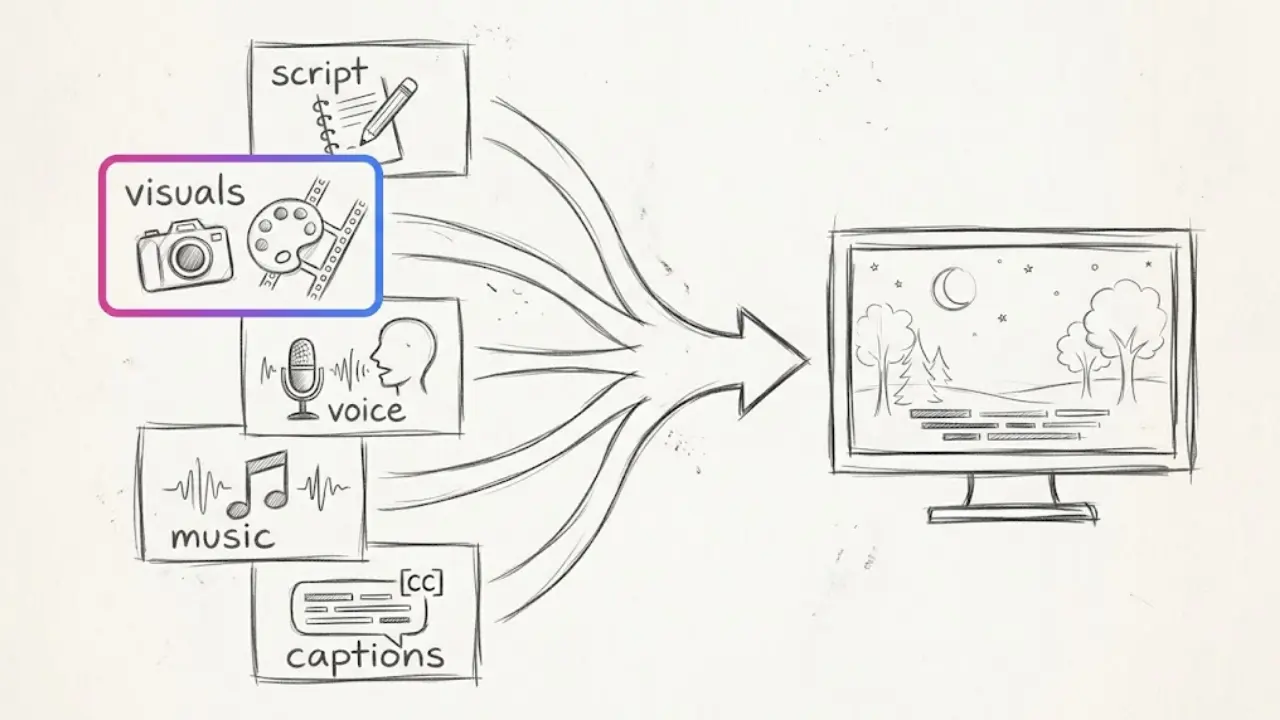
- The script. A slow, soothing narration. It can be a sleep story that drifts through a quiet scene, a body-scan meditation that relaxes the listener step by step, or a short breathing exercise. Short sentences and a slow pace matter more than clever writing.
- The voice. A warm, low-energy voiceover that never rushes. The voice sets the entire mood, so this is the piece to get right first.
- The visuals. Slow, calm scenes that do not demand attention. Think soft night skies, gentle rain on a window, a quiet forest or a slow ocean at dusk. Movement should be minimal.
- The music. A soft ambient bed or gentle piano that loops without any sudden changes. Music covers silence and smooths the transitions between scenes.
- The captions. Optional here, and often left off for pure sleep content so the screen stays dark and calm. For daytime meditation clips on Reels or Shorts, light captions can help.
The reason most people give up is that stitching these five together by hand, night after night, turns a relaxing idea into a second job. That is the exact problem Faceless Lab was built to remove.
3. How to make a faceless sleep video inside Faceless Lab
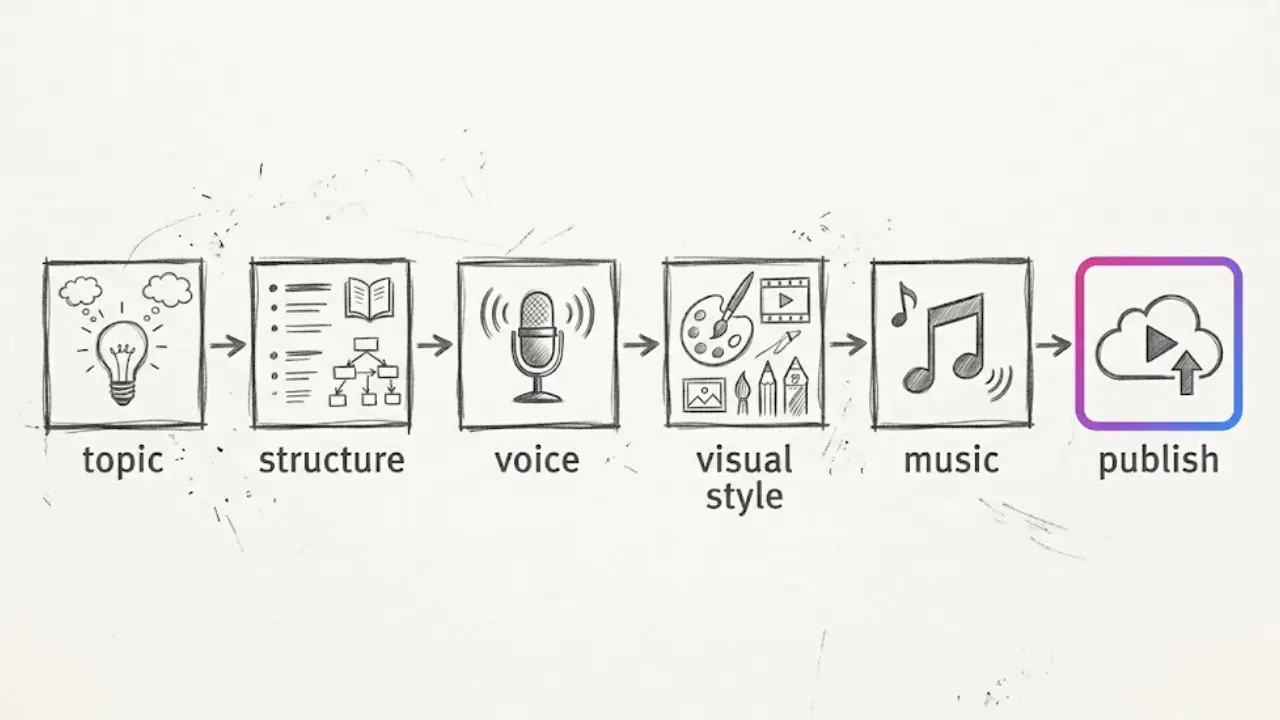
Here is the workflow we use to turn a single idea into a finished sleep video, without opening a separate editor.
Step 1: Start from a topic or a script
Open the dashboard and enter your idea, for example "a calm sleep story about a cabin in the snow" or "a ten-minute guided meditation for anxious evenings." Faceless Lab generates a full script for you. You can also paste your own script if you already have one you like, and edit any line directly.
Step 2: Choose a structure that fits the mood
Faceless Lab includes 8 video structures. For this niche you will usually reach for a simple narrated story or a step-by-step guided format rather than a fast listicle. The structure decides how the script and scenes are laid out, so picking a calm one keeps the pacing slow.
Step 3: Pick a soothing voice
You get access to 200+ ElevenLabs voices. Choose a warm, unhurried voice and preview it against a couple of lines. This is the single most important choice for a sleep channel, so spend a minute here.
Step 4: Set the visual style
Faceless Lab offers 39 visual styles, and the visuals are generated across multiple models through Replicate. For sleep content, lean toward soft, realistic or painterly night scenes and keep the look consistent across every video so your channel feels like one place.
Step 5: Add music and optional captions
Pick a gentle track from the library. Most of the music is royalty-free and clearly marked, so you can publish without copyright worry. Leave captions off for pure sleep videos, or add light ones for shorter daytime meditations.
Step 6: Generate, then schedule or publish
Generate the video and give it a quick review. From there you can schedule it or let Faceless Lab publish for you to YouTube, Facebook, Instagram and LinkedIn. TikTok publishing needs your explicit consent each time rather than running fully automatically, so that one stays in your hands.
Try it free and build your first sleep video
4. Voices, visuals and music that help people wind down
The difference between a sleep video people finish and one they close in ten seconds is almost always the mood. A few specific choices carry most of that.
Slow the voice down. Pick a warm, lower-pitched voice and keep the pace gentle. If a line reads too quickly, shorten the sentence rather than speeding up the delivery. Silence between sentences is part of the calm, not a gap to fill.
Keep visuals slow and dark. Bright, busy or fast-moving scenes wake people up, which is the opposite of what you want. Soft night colours, slow movement and gentle transitions hold the mood. Consistency matters more than variety, so a viewer who liked one video knows what to expect from the next.
Let the music breathe. A soft ambient bed or slow piano that loops smoothly works better than anything with a build or a drop. The music should sit under the voice, never compete with it.
Match length to the platform. Long ten to sixty minute sessions live on YouTube where people play them overnight. Short one to three minute breathing clips and single affirmations fit Reels, Shorts and TikTok. You can pull a short calm clip out of a longer idea to feed the short-form platforms.
5. Where a faceless sleep channel is and isn't the right choice
We would rather be honest than oversell, so here is the straight version.
It is a strong choice if you want a channel that compounds quietly, you are patient with slow early growth, and you like the idea of a back catalogue that keeps earning while you do other things. It suits creators who value consistency over going viral, and it fits Faceless Lab well because calm voice, slow visuals and steady music are exactly what the tool produces cleanly.
It is a weaker choice if you want fast, spiky growth or you enjoy being on camera and reacting to trends. Sleep content rarely explodes overnight. It grows like a savings account, a little at a time, and rewards you months later. There is also real competition from large established sleep channels, so your edge comes from a consistent style and a steady posting rhythm rather than from any single upload.
One honest limitation. Faceless Lab generates fresh AI visuals and voice, so it is built for creating calming content rather than remixing long recordings of copyrighted music or film. That is a good thing for staying publishable, and it means you should plan around original ambient scenes rather than expecting to reuse protected footage.
6. How to grow and monetize a faceless sleep channel
Growth in this niche is about showing up on a schedule and letting the library do the compounding.
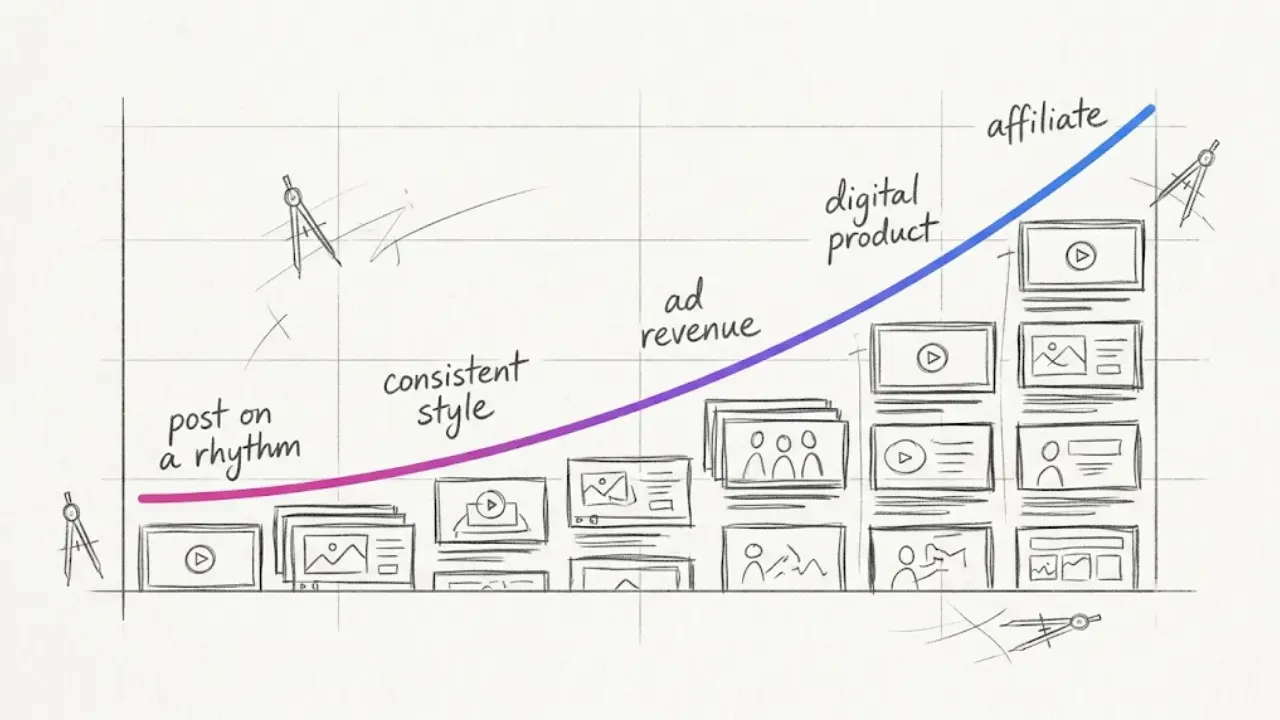
Post on a rhythm. Batch several videos in one sitting, then let them publish across the week. A channel that reliably posts calm content trains both the algorithm and your viewers to come back. This is where scheduling earns its keep, because you can set a week of uploads and step away.
Build a recognisable style. Use the same voice, the same visual look and the same intro feel across every video. A viewer who fell asleep to one of your videos should recognise the next one instantly.
Then think about money. Sleep and meditation channels earn through platform ad revenue on long watch sessions, through simple digital products like a downloadable sleep pack, and through affiliate links to calming products in the description. Longer videos with high completion tend to do well on ad revenue once you qualify for monetization.
Our plans keep this affordable while you find your footing. You can start on the Free trial at €0, then move to Starter at €19, Growth at €59 or Pro at €149 per month as your posting volume grows. The idea is to spend your time choosing topics, not editing them.
A faceless sleep and meditation channel is one of the calmest ways to build a content library that keeps working after you close the laptop. Pick a soothing voice, keep the visuals slow and dark, hold a consistent style, and publish on a rhythm you can keep. The niche will not make you famous overnight, and it is not trying to. It is trying to be there, quietly, every night someone needs help falling asleep.
If that sounds like the kind of channel you want to run, the easiest next step is to make one video and hear how it sounds. Try Faceless Lab free and build your first calm video
Read more
Frequently asked questions
How do I make faceless sleep videos without recording my own voice?
You use an AI voiceover instead of your own. In Faceless Lab you enter a topic or paste a script, then choose from 200+ ElevenLabs voices to narrate it. For sleep content, pick a warm, low-energy voice and keep the pace slow. The tool pairs that narration with calm visuals and gentle music, so the finished video has a soothing spoken guide without you ever turning on a microphone. You can preview voices against a few lines before you commit, which is worth doing since the voice sets the whole mood of a sleep channel.
Are faceless sleep and meditation channels profitable?
They can be, but they grow slowly and compound over time rather than spiking. Income usually comes from platform ad revenue on long watch sessions, simple digital products like a downloadable sleep pack, and affiliate links to calming products. Long videos with high completion rates tend to earn well once a channel qualifies for monetization. The real advantage of this niche is that videos keep earning for months or years after you post them, so a steady library becomes a quiet, ongoing source of views and revenue.
How long should a faceless sleep video be?
It depends on the platform. On YouTube, long sessions of ten to sixty minutes work well because people leave them playing overnight, and that long watch time helps your channel. For Reels, Shorts and TikTok, short one to three minute breathing exercises, affirmations or mini meditations fit better. A good approach is to build longer videos for YouTube and pull short calm clips from the same idea to feed the short-form platforms, so one script can serve two formats.
What kind of visuals work best for sleep content?
Slow, dark and calm. Soft night skies, gentle rain, quiet forests or a slow ocean at dusk all hold a restful mood, while bright, busy or fast-moving scenes tend to wake people up. Faceless Lab offers 39 visual styles generated across multiple AI models, so you can pick a soothing look and keep it consistent across every video. Consistency matters more than variety here, because a recognisable style helps returning viewers trust that your next video will feel just as calm as the last.
Can Faceless Lab publish my sleep videos automatically?
Yes, for most platforms. You can schedule videos and let Faceless Lab publish them to YouTube, Facebook, Instagram and LinkedIn on the rhythm you set. TikTok is the exception, since it needs your explicit consent each time rather than running fully automatically. There is also an Autopilot feature in beta that can keep a queue posting for you. This is what makes the niche so hands-off, because you can batch a week of calm videos in one sitting and let them go out on their own.
Do I need meditation or audio experience to start?
No. You do not need to be a meditation teacher or an audio engineer. Faceless Lab generates the script, the voice, the visuals and the music for you, so your job is choosing calming topics and keeping a consistent style. If you want more authority over time you can learn the basics of pacing and breathing scripts, but you can launch a solid channel on day one by picking a soothing voice, a slow visual style and gentle music, then publishing on a steady schedule.
Related articles
Start a Faceless Car Channel Without Owning a Single Supercar
Cars never stop being searched. Here is how to start a faceless car channel with AI, which formats need no footage, a four-week posting plan and how to keep specs accurate.
Turn Study and Productivity Tips Into Faceless Shorts People Save for Later
Exam season and New Year planning send people searching for study and productivity tips. Learn how to pick a promise, write useful shorts and schedule a faceless productivity channel without filming.
Dog and Cat Tips Make a Faceless Channel That Owners Come Back To
Pet owners search for tips every day, and each answer fits one short. Learn how to pick an audience, write safe tips, and publish a faceless dog and cat channel without ever filming.